


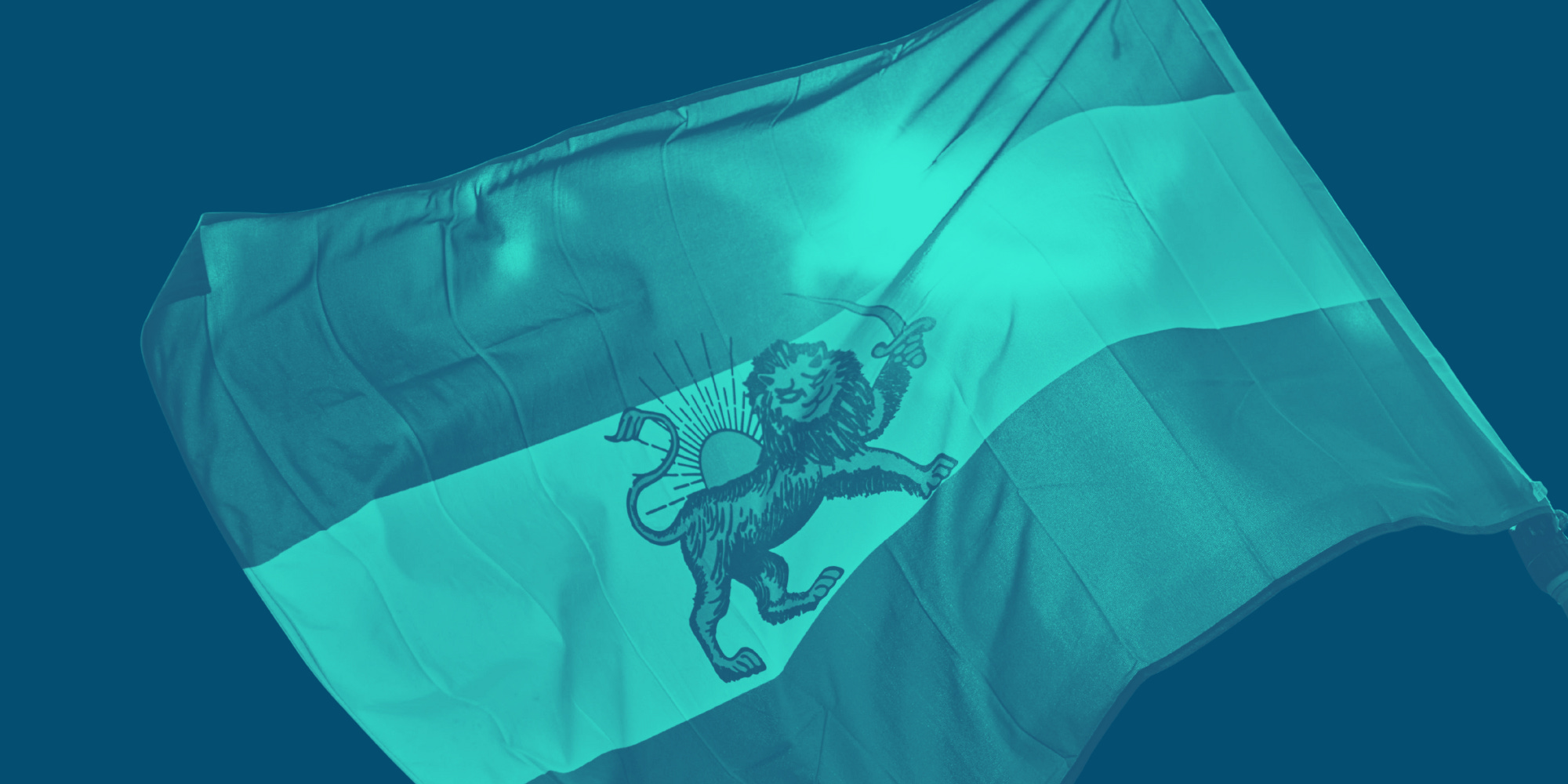
The last two weeks have seen Iranians from all walks of life take to the streets in scenes recalling the toppling of the Shah in 1979. What started as protests related to a currency crisis quickly morphed into revolutionary slogans — calling for an end to Khamenei’s dictatorship, an end to the Islamic Republic, and even the return of the Shah’s son, Reza Pahlavi, to Iran.
Terrified by the popular uprising, the regime has resorted to unspeakable brutality that dwarfs anything seen in modern Iranian history, while simultaneously imposing a nationwide internet blackout to mask its crimes. Iranians showcase their bravery not just in the streets, but equally in spreading news of their struggle abroad despite the government’s restrictions.
Against their authoritarian government, Iranians engaged in a defiant display of parrhesia — a concept from ancient Greece meaning “fearless speech.” Using Elon Musk’s Starlink satellite systems to bypass internet restrictions, they have shared hundreds of images and videos of protests showcasing an uprising in the millions.
The capital, Tehran, saw huge gatherings (as seen in this video and here). A European diplomat, citing intelligence reports, told the news outlet Iran International that some 1.5 million people took to the streets of Tehran on January 8 alone.
Yet the movement went far beyond Tehran — encompassing other large cities like Mashhad in the east, as well as smaller ones like Abadan in the south, Hamedan in the west, and Rasht in the north. Regions and cities predominantly inhabited by Iran’s ethnic minorities, such as Astara and Urmia in the Azeri-speaking northwest, Kurdish-speaking Abdnan in Ilam, Lorestan’s Aligudarz, and the Baluchi city of Zahedan, all witnessed large protests. Overall, according to the BBC, over 100 cities and towns across all of Iran’s 31 provinces participated in the movement. From villages, too, Iranians shared evidence of mass anti-government gatherings.
The Islamic Republic quickly branded protestors as “terrorists” and engaged in a vicious crackdown — with an estimated death toll of 12,000 to 20,000 in the span of days. Even as a source in Iran’s health ministry told Reuters last Tuesday that the regime had murdered at least 2,000 protestors, the country’s foreign ministry, Abbas Araghchi, went on Fox News to claim only hundreds had been killed. Censorship operates in concert with tyranny. Through an ongoing internet shutdown — Iran’s longest on record — the regime tries to hide its crimes.
Yet Iranians’ parrhesia endures. Through Starlink, they risk life and limb to document the regime’s atrocities. By publishing horrifying footage and images of the crackdown, they disproved the government’s claim about hundreds of casualties — a figure that only captures a fraction of the repression’s brutality. Videos show security forces shooting at unarmed Iranians with shotgun and machine-gun fire. Snipers perched on rooftops rained bullets on protesting crowds. Regime forces assailed hospitals treating protestors with tear gas and bullets.
Morgues are filled with bodies. A doctor from Tehran told Time Magazine on January 9, just a day into the mass crackdown, that six hospitals in the capital saw 200 deaths in one night. Another reported to The Guardian that his hospital saw more than 400 eye injuries from gunshots in a single night. More than 18,000 people have been arrested and are at risk of execution, according to Human Rights Activists in Iran (HRANA), a human rights monitor.
The regime has also resorted to its familiar playbook to torment protestors’ loved ones: extorting parents to pay for their children’s bodies and airing forced confessions on state television. The scale of the regime’s atrocities would never have come to light without Iranians’ parrhesia — their determination to show international observers both the extent of their own government’s barbarity and their own fearless resistance.
The sheer scale of evidence Iranians managed to share from the unfolding massacre forced the government to walk back its claim that only hundreds had died. Seeing it cannot deny obvious mass casualties, the regime blames protestors, the United States, and Israel — not its soldiers and armed militias — for the violence. Ali Khamenei, Iran’s “supreme leader,” recently acknowledged thousands of deaths in the protests but predictably deflected the violence onto the demonstrators, a ludicrous claim. As the regime’s crackdown continues, the internet blackout aims to crush Iranians’ speech while providing full freedom of expression to the government’s propagandists, who link the violence to foreign agitators instead of the regime’s troops.
Last week, in the midst of a total internet shutdown, Qatari-financed Al Jazeera somehow reported live from Tehran, all while portraying Iran’s mass uprising as an Israeli-backed psyop to its viewers. Regime apologists, such as Mohammad Marandi, were allowed to speak to Western podcasts and international media about U.S.- and Israeli-instigated “riots” unfolding in Iran. Meanwhile, clueless Westerners, mainly on the political left, arrogated themselves the right to speak on Iranians’ behalf to justify the regime’s actions (as Pink Floyd’s Roger Waters did on a major talk show).
The regime tried to silence Iranian voices while covering up its mass murder campaign. And they might have succeeded in a world before satellite Internet, cell phones with high definition cameras, and social media. Nevertheless, the truth prevailed thanks to Iranian resilience and the modern tools of mass communication; as the regime rained down bullets, Iranians’ parrhesia ensured neither the Islamic Republic’s crimes, nor the people’s resistance, would go forgotten.
Iranians have demonstrated formidable bravery in sharing evidence of the ongoing government killings through Starlink. In the struggle against darkness, friends of freedom, justice, and humanity have the duty to share their light with the world.
Hirad Marami is a research assistant at The Future of Free Speech and a student at the University of Chicago studying economics and history.
