


This Week At A Glance 🔎
— 🇺🇲 DOJ Orders “Antifa” Intelligence Dragnet
— 🇪🇺 EU Sanctions 12 People Over Russian “Propaganda”
— 🇦🇺 Australia Expands Hate Speech Restrictions to Target Antisemitism
— 🇺🇬 Uganda Bans Live Broadcasts of Riots Ahead of Presidential Election
— 🇻🇪 Venezuela Issued 90-Day Order to Hunt Supporters of US Military Operation, Journalists Arrested
First of All 🇺🇲
» DOJ Orders “Antifa” Intelligence Dragnet
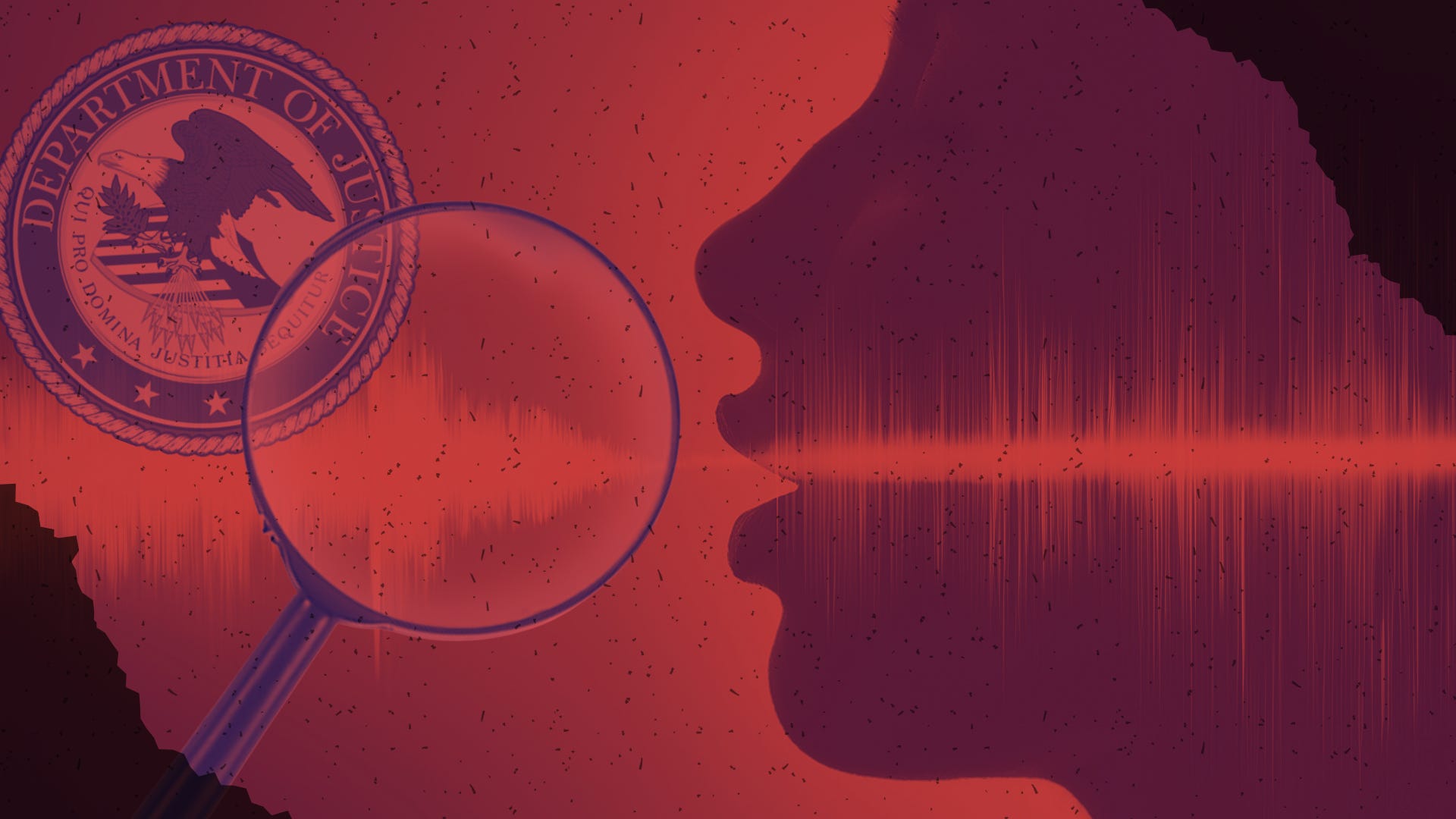
A December memo from Attorney General Pam Bondi directs all federal law enforcement agencies to deliver intelligence files on “Antifa,” short for “anti-fascist,” and “Antifa-related” activities to the FBI, which is tasked with creating lists of Americans and foreigners to investigate.
Context:
Bondi’s memo implements a strategy outlined in President Trump’s “Countering Domestic Terrorism and Organized Political Violence” memo from September 2025.
The September memo came a day after the fatal shooting at the Dallas Immigration and Customs Enforcement (ICE) facility in Dallas, directing them to investigate and disrupt groups that incite political violence, with a focus on “antifa” activity.
Bondi’s Memo:
The memo cited the phrase “Hey fascist! Catch!,” which was inscribed on a bullet casing allegedly left behind by Charlie Kirk’s suspected assassin, and said “violence against what extremists claim to be fascism is the clarion call of recent domestic terrorism.”
“Anti-Americanism,” “anti-capitalism,” “anti-Christianity,” “opposition to law and immigration enforcement,” “radical gender ideology,” and “hostility towards traditional views on family, religion, and morality” were listed as some of the content that could be reasons for investigation.
By pooling together the surveillance tools of Joint Terrorism Task Forces that link local and state law enforcement with agents from the FBI, ICE, and other federal agencies, the memo claims the government will pursue people “with a willingness to use violence” to serve those beliefs, although it does not mention right-wing viewpoints or violent extremism.
Our Take: The DOJ’s approach dangerously blurs the line between investigating violent crime and policing beliefs. When the government decides to treat ideology and lawful information sharing as evidence of terrorism, they enter unconstitutional waters. History shows over and over again that expansive investigative schemes, based on vague ideological markers, lead to chilling of speech and discourage lawful political activity. — Ashkhen Kazaryan
» Matt Taibbi, Known for ‘Twitter Files,’ Sues Book Author and Publisher for Defamation
Journalist Matt Taibbi, known for releasing the Twitter Files, has filed a defamation lawsuit against Eoin Higgins and his publisher, Bold Type Books (a division of Hachette), for claims made in Higgins’ book Owned: How Tech Billionaires on the Right Bought the Loudest Voices on the Left.
The book’s implication that Taibbi is “owned” by or “sold out” to Big Tech moguls like Elon Musk, Taibbi contends in an article posted to The Free Press, is the primary basis for the lawsuit. Taibbi calls the claim a “harmful lie.”
The existence of the lawsuit was first made public in a Substack post by Higgins, who declined to comment on the suit other than saying, “I stand by my work.”
Taibbi also claims that his lawsuit is actually protecting free expression:
The idea that it’s somehow anti-speech to use courts to address a falsehood is dead wrong. It’s true that the 1964 case New York Times Company v. Sullivan set an extremely high bar for proving libel, requiring plaintiffs to show that the defamatory statement was motivated by “actual malice” in the form of “reckless disregard” for the truth. Yet when a false claim meets that threshold, as I believe Higgins’s does, it’s vital to call it out and prevent rigorous speech and opinion from being overshadowed by malicious lies.
Our Take: This lawsuit tests a boundary between defamatory falsehoods and protected criticism. Accusations that a journalist has “sold out” or is “owned” by powerful interests are typically understood as rhetorical opinion and political critique, not verifiable statements of fact, particularly in the context of a book advancing an argumentative thesis. Expanding defamation law to cover such language would risk converting sharp commentary about media bias or influence into actionable libel, undermining the breathing space the First Amendment requires for robust debate about the press itself. This story also is a great example of the Streisand Effect. - Ashkhen Kazaryan
The Digital Age 🤖
» Virginia Law Limits Minors’ Social Media Screen Time
On January 1, a new Virginia law took effect that will require social media companies to limit kids’ use to 1 hour per day.
Details:
Social media companies must verify account holders’ ages and restrict users under 16 to 1 hour per day on apps like Instagram or TikTok.
It allows parents to extend their kids’ time beyond the one-hour limit using parental controls.
» Judge Blocks Texas Law Restricting Minors’ Access to App Store
A federal district judge has temporarily blocked a Texas law that would have restricted children’s use of app stores.
Background:
Texas Senate Bill 2420 would have forced app stores to verify users’ ages and obtain parental consent for minors to download apps or make in-app purchases.
The state of Texas has already appealed the ruling.
The Brussels Effect: Europe and Beyond 🇪🇺

» Poland Asks EU to Investigate TikTok Over AI Content
Poland has asked the European Commission to investigate TikTok under the Digital Services Act (DSA) after AI-generated videos of young women dressed in Polish national colors calling for Poland to exit the EU gained popularity.
Details:
Polish authorities claim the content is Russian disinformation and that the recordings contain Russian syntax.
In a letter to the Commission, Poland’s Deputy Digitalization Minister said the nature of the narratives, their distribution, and the use of synthetic materials violate the obligations imposed by the DSA.
The European Commission confirmed receipt of the letter, adding that under the DSA, very large online platforms must assess and mitigate systemic risk, including those stemming from AI.
» 10 People Found Guilty of Cyberbullying Brigitte Macron
A Paris court has convicted 10 people of cyberbullying Brigitte Macron, France’s first lady, for spreading false claims that she is a transgender woman.
Details:
The defendants were accused of making malicious online comments about Macron’s gender and sexuality, including equating the age difference between her and President Emmanuel Macron with “pedophilia.”
Several defendants reportedly said they did not understand why they were being prosecuted, and that their comments were intended as humor or satire.
The court handed down penalties ranging from mandatory cyberbullying awareness training to suspended sentences, and, in one case, a 6-month prison sentence.
» EU Sanctions 12 Individuals Over Russian ‘Propaganda’
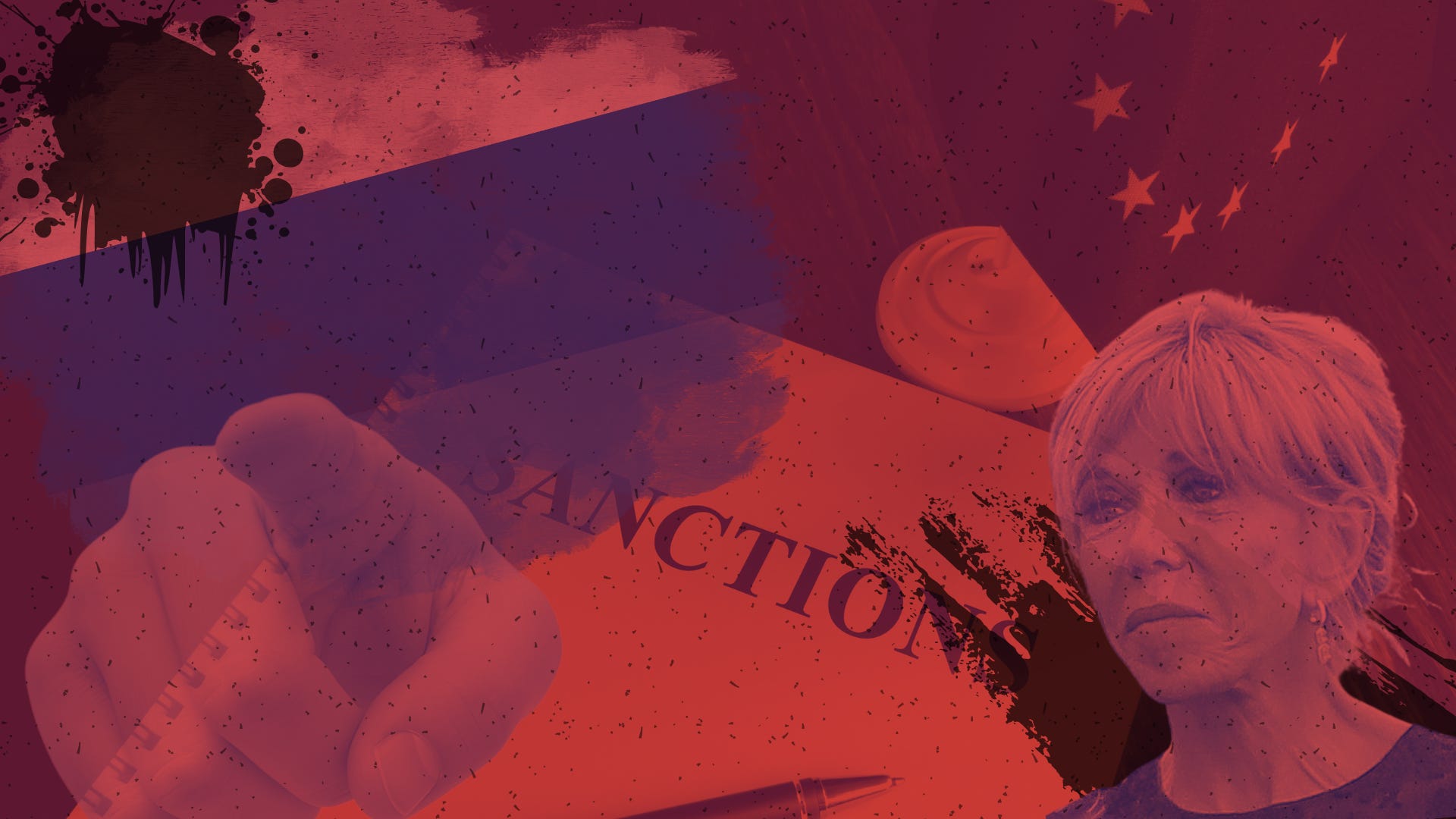
The EU has sanctioned 12 individuals and two entities linked to pro-Kremlin networks who have promoted pro-Russian propaganda.
Details:
One of the sanctioned individuals is former Swiss army officer Jacques Baud, who the Official Journal of the European Union said acted “as a mouthpiece” for Russia and “makes conspiracy theories.”
So far, Switzerland has deferred to the EU on sanctions related to Russia’s war in Ukraine, which apply to more than 2,600 individuals and entities.
The Swiss Secretariat for Economic Affairs said it was aware a Swiss citizen was on the sanctions list, but that Switzerland joined the EU sanctions related to the war, but not EU sanctions targeting Russia’s “hybrid threats, non-military actions, including disinformation and propaganda, cyberattacks, election interference enacted in October 2024.”
» U.S. Revokes Visas of Five Europeans Who Favor Stricter Content Moderation Rules
The State Department said it would deny visas to five Europeans accused of censoring “American viewpoints” online, sparking backlash among European officials.
The Targets:
The move targets former EU Commissioner Thierry Breton, who U.S. officials described as the “mastermind” behind the Digital Services Act, a law that enables the EU to impose multi-million-euro fines on large online platforms that fail to curb disinformation and hate speech.
Imran Ahmed, head of the Centre for Countering Digital Hate, faces immediate deportation after he was identified as a “key collaborator with the Biden Administration’s effort to weaponize the government against U.S. citizens.”
Clare Medford of the Global Disinformation Index was also identified and accused of using taxpayer money to “exhort censorship and blacklisting of American speech and press.”
Two members of the Berlin-based nonprofit Hate Aid are also subject to visa bans.
The Response:
The European Commission condemned the move and requested “clarifications” from the U.S., saying, “If needed, we will respond swiftly and decisively to defend our regulatory autonomy against unjustified measures.”
Vice President JD Vance has been a frequent critic of Europe’s digital rules that open the door to censorship and said earlier this month that the EU should not be “attacking American companies over garbage.”
Free Speech Recession 🌍
» Australia Expands Hate Speech Regulations to Target Antisemitism
The Prime Minister of Australia, Anthony Albanese, has announced a package of legislative reforms aimed at combatting antisemitism after the Bondi attack on a Hanukkah event.
New South Wales has moved faster, tightening protest and gun laws less than two weeks after the December 14 attack.
The Albanese Legislative Package Includes:
Creation of a new federal offence of “aggravated hate speech” aimed at people, including preachers, who incite violence, with higher penalties than existing provisions.
A new, narrower federal offence for “serious vilification based on race” or promoting racial supremacy, sitting alongside existing racial vilification laws.
Making “hate” an explicit aggravating factor in sentencing for online threats and harassment, intended to capture racially or religiously motivated abuse on digital platforms.
A regime to identify organisations whose leaders engage in hate speech, potentially exposing them to sanctions or loss of funding
Expanding the authority of the Home Affairs Minister, who oversees federal police and border control agencies, to reject or cancel visas for those who spread hate and division in Australia, or would do so if they entered the country.
The NSW Legislative Package empowers police to impose a blanket ban on public gatherings in designated areas for up to three months after a terrorism incident, with extensions available in two‑week increments.
» Uganda Bans Live Broadcasts of Riots Ahead of Presidential Election
On January 5, Uganda’s Ministry of Information Communication and Technology announced a ban on live broadcasting of riots, “unlawful processions,” and other violent incidents ahead of the January 15 presidential election, citing concerns about escalating tensions and spreading panic.
The ministry also prohibited the dissemination of content deemed “inciting, hateful, or violent.”
Background:
President Yoweri Museveni is seeking to extend his 40-year rule in the upcoming election, facing Robert Kyagulanyi Ssentamu, also known as Bobi Wine, who ran in the most recent 2021 election.
Over 400 people have been arrested across the country at rallies in support of Wine’s party, The National Unity Platform, according to international human rights group Amnesty International, and some attendees reported being beaten and tortured.
More than 50 people were killed during security force crackdowns before the 2021 election, after Wine’s supporters accused Museveni of stealing the election, which he denied.
» Venezuela Issued 90-Day Order to Hunt Supporters of US Military Operation, Journalists Arrested
After the U.S. military operation to arrest and capture Nicolas Maduro, the Venezuelan government issued a 90-day state of emergency and ordered police to “immediately begin the national search and capture of everyone involved in the promotion or support for the armed attack by the United States.”
Details:
Members of The Colectivos, a paramilitary militia that supports Maduro, have been searching phones and cars for any evidence of people backing the U.S. military operation in Caracas while wearing masks and armed with Kalashnikovs, a type of assault rifle.
14 journalists have already been arrested.
» Iranian President Directs Security Forces to Refrain from Target Protesters After Violence Draws International Attention
Masoud Pezeshkian, President of Iran, ordered that security measures not be taken against demonstrators amid economic protests across the country, distinguishing between peaceful protesters and “rioters.”
Details:
At least 35 people have been killed and more than 1,200 detained during nine days of protests focused on economic grievance, soaring inflation, and the collapse of Iranian currency.
U.S. President Donald Trump warned Iran against violently suppressing protesters, claiming the U.S. is “locked and loaded” if peaceful demonstrators are attacked.
Israel’s President Benjamin Netanyahu told the country’s cabinet, “We stand in solidarity with the struggle of the Iranian people and their aspirations for freedom, liberty, and justice.”
Iran’s military chief, General Amir Hatami, warned the country would not allow itself to be threatened by outside powers.
Ashley Haek is a communications coordinator and research assistant at The Future of Free Speech.
Ashkhen Kazaryan is a Senior Legal Fellow at The Future of Free Speech, where she leads initiatives to protect free expression and shape policies that uphold the First Amendment in the digital age.