



This Week at a Glance 🔎
—🇺🇲 Border Patrol Kills Nurse Recording ICE Raid
—🇪🇺 EU Determines WhatsApp Subject to DSA Regulation
—🇧🇾 Radio Operators in Belarus Face Death Penalty
—🇧🇮 Burundi Journalists Sentenced to Prison
—🇰🇿 Belgian Football Fans Jailed in Kazakhstan for Borat Outfits
First of All 🇺🇲
» U.S. Border Patrol Kills Minneapolis Nurse Who Was Recording ICE Raid
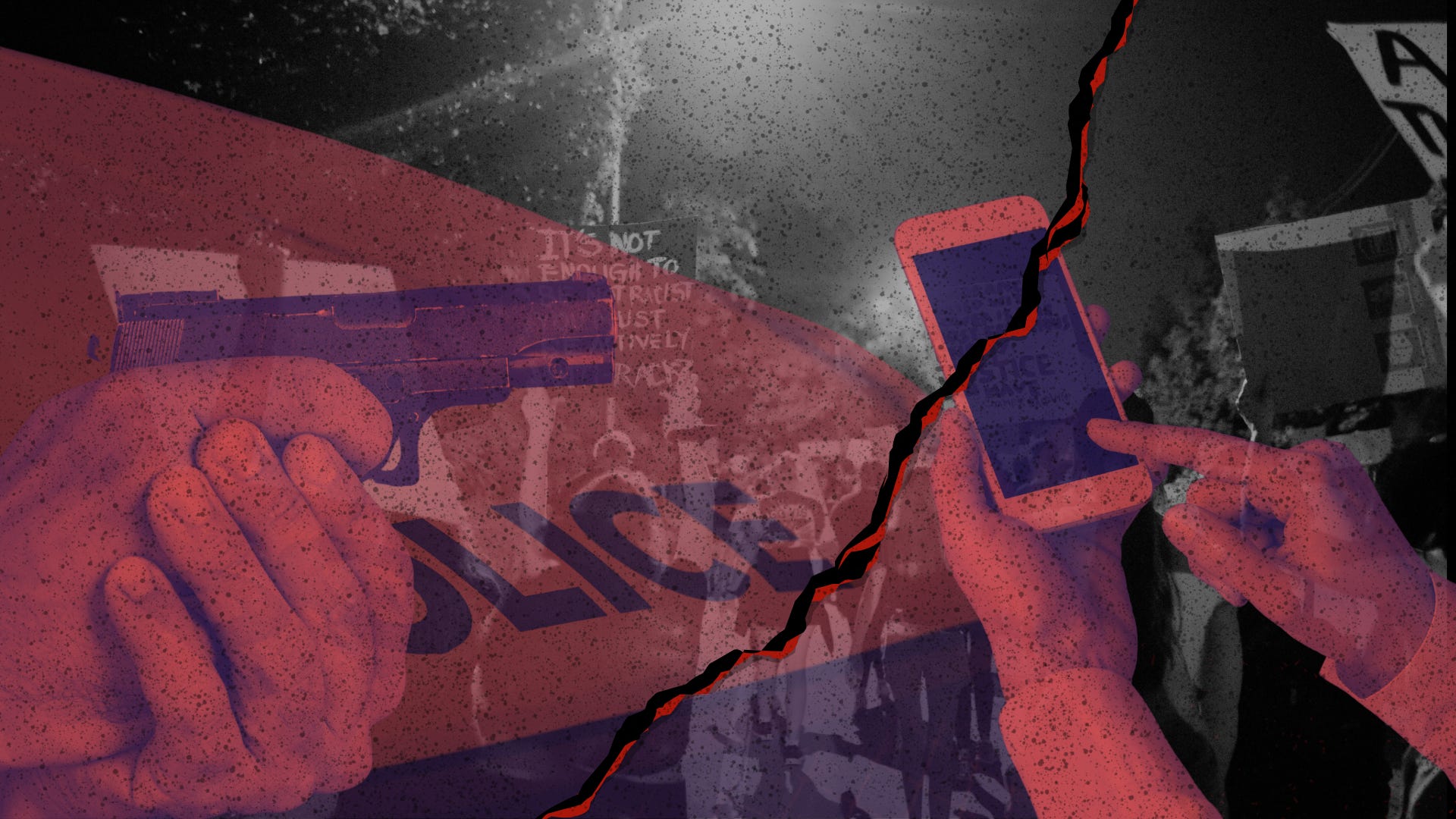
On January 24, border patrol agents shot and killed Alex Pretti, a 37-year-old Veterans Affairs ICU nurse, while he was recording an immigration enforcement operation in Minneapolis. This was the second fatal shooting of a U.S. Citizen by federal agents in Minneapolis this month.
Details:
Verified videos appear to show Pretti holding a phone, directing traffic, and attempting to help a woman whom a federal agent had pushed to the ground.
He was then pepper-sprayed and wrestled to the ground by multiple agents before being shot ten times in less than five seconds.
Official Response vs. Video Evidence:
Secretary Kristi Noem claimed Pretti “approached” officers “brandishing” a 9mm handgun and “arrived at the scene to inflict maximum damage on individuals and to kill law enforcement.”
This statement came as video evidence posted to social media appeared to show another agent removing the gun from Pretti’s waistband and stepping away before shots were fired.
Minneapolis Police Chief Brian O’Hara stated Pretti was a lawful gun owner with a permit to carry, had no criminal record, and appeared to be “exercising his First Amendment rights to record law enforcement activity.”
As of January 28, the two agents who shot at Pretti have been placed on administrative leave.
Our Take: “Within hours of the killing of Alex Pretti [ . . . ] top officials attempted to shape the narrative,” Jacob Mchangama wrote at Persuasion. “As bystander footage spread across social media, the official narrative began to collapse. [ . . . ] This is what a free society should aim for: not a perfect public sphere without falsehoods (which has never existed), but a public sphere with enough openness, transparency, and decentralized checking power to ensure that lies—especially from the top—cannot become the permanent record.”
» FBI to Investigate Minneapolis Protestors’ Alleged Use of Signal Chats
On Monday, FBI Director Kash Patel announced the launch of a criminal investigation into encrypted Signal group chats used by Minneapolis activists, after claims circulated by far-right online personality Cam Higby that he had “infiltrated” the chats and uncovered efforts to track federal immigration agents.
Background:
Higby posted screenshots on X purporting to show Minneapolis anti-ICE organizers using Signal, the encrypted messaging app, to share sightings, vehicle descriptions, and license plates of possible ICE vehicles. His posts framed the activity as an effort to obstruct or endanger federal agents.
Higby promoted these claims on the podcast of right-wing media figure Benny Johnson, calling for federal action.
FBI Director Patel appeared on the same show and claimed the FBI had opened an investigation “as soon as” Higby made his social media posts.
While stressing that the FBI was not targeting peaceful protest, Patel argued, “You cannot create a scenario that illegally entraps and puts law enforcement in harm’s way.”
Free Speech Concerns: Kevin Goldberg, Vice President of the Freedom Forum, told The Guardian that, based on the publicly shared material, he saw nothing obviously illegal and warned that observing and alerting others to potential dangers is generally protected speech. He cited Supreme Court precedent recognizing a right to organize privately, absent criminal conduct.
» FCC Says Late Night Talk Shows Not Exempt from Equal Time Rule
Last week, the Federal Communications Commission said that late-night and daytime television talk shows interviewing political candidates must comply with the federal “equal time” rule, warning networks not to rely on a 2006 FCC Media Bureau decision that treated such interviews as exempt “bona fide news” content.
Background:
For nearly two decades, broadcasters have leaned on a 2006 exemption granted to The Tonight Show to argue that candidate interviews on entertainment programs qualify as genuine news interviews and therefore fall outside equal-time requirements.
In a public notice, the FCC’s Media Bureau said it has seen no evidence that any current late-night or daytime talk show interview would qualify for that exemption and urged stations seeking certainty to file for a declaratory ruling.
The rules do not apply to so-called bona fide news programs and are typically in effect 90 days before a political candidate’s nomination via convention or caucus.
In September, FCC Chairman Brendon Carr said the FCC should consider reviewing whether “The View” runs afoul of equal time commission rules when covering rival political candidates.
After pressuring broadcasters to take Jimmy Kimmel’s show off the air, Carr faced bipartisan criticism. (See our response from Ashkhen Kazaryan here).
Democratic FCC Commissioner Anna Gomez criticized the recent guidance as an escalation in the FCC’s “campaign to censor and control speech,” adding, “The First Amendment does not yield to government intimidation. Broadcasters should not feel pressured to water down, sanitize, or avoid critical coverage out of fear of regulatory retaliation.”
The Digital Age 🤖
» Lawsuit Against ‘Addictive’ Social Media Platforms Proceeds, TikTok and Snapchat Settle
A lawsuit that accuses social media platforms of being addictive and harmful to children has proceeded to trial.
While Snapchat and TikTok reached a settlement with the 19-year-old plaintiff, the trial will continue for Meta and YouTube.
The Case:
The plaintiff, identified as “KGM,” claims that social media use from a young age caused her to be addicted to the technology, leading to depression and suicidal thoughts.
Their lawsuit alleges that the addiction and mental illness suffered were caused by design choices on behalf of companies that sought to make their platforms frequented by children to boost profit.
If the Los Angeles County Superior Court agrees, the ruling could sidestep the companies’ protection from liability for material posted by users on their platforms, as enshrined in Section 230 of the Communications Decency Act.
Industry Response:
Spokespersons from Meta and Google, YouTube’s parent company, have strongly disputed the allegations, citing safeguards they have implemented for children over the years.
“Recently, a number of lawsuits have attempted to place the blame for teen mental health struggles squarely on social media companies,” said a blog post from Meta, “But this oversimplifies a serious issue.”
The Bigger Picture:
The case marks the beginning of a slate of lawsuits aimed at holding social media companies accountable for children’s mental well-being.
In June, a federal trial in Oakland, California, will involve school districts suing platforms over harms to children.
More than 40 state attorneys general have filed lawsuits against Meta, claiming its Instagram and Facebook features addict children to its platforms.
TikTok also faces similar lawsuits in over a dozen states.
» Report Shows Chinese Censorship of Mongolian Language and Content
A report from the Southern Mongolian Human Rights Information Center revealed a systematic campaign in China that uses surveillance, intimidation, platform shutdowns, and content takedowns to silence Mongolian language, music, and culture online.
Background:
The data show an escalating crackdown on Mongolian-language internet use following a 2020 policy that replaced Mongolian with Mandarin Chinese in all subjects in schools across China’s Inner Mongolia Autonomous Region.
The policy sparked protests across the region and led to a swift suppression that left 8,000-10,000 Mongolians in custody.
Online Crackdown:
Nearly 89% of the 169 cultural websites written in Mongolian have been shut down, converted to Mandarin-only access, or stripped of Mongolian-related content, including discussions of Chinggis Khan.
Language-specific messaging apps designed to support Mongolian script have been restricted and shut down, including Bainuu, which had at least 400,000 users.
Mongolian music has been scrubbed from music apps.
Pressure on Activists:
Activists and educators who posted about the issue online have been arrested, as well as undergone forced “re-education” and “confessions.”
The Brussels Effect: Europe and Beyond 🇪🇺
» EU Rules WhatsApp is Subject to DSA Requirements
The EU has designated WhatsApp, Meta’s messaging app, as a Very Large Online Platform under the Digital Services Act.
WhatsApp joins the ranks of Facebook, Instagram, X, and TikTok and is therefore subject to the strictest set of Europe’s online safety rules.
Details:
The decision focuses on WhatsApp Channels, where administrators can broadcast announcements to groups in the feed, and private messaging is explicitly excluded.
The EU’s threshold for very large online platforms is set at 45 million users in the continent, which WhatsApp surpassed in August, reporting approximately 51.7 million users.
Meta has been given four months to assess and mitigate systemic risks on the platform, including the spread of illegal content and threats to civic discourse, elections, fundamental rights, or health.
If it fails to address these systemic risks to users, it could face fines of up to 6% of global annual turnover under the DSA.
Our Take: The DSA’s systemic-risk obligations ask platforms to navigate a set of ill-defined and sometimes conflicting interests. So far, the European Commission has been cautious about sanctions that would directly restrict speech. But the risk of misapplication—through jawboning, enforcement overreach, or unintended self-censorship—is real and past practice has already shown some worrying signs. As DSA enforcement ramps up, free-speech advocates should watch these unprecedented provisions closely. — Jordi Calvet-Bademunt
» EU Launches Inquiry Into X Over AI Images
The European Commission has launched a formal investigation into X under the Digital Services Act, focused on the platform’s AI chatbot, Grok, and its creation of sexually explicit imagery.
Background:
The formal inquiry was launched on January 26 and will focus on whether the company properly assessed and mitigated risks in relation to Grok’s deployment on X, including those related to the sharing of illegal content such as manipulated sexually explicit images.
After backlash erupted over the images, the company first restricted access to the tool to paid subscribers and subsequently announced that it had introduced measures to prevent Grok from allowing image editing in such contexts, including for paid customers.
A commission official said the measures did not address broader concerns about Grok and that the company lacked “effective mitigating measures.”
The investigation follows a separate probe from the UK’s internet regulator, OfCom, which announced its investigation in early January.
The Commission has also extended an inquiry into X’s algorithmic recommendation system, after the company announced it would move to a Grok-based model for filtering information and content for users.
Free Speech Recession 🌍
» Radio Operators in Belarus Face Death Penalty
The Belarusian government has detained three radio operators who face the death penalty after being accused of “intercepting state secrets.”
Details:
The operators are among seven individuals detained who are allegedly associated with the Belarusian Federation of Radioamateurs and Radiosportsmen (BFRR), an amateur radio nonprofit club.
On state TV, Belarusian officials claimed the men committed “espionage” and “treason.”
Authorities reportedly seized more than 500 pieces of radio equipment and were accused on state TV of using the technology to spy on the movement of government planes, though no evidence was provided to support these claims.
» Burundi Journalist Sentenced to Four Years in Prison
Sandra Muhoza, a Burundian journalist, has been sentenced to four years in prison for “undermining the territorial integrity of the nation and racial hatred.”
Details:
Muhoza works for the online outlet La Nova Burundi and has been in detention since April 2024.
The charges concern information Muhoza shared in a private WhatsApp group about alleged arms distribution by the government.
She was originally convicted in December 2024 on the same charges, but an appellate court found the trial court lacked jurisdiction and overturned the conviction.
The case was remanded to a Ngozi court, which sentenced her to four years in prison, 27 months more than her original sentence, and ordered her to pay a fine of 200,000 Burundian francs, the equivalent of $67.
» Three Belgian Football Fans Jailed in Kazakhstan
Three Belgian football fans have been sentenced by a Kazakh court to short jail terms for wearing mankini swimsuits that mimicked the film character Borat.
Details:
The fans were detained during the Champions League match between Kairat Almaty and Club Brugge and sentenced to days of administrative detention for disrupting public order.
The men wore green swimsuits to the game, while chanting “Borat is ours” in Dutch.
Borat, the character, was a fictional Kazakh journalist who appeared in a satirical TV show and was later adapted into a 2006 film.
The movie was initially banned in Kazakhstan, though attitudes changed when the country’s then-foreign minister said he was “grateful” for the character, which was drawing tourists.
Ashley Haek is a communications coordinator and research assistant at The Future of Free Speech.
Justin Hayes is the Director of Communications at The Future of Free Speech and the Managing Editor of The Bedrock Principle.
Jordi Calvet-Bademunt is a Senior Research Fellow at The Future of Free Speech.