


This Week at a Glance 🔎
— 🇺🇲 FCC Chair Threatens Broadcast Licenses Over ‘Fake News’ on Iran War
— 🇦🇺 20% of Australian Minors Continue to Use Social Media After Ban
— 🇷🇺 Russia Tests Internet Shutdown Systems in Moscow
— 🇬🇧 UK Urges Social Media Platforms to Strengthen Age-Verification
— 🇬🇪 Georgia Legislative Package Targets Foreign Cooperation and Public Criticism
First of All 🇺🇲
» FCC Chair Threatens Broadcast Licenses Over ‘Fake News’ on Iran War
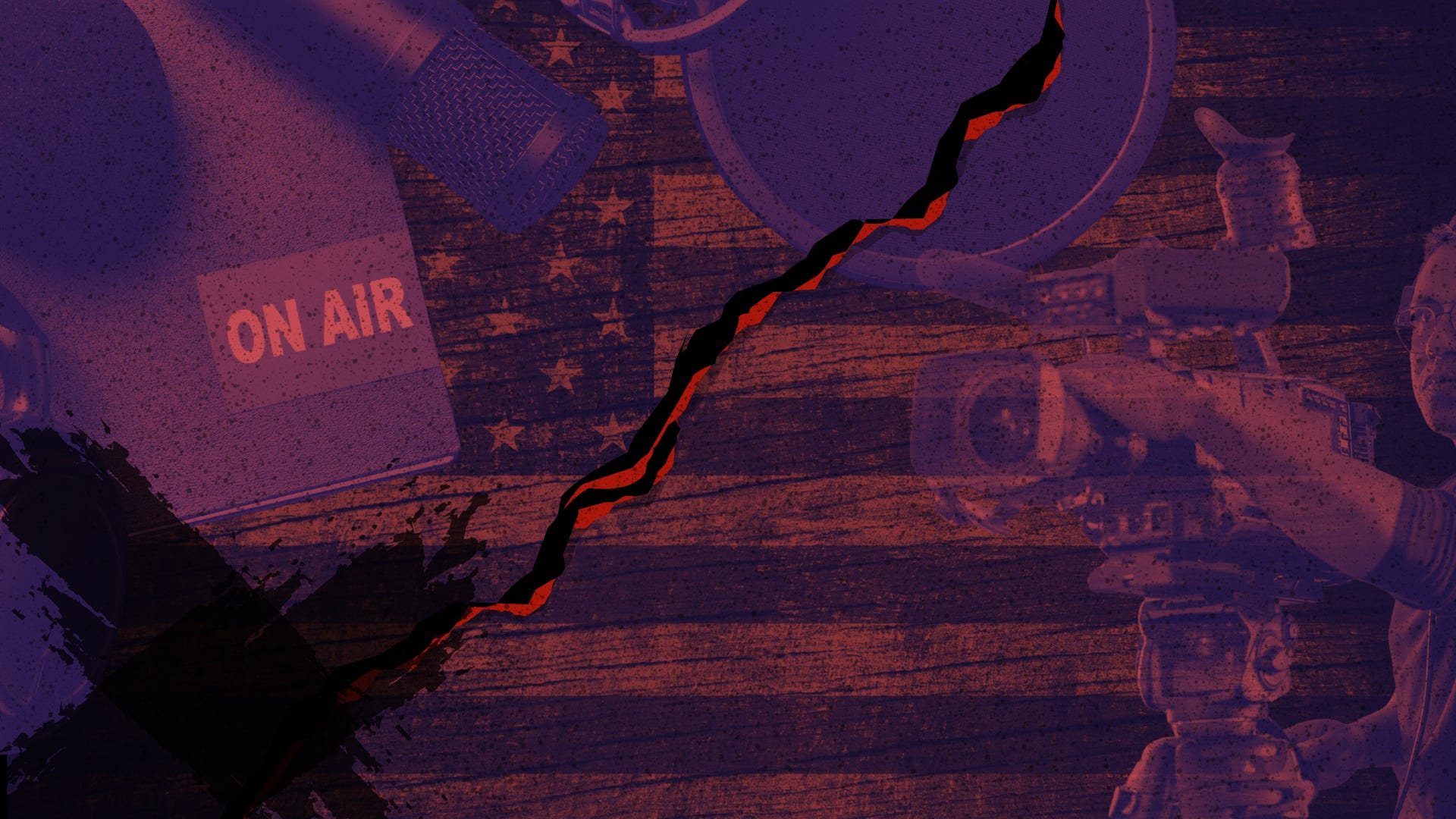
Federal Communications Commission Chairman Brendan Carr has warned broadcasters that their licenses could be revoked for “running hoaxes and news distortions” about the Iran war, prompted by President Trump’s criticism of media coverage of the conflict.
Details:
In a post on X, Carr wrote that “broadcasters that are running hoaxes and news distortions— also known as fake news— have a chance now to correct course before their license renewals.”
Carr posted the message in response to a post from President Trump that criticized media coverage of an attack on U.S. air tankers in Saudi Arabia.
“None were destroyed, or close to that, as the Fake News said in headlines,” Trump wrote, specifically calling out two newspaper outlets: The Wall Street Journal and the New York Times (outlets that are not regulated by the FCC).
In another Truth Social post, Trump posted: “The story was knowingly FAKE and, in a certain way, you can say that those Media Outlets that generated it should be brought up on Charges for TREASON for the dissemination of false information!”
In an interview with CBS News, Carr said that anyone “that doesn’t like, you know, the contours of the licenses” can turn to cable or streaming services, but that “there is something unique about being on the broadcast airwaves.”
Carr added that while there was no imminent effort to reassess broadcast licenses, ongoing investigations, such as FCC probes into ABC over the equal time rule and into Comcast and its subsidiary, NBC Universal, over diversity equity, and inclusion policies, could serve as a reason to demand early license renewal.
Commissioner Anna Gomez, the FCC’s sole Democratic member, reacted to Carr’s post and said, “Such threats violate the First Amendment and will go nowhere. Broadcasters should continue covering the news, fiercely and independently, without fear of government pressure.”
Our Take: “It’s important to remember that the government does not need to revoke a single license to change what gets reported, how a story gets framed, or whether a producer decides a particular piece is worth the headache. They just need to flex their muscles and point the editorial winds in the direction they want them to blow,” wrote Ashkhen Kazaryan at The Bedrock Principle. “That is why the Supreme Court, case after case, has held that government pressure designed to alter private speech raises the same constitutional concerns as outright censorship.”
» Photographers Banned from Pentagon for ‘Unflattering’ Photos of Hegseth
After Department of Defense Secretary Pete Hegseth reportedly expressed displeasure with how he appeared in independent press photos of a March 2 press conference regarding military strikes in Iran, the Pentagon announced it would ban photographers from its briefing room.
Details:
The photographs were published by wire services, including the Associated Press, Reuters, and Getty Images.
Photographers were subsequently barred from the March 4 and March 10 briefings.
Kingsley Wilson, a Pentagon spokesperson, defended the restriction and suggested that outlets apply for credentials if the lack of access “hurts their business model.”
Wilson also said the move was to use the room “effectively,” and that the public can instead use photos released by the Defense Department’s own staff photographers.
It is unclear whether the ban on photographers is a permanent policy change or temporary and tied specifically to briefings related to Iran.
» DOJ Moves to Drop Charges Against American Flag-Burner
The Justice Department has dismissed charges against veteran Jan “Jay” Carey, who had set an American flag on fire across the street from the White House on the same day President Donald Trump signed an executive order directing Attorney General Pam Bondi to “vigorously prosecute” people who burn the American flag.
Background:
Carey pled not guilty to two misdemeanors brought by the office of Jeanine Pirro, U.S. attorney for the District of Columbia: igniting a fire in an undesignated area and lighting a fire causing damage to property or park resources.
On the day he was arrested, Carey said in a social media video of him burning the flag that he was protesting Trump’s policies.
The Executive Order:
In 1989, the Supreme Court ruled that flag-burning is protected under the Constitution.
President Trump’s executive order does not make burning the American flag a crime or assess a penalty for it, but argues that doing so is “likely to incite imminent lawless action.”
It also gives the Attorney General the opportunity to “pursue litigation to clarify the scope of First Amendment exceptions in this area.”
The Justice Department filed to dismiss the charges on March 13, days before the March 16 deadline in the case.
» Ohio Senate Passes Debated Antisemitism Bill to Target Campus Speech
Ohio’s Senate has passed SB 87, a bill aimed at preventing anti-Semitism on college campuses, that codifies the contested International Holocaust Remembrance Alliance (IHRA)’s definition of antisemitism and expands the legal definition of ethnic intimidation.
Details:
The IHRA’s definition outlines eleven antisemitic scenarios, which range from denying the Holocaust to conflating modern-day Israel with Nazism.
Ohio Senate Minority Leader Nickie Antonio (D., Lakewood) and state Sens. Hicks-Hudson, Catherine Ingram (D., Cincinnati), and Kent Smith (D., Euclid) voted against the bill, arguing the language must be refined to ensure students and faculty can discuss world events, such as conflicts involving Israel.
The bill has gone to the House for consideration.
» UF College Republicans Sue University Over Chapter Deactivation
The University of Florida College Republicans has filed a lawsuit against the university after it deactivated the campus chapter following a photo of a student performing a Nazi salute.
Context:
The issue stems from an X post of a screenshot showing students performing a Nazi salute in a chat room on Guilded, a platform for gaming communities that has since shut down.
UF announced on X that it would deactivate the chapter at the request of the Florida Federation of College Republicans (FFCR) while it reorganizes under “new student leadership” for reinstatement.
In its statement, UF said, “The university also supports the rights of organizations, such as FFCR, to take decisive action in addressing conduct that is antithetical to its principles.”
The Lawsuit:
The lawsuit claimed, “UF’s action was taken because of opposition to or disapproval of the perceived viewpoint.”
It also claims the university denied the chapter due process and did not identify a specific policy to warrant the deactivation.
It requests that a judge reinstate the chapter, alleging that the university retaliated against speech protected by the First Amendment.
Because UF is a public university, the case raises core First Amendment questions about when schools can penalize student organizations for controversial or offensive speech.
The Digital Age 🤖
» One-Fifth of Australian Minors Continue to Use TikTok, Snapchat After Social Media Ban
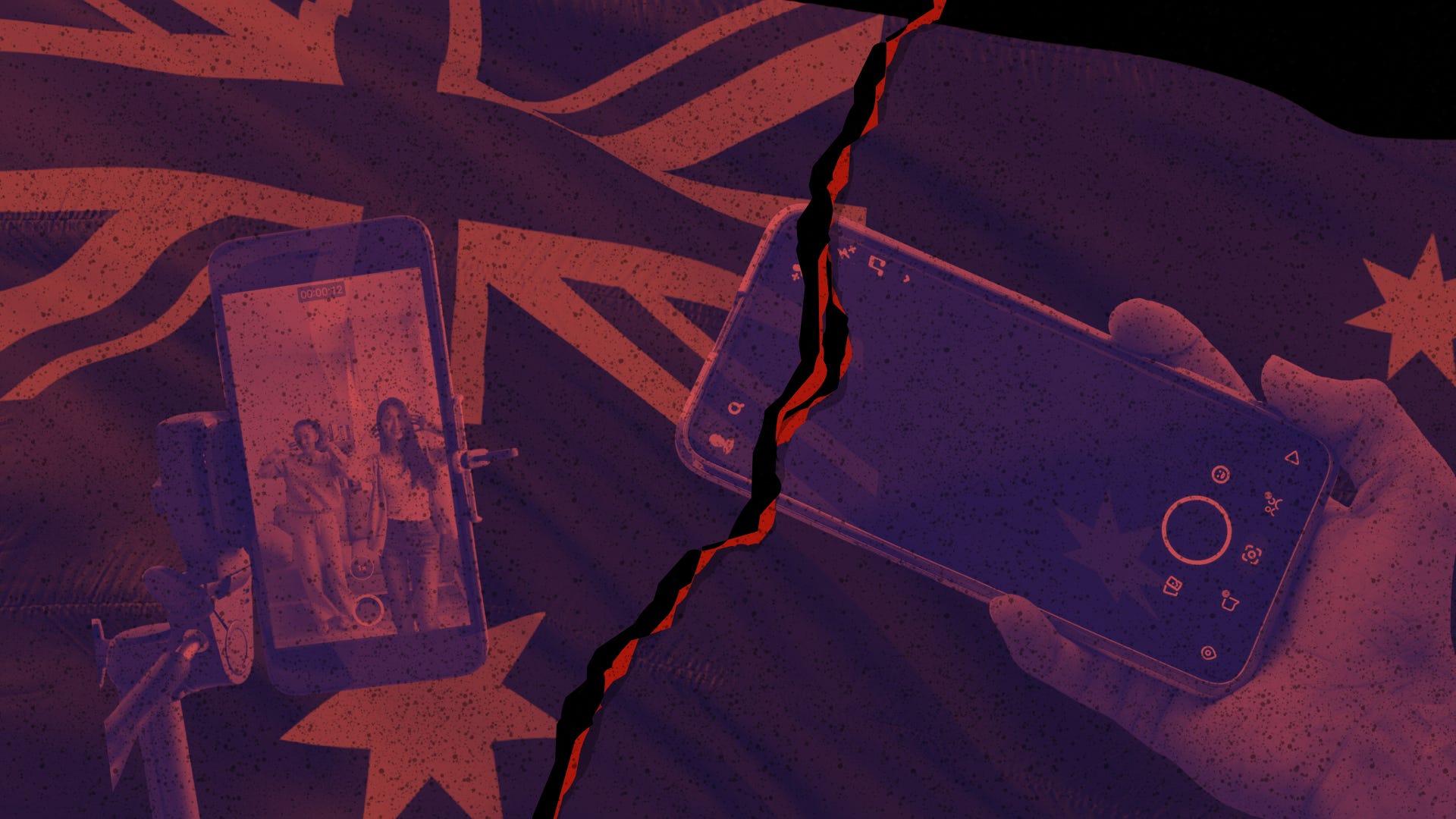
Two months after Australia banned social media from allowing minors, one-fifth of Australian teenagers under 16 were still using platforms.
Context:
The ban, included in a previous Free Flow, went into effect in December and requires platforms to block minors under 16 from accessing or using their services, or face fines of up to $49.5 million AUD ($35 million USD).
The world is carefully tracking the impact of the ban as governments around the world are considering or advancing similar measures to keep minors off social media.
The Aftermath:
More than 20% of Australians aged 13-15 use TikTok and Snapchat, even with the bans in place.
Data also showed that the number of 13-to-15-year-olds using Snapchat in Australia fell by 13.8 percentage points between November and February, although 20.3% of users still fall within that age range.
A spokesperson for the eSafety Commissioner, Australia’s internet regulator, said the office was aware of reports of minors’ continued social media use and is “actively engaging with platforms and their age assurance providers,” while continuing to monitor for breaches of the law.
The spokesperson added that the office is “actively drawing on a range of insights to assess compliance.”
» Hawaii Proposes Bills Seeking to Restrict Minors’ Access to Social Media
Bills targeting minors’ use of phones at school, social media access, and interactions with artificial intelligence are moving through Hawaii’s legislature.
Details:
SB 2761:
Seeks to bar children under 16 from creating or keeping social media accounts, requiring platforms to verify users’ ages and remove underage accounts.
The bill has passed out of the Senate Committees on Commerce and Consumer Protection and Judiciary.
HB 1559:
Would prohibit students in public schools from using “telecommunication devices” during the school day, including at lunch and recess, with limited exceptions for emergencies.
Schools would be able to confiscate phones and release them only to a parent or guardian, and unclaimed devices would be forfeited after three months.
HB 1782:
Would regulate conversational and companion-style AI systems, banning features that encourage emotional dependency, stimulate romantic relationships, or present the AI as human or “sentient.”
AI providers would be required to disclose when minors interact with AI, limit data collection, and impose penalties for violations.
» Russia Expands Internet Shutdown Tests in Moscow
Russia shut off mobile internet in downtown Moscow in what the government insists was a necessary step to protect Russians from attacks by Ukrainian drones, which can use local cell phone towers for navigation.
However, analysts argue that the shutdowns are a test of a nationwide system that Moscow has been building to limit information and connectivity during unrest.
Background:
Russia is reportedly testing a system used in Iran during nationwide anti-government protests earlier this year, which allowed authorities to shut down the internet while regime insiders used “white SIM cards” to access the web.
Russia has already established a “white-list” of government-approved websites that remain accessible during shut-offs, as mentioned in a previous Free Flow.
They’ve also targeted messaging apps such as Telegram and WhatsApp while promoting a state-backed messaging platform, Max, as included in a previous Free Flow.
In February, Russia’s parliament passed a new law requiring telecommunications companies to shut off data access upon request from the Federal Security Service.
The Shut-Offs:
The data outages have extended to dozens of regions, including places far from zones impacted by drones.
Pharmacies have had to close in some regions as their medicine-tracking system went offline; children with diabetic sensors cannot transmit glucose-level alerts to parents; and people are unable to book appointments, order medication, or use online banking services.
The Brussels Effect: Europe and Beyond 🇪🇺
» UK Urges Social Media Platforms to Strengthen Age-Verification
The UK’s Information Commissioner’s Office (ICO) and internet regulator, Ofcom, have sent letters to major social media companies urging them to enforce stricter protection for children, including stronger age verification measures, on their platforms after lawmakers rejected a blanket ban for under-16s.
Context:
Earlier this month, UK lawmakers voted down a proposal in a piece of child welfare legislation that would have banned social media for children under 16.
The decision comes as countries across Europe, including Spain, France, and Denmark, consider plans to implement similar bans after Australia became the first country to prohibit social media access to minors under 16.
The Letters:
The ICO published an open letter on March 12, including remarks from its CEO, Paul Arnold, calling on platforms to use “viable technologies” to identify children and prevent them from accessing content.
The ICO letter called on social media platforms to use facial age estimation, digital ID, or one-time photo matching to strengthen age verification.
Arnold said measures such as “self-declaration” can be “easily circumvented” and put “under-13s at risk by allowing their information to be collected and used unlawfully.”
Ofcom, among other demands, has also asked companies, including YouTube, TikTok, Facebook, Instagram, and Snapchat, to submit reports on what measures they have in place to keep children off their platforms by April 30.
Industry Response:
A Meta spokesperson told CNBC that it already uses AI systems to detect users’ age based on their activity and conduct facial age estimation, adding that it also has a separate teen account with built-in protections.
TikTok said that since January, it has rolled out enhanced technologies and specialist moderators across Europe to detect and remove accounts that belong to anyone under 13.
The company also uses facial age estimation, credit card authorization, or government-approved ID to confirm users’ ages.
Snapchat said it is investing and working on its safety efforts, adding that it strongly supports age-verification at the app-store level, “rather than patchwork checks by individual platforms.”
Free Speech Recession 🌍
» Georgia Adopts Legislative Package Restricting Foreign Cooperation and Public Criticism
On March 4, the Georgian parliament adopted a legislative package of amendments that expand state control over foreign funding, introduce criminal sanctions for cooperation with foreign entities or donors, and criminalize public criticism of the government’s legitimacy.
The package includes amendments to the Law on Grants, the Law on Political Associations, the Criminal Code, and the Administrative Offenses Code.
Targeting Extremism:
The amendments have implemented an “extremism” provision against acts that “systematically” question the government’s legitimacy.
Violators of this provision could face up to three years in prison, while organizations could face heavy fines or even forced closures.
Restricting Foreign Funding:
The definition of what constitutes a “grant” that needs government approval has expanded to include technical and free-of-charge assistance and grants transferred from a foreign organization to its domestic branches.
The list of entities considered “grant recipients” has also expanded to include foreign-based organizations working on Georgia-related issues.
Violators can face fines, 300-500 hours of community service, or up to six years in prison under the new law, with harsher penalties in certain cases.
The legislation also applies retroactively, meaning unused grants that were received before the law’s enactment will require new government approval, and recipients will be barred from using the funds if permission is denied.
Restricting Foreign Cooperation:
Individuals who have worked in foreign-funded organizations will be prohibited from political party membership for eight years.
Penalties are also introduced for individuals who engage in “external lobbying,” with potential prison sentences reaching up to six years, and for businesses “publicly carrying out such political activity that is not related to its principal entrepreneurial activity.”
» Hungary Journalists Forcibly Removed While Covering Campaign Event
In the past week, four journalists from independent outlets have been forcibly forcibly removed or told to leave while reporting on public campaign events held in support of the ruling Fidesz party of Prime Minister Viktor Orbán.
The incidents occurred shortly before Hungary’s parliamentary election in April.
Incident 1:
On March 10, two journalists from the online news platform Telex were forcibly removed from a campaign event in the village of Csakbereny by the local mayor.
The journalists had planned to ask Zslot Semjén, the country’s deputy prime minister and the leader of the Christian Democratic People’s Party, questions.
When the pair entered the event, the mayor seized their camera, covered the lens, then physically pushed them toward the exit, grabbing one of them by the arm, and security guards prevented them from re-entering the venue.
The incident follows the hours-long detention of two Telex reporters in January 2026, who were waiting outside a film studio to question Orbán after being barred from asking questions at his yearly conference.
Incident 2:
Days later, on March 15, two journalists from HVG, an independent weekly, were interviewing participants at a pro-government rally in Budapest when one of them, Noémi Martini, was approached by an event organizer who demanded they stop their work and leave the area, alleging they were blocking the road.
Martini was surrounded and pushed by security guards until she left the main rally, though other journalists from other media outlets were permitted to report freely from the demonstration.
» Zimbabwe Issues Arrest Warrant Over Journalist’s Speech on Country’s Press Freedom Crisis
The Zimbabwe Republic Police’s Law and Order section has issued an arrest warrant against Blessed “Dhara” Mhlanga, digital editor and head of broadcasting of Alpha Media Holdings (AMH), following his remarks on media repression at the Geneva Summit for Human Rights and Democracy.
Details:
Mhlanga was one of the panelists in a presentation titled “Silenced for Reporting: Zimbabwe’s War on the Press,” where he argued that the government was targeting watchdog journalists in its legal system.
The Minister of Information, Publicity, and Broadcasting Services, Dr. Zhemu Soda, condemned his remarks, adding that the government has “put in place legal frameworks designed to protect our hard-won sovereignty from those who seek to undermine it through foreign platforms.”
Following the Minister’s statement, authorities issued an arrest warrant against Mhlanga for “willfully injuring the sovereignty and national interest of Zimbabwe by actively participating in meetings, communication or cooperation with foreign governments or their agents” under Section 22A of the Criminal Law Codification and Reform Act.
Mhlanga is also facing prosecution for charges of “transmitting data messages that incite violence or damage to property,” over a broadcast interview with Blessed Geza, a late war veteran and member of the ruling party Zanu PF, in which Geza criticized the government’s plans to extend the presidential term limits in its Constitution.
He was expected to appear in court on March 9 for the continuation of the trial, but his attorneys have told the court he is currently seeking medical treatment in South Africa.
Ashley Haek is a communications coordinator and research assistant at The Future of Free Speech.
Abigail Pope is a communications intern at The Future of Free Speech and a student at Vanderbilt University studying economics.