


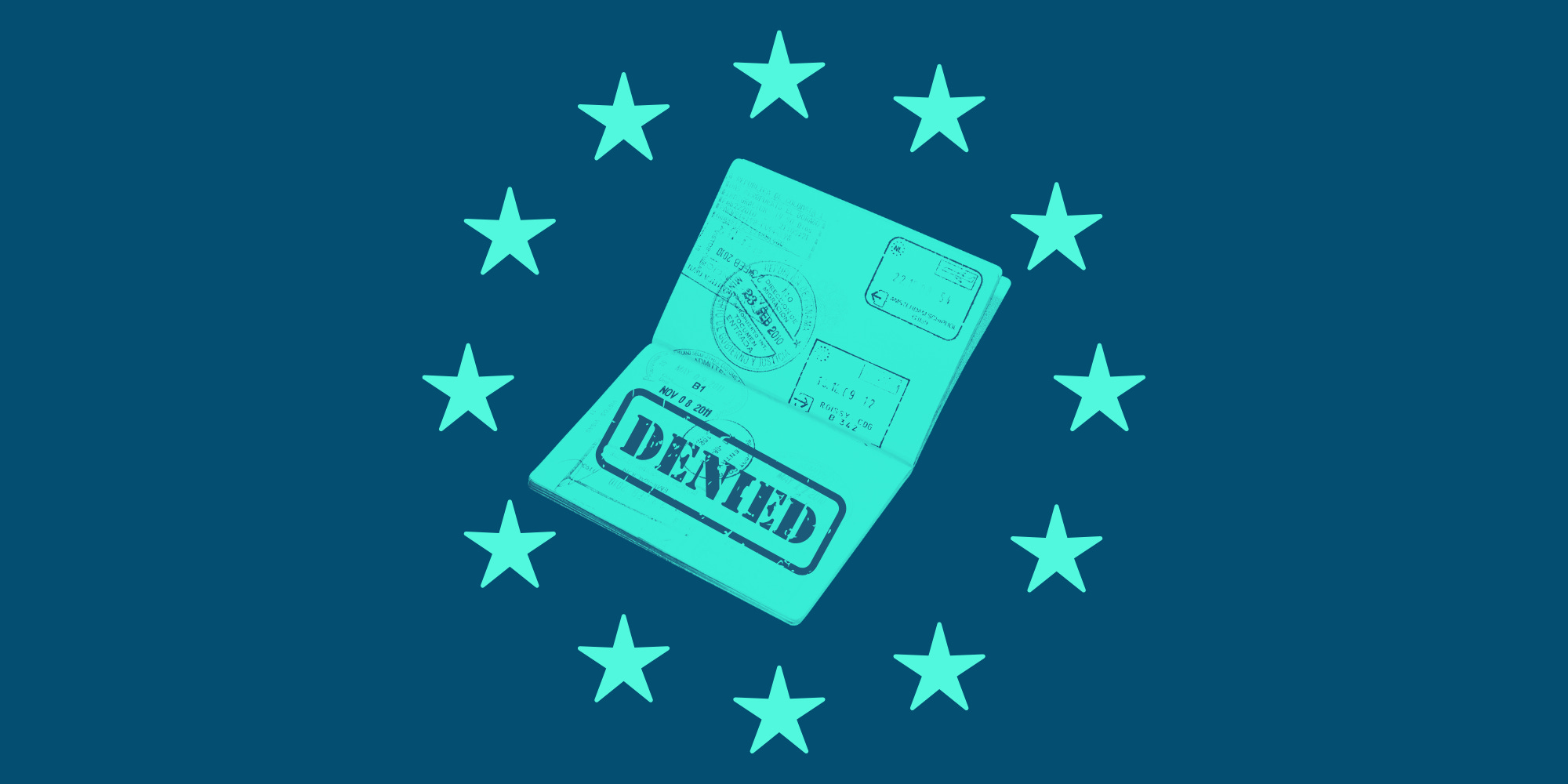
Imagine that all your financial assets are frozen and you are prohibited from entering or transiting multiple countries. This decision is not made in a court, but imposed by the executive, without prior judicial proceedings, without a right to be heard, and without any opportunity to defend yourself before the measures take effect.
The justification offered is that the objective is not to punish, but merely to change behaviour, based on the allegation that you engage “in the use of information manipulation and interference.” What reads like dystopian fiction or a practice associated with authoritarian systems has become reality in established liberal democracies.
In December 2025, the Council of the European Union amended its decision “concerning restrictive measures in view of Russia’s destabilising activities.” Besides extremely serious allegations such as sabotage, malicious cyber activities or facilitating acts of violence, other individuals are sanctioned on the basis of “planning, directing, engaging in, directly or indirectly, supporting or otherwise facilitating the use of coordinated manipulation and interference,” which includes “promoting pro-Russian propaganda and conspiracy theories on Russia’s invasion of Ukraine, as well as anti-Ukraine and anti-NATO narratives.”
The Council of the European Union maintains that “sanctions are not punitive and instead seek to bring about a change in the policy or conduct of those targeted, with a view to promoting the objectives of the EU’s Common Foreign and Security Policy.” On this logic, the existence of criminal behaviour is not strictly required. It is sufficient that a person or organization’s conduct is perceived as detrimental to the EU’s Common Foreign and Security Policy or that a change in the behaviour would be deemed beneficial. Without prior judicial proceedings, sanctioned individuals or organisations may be prohibited from entering or transiting the territory of the Union, and all of their economic resources may be frozen.
None of this is novel. Even when focused on serious offences, sanction regimes have long carried substantial human rights implications, precisely because they operate in the absence of ordinary judicial safeguards and due process guarantees.
From Preventive Measures to Discretionary Punishment
Although the Council presents sanctions as targeting, e.g., “individuals, such as terrorists or people responsible for human rights violations,” the category of potential targets has been subject to persistent scope creep.
Among the 59 individuals sanctioned as of the December 2025 amendment is Jacques Baud, a former colonel in the Swiss army and NATO head of department, living in Belgium. The decision alleges that he has appeared as “a regular guest on pro-Russian television and radio programmes” and “act[ed] as a mouthpiece for pro-Russian propaganda and [made] conspiracy theories, for example, accusing Ukraine of orchestrating its own invasion in order to join NATO.” On this basis, Baud is considered “responsible for, implementing or supporting actions or policies attributable to the Government of the Russian Federation which [would] undermine or threaten stability or security in a third country (Ukraine) by engaging in the use of information manipulation and interference.”
He is prohibited from entering or transitioning the member states of the European Union, which is particularly challenging since he already lives in the territory of the Union (Brussels, Belgium), and his assets shall be frozen. Member state authorities may only “authorise the release of certain frozen funds or economic resources” after determining that they are, inter alia, “necessary to satisfy the basic needs of the persons [...] and their dependent family members.”
Baud himself maintains that he has “systematically declined invitations” from media outlets such as Russia Today and has neither relations with nor received any money from Russia. In his words:
“In summary, I am being credited with statements I did not make, in a relationship with Russia that I do not have, for activities that are not even defined and that we do not even know are related! What is more, the activity I am being credited with as a propagandist is not punishable by any law!” (translated from German).
Regardless of whether the allegations attributed to Baud are accurate, the opinions at issue likely fall within the scope of the right to freedom of expression, as enshrined in Article 11 of the Charter of Fundamental Rights of the European Union.
Where concrete indications of unlawful conduct exist, a liberal democracy requires that such allegations be examined by independent courts before any punitive measures are imposed. The individual concerned must have the right to be heard and benefit from the presumption of innocence.
The separation of powers is not a formal nicety, but a foundational safeguard of the rule of law. By extending executive sanctions to speech and non-technical online conduct, the Council not only practically bypasses these foundational principles but also creates significant chilling effects on freedom of expression.
With the sanctions, human rights — including the right to freedom of expression — are subject to the condition that the executive does not deem the expressed speech detrimental to its common foreign and security policy interests. Such a condition enables arbitrary deprivations of fundamental rights by discretionary executive decisions. Consequently, these procedures should be recognized as fundamentally incompatible with the rule of law.
In its public submission on the European Democracy Shield, The Future of Free Speech warned against taking stronger measures against “disinformation” and emphasised that “Europe Cannot Protect Democracy by Distrusting Its Citizens.” Recalling John F. Kennedy’s warning that “a nation that is afraid to let its people judge the truth and falsehood in an open market is a nation that is afraid of its people,” it is precisely this erosion of confidence in citizens that facilitates the turn toward discretionary and increasingly authoritarian instruments, such as the recent sanction regimes.
It is therefore crucial to recall that “in the digital age, it’s impossible to effectively shield citizens from hostile propaganda and disinformation without compromising the egalitarian and liberal values of democracy.” Further pursuing this route is neither normatively desirable nor practically effective: it generates backfire effects, entrenches distrust, and ultimately amplifies the very dynamics it purports to counter.
If Europe is serious about strengthening democracy and upholding the rule of law, it must reverse course. This means upholding freedom of expression (including speech it deems detrimental to its foreign policy) and the principles of the rule of law while ceasing to be afraid of its people to “judge the truth and falsehood in an open market.”
Safeguarding democracy in the digital age requires resilience, not discretionary punishment of dissent. Europe cannot defend its constitutional order by subordinating fundamental rights to foreign-policy expediency.
Alexander Hohlfeld is an affiliate fellow at The Future of Free Speech and a digital policy researcher and consultant.