


This Week at a Glance 🔎
— 🇺🇸 Trump Seeks to Revive $475M Defamation Suit Against CNN
— 🇬🇧 White House Opposes UK Social Media Ban for Under-16s
— 🇨🇳 China Suppresses Tiananmen Square Anniversary Remembrance
— 🇩🇪 German Court Says Google Liable for AI Overviews
— 📱FCC Targets “Burner Phones”
First of All 🇺🇸
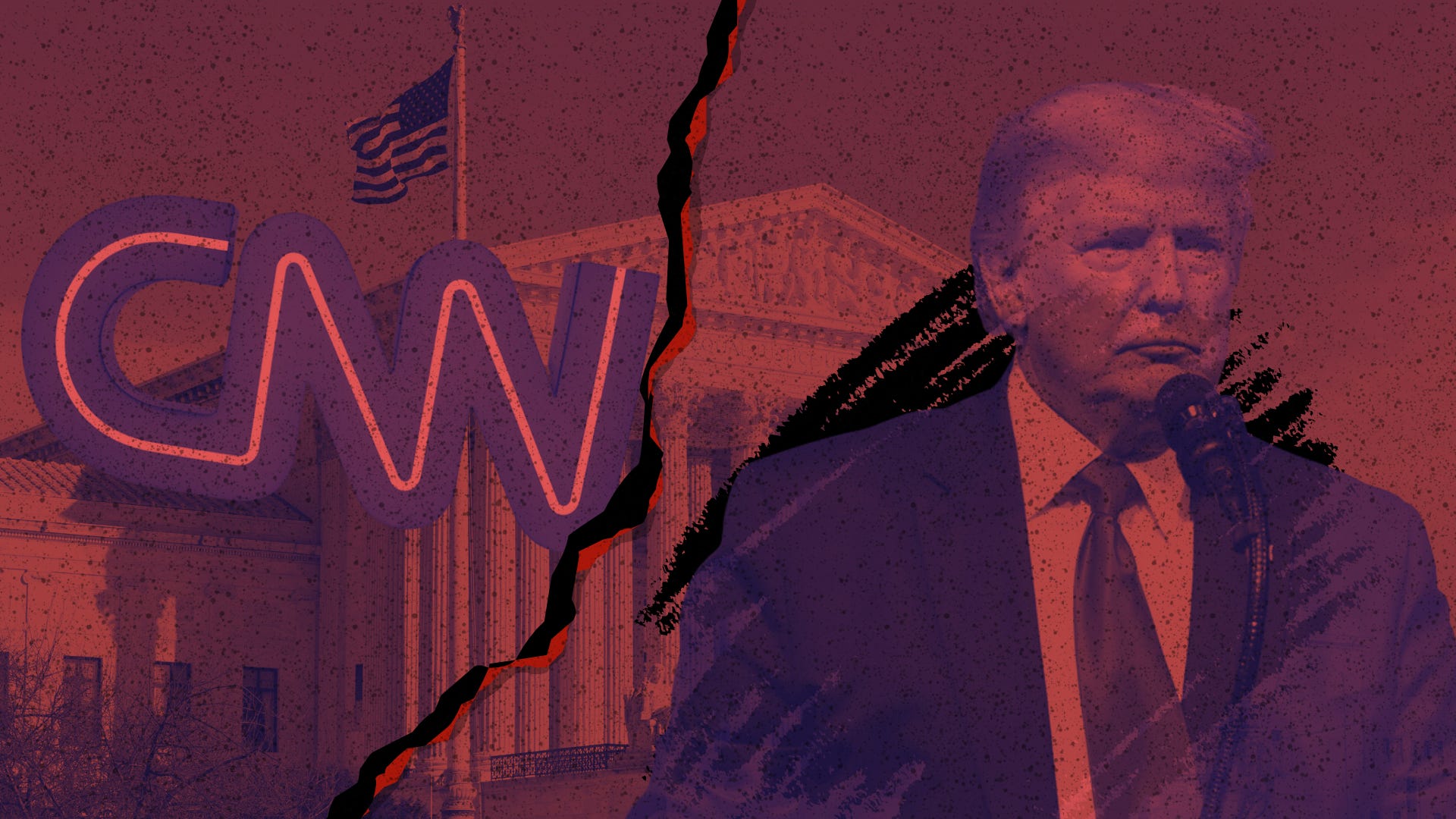
» Trump Tells Supreme Court He Will Seek to Revive $475 Million CNN Defamation Suit
President Donald Trump has reportedly told the U.S. Supreme Court that he plans to ask the Justices to revive his $475 million defamation lawsuit against CNN over the network’s use of the term “Big Lie” in reporting on his claim that the 2020 election was rigged against him.
Context:
Trump sued CNN in 2022, accusing the network of smearing him by frequently using “Big Lie” to describe his theory that Joe Biden’s 2020 victory was the result of mass voter fraud, and of harming his reputation by hosting guests who compared him to Adolf Hitler.
The case was dismissed in July 2023 by U.S. District Judge Raag Singhal, who said that while the network’s statements were “repugnant,” they were not “defamatory.”
“This case involves political speech of the highest order,” Singhal wrote, “The First Amendment has its fullest and most urgent application precisely to the conduct of campaigns for public office.”
The ruling was upheld by a three-judge federal appeals court panel in November 2025.
According to a request docketed by the Justices, Trump’s lawyers have now asked the Court for a 60-day extension to August 15 to file his petition for a review of the lower court’s dismissal of the case.
The filing indicated Trump also wants the Justices to weigh in on when a jury, rather than a judge, should decide whether an allegedly defamatory statement would be viewed by the public as opinion or fact.
» Press-Freedom Groups Demand Charges Be Dropped Against Journalists Arrested at Newark ICE Protests
More than a dozen national and statewide press organizations have demanded that authorities drop charges against at least three journalists arrested while covering protests outside Newark, New Jersey’s Delaney Hall immigration detention center.
Details:
Protests at Delaney Hall, the state’s largest immigration detention center, have been ongoing since May 22.
After authorities enforced an emergency curfew around the facility, they began “kettling” crowds, or surrounding and containing groups before making arrests.
Despite state guidelines that exempt journalists from the curfew, three were arrested on May 31, and one was reportedly charged with felony rioting and resisting arrest.
The allegations directly challenge state officials’ statements that journalists at Delaney Hall were not arrested, detained, or injured during operations.
Broader Context:
According to the organizations, the U.S. Press Freedom Tracker is investigating at least three arrests, 38 assaults, and five incidents of equipment damage involving journalists covering the Delaney Hall protests.
The Tracker is also investigating an Essex County Prosecutor’s Office sergeant after they were charged with stealing an injured photojournalist’s gear.
Photographers report being pepper-sprayed and struck with batons by Immigration and Customs Enforcement agents while reporting.
A WNBC television crew claims state police removed them from their marked news vehicle and directed them into an area where tear gas was deployed.
» Hawaiian Think-Tank Sues Over State’s Corporate Political Spending Law
Grassroot Institute of Hawai’i (GIH), a public policy think tank, has filed a lawsuit against “Act 11,” which establishes new restrictions on political spending by incorporated entities, including nonprofits, trade associations, corporations, and unions, arguing that the law violates organizations’ First Amendment rights.
Act 11:
Act 11 directly challenges the Supreme Court’s 2010 ruling in Citizens United v. FEC, which affirmed independent spending by third parties on political advertisements as protected speech.
Existing campaign finance statutes allow organizations to make such contributions as long as they register “independent expenditures” and “electioneering communications” and disclose them to donors.
Act 11 prohibits incorporated entities, including nonprofits, from engaging in “election activity” and “ballot-issue activity,” which could potentially include any spending to speak out for or against candidates, ballot measures, or political parties.
Entities can face a range of penalties from suspension of authority to operate, revocation of tax exemptions, to involuntary dissolution.
According to the Institute for Free Speech (IFS), GIH’s legal representation, by prohibiting any spending to “directly or indirectly … support or oppose” a candidate, the law risks prohibiting routine legislative education and advocacy that may mention elected officials.
The Lawsuit:
Keli’i Anika, President of GIH, said in a statement that Act 11 “prevents citizens from organizing and pooling resources, time, and effort to speak on topics of public concern.”
Owen Yeates, the lead IFS litigator on behalf of GIH, argued, “Americans have a constitutional right to join together through nonprofits and other associations to advocate for the causes that matter to them and their communities. Moreover, Americans have a right to decide for themselves which voices they want to hear. Act 11 strips those rights from the residents of Hawai‘i.”
The Act is set to take effect in July 2027.
The Digital Age 🤖
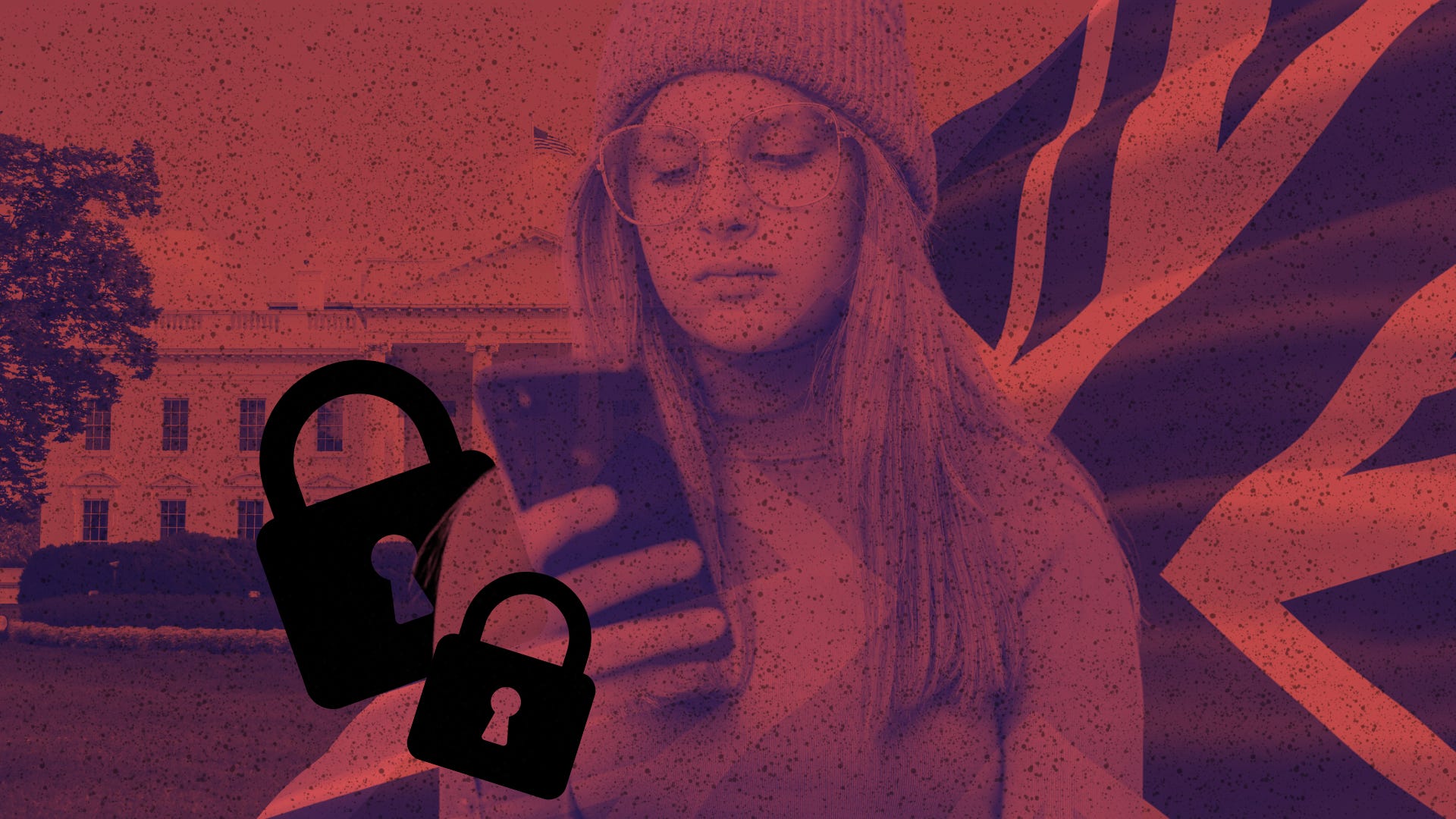
» White House Urges UK Not to Ban Social Media for Under-16s
In a submission to the UK government’s consultation on online safety, the White House has urged the country not to impose a social media ban for children under 16.
Details:
The submission argues that age-gating content will not work and instead calls on the UK to give parents “robust tools” to manage children’s privacy settings and account controls, and to mandate that platforms offer a safe online experience.
It also explains, “We have concerns about regulations that impose disproportionate compliance burdens on American companies or that apply to one platform but not similar services.”
Context:
Meta, whose platforms will be affected by the outcome of the consultation, has already launched a legal challenge against Ofcom, the UK’s media regulator, regarding the fees and fines it is enforcing under the Act, as included in a previous Free Flow.
The news comes as the country’s Prime Minister Keir Starmer is expected to unveil a package of online restrictions that includes a ban on “harmful” social media apps and potential blocks on conversations with strangers on gaming platforms.
The “harmful” apps subject to the ban are unknown, though reports that YouTube Kids could be exempt indicate there may be exceptions for “educational” platforms.”
» FCC Proposes Telecom Providers Collect Identifying Information About Phone Customers
A recent proposal from the Federal Communications Commission (FCC) would legally require telecommunications companies to store identifying personal information of all phone customers to prevent people from buying “burner phones.”
Details:
“Burner phones” are phones that are not linked to your identity at the point of purchase, and can be important technology for journalists, domestic abuse survivors, or privacy-conscious people.
The proposed changes would require telecom providers to obtain the “name, physical address, government issued identification number, and an alternate telephone number of any new and renewing customer before granting access to its services.”
The agency claims the goal of collecting the data is to deter scammers and to allow enforcers to better identify them, but it also lists other ways the data could help authorities.
Authorities note that the data could help identify people involved in investigations into “fraud, espionage, or influence operations that undermine national security” as well as “abuse in text messaging networks.”
One section adds, ‘criminals continue to leverage the anonymity provided by phone calls and texts to defraud Americans and exploit communications networks…”
The proposal is open to public comment until June 25.
The Brussels Effect: Europe and Beyond 🇪🇺
» German Court Holds Google Liable Over AI-Generated Overview Results
The Regional Court of Munich has ruled that Google is directly liable for what its AI search overviews say, and that prior case law shielding search engine operators from liability does not apply to such overviews.
Context:
The case was brought by two Munich-based publishing companies that Google’s AI overviews had falsely linked to scams, subscription traps, and shady business practices in certain search queries.
The publishers had sent Google a cease-and-desist letter, but even though specific texts were no longer being displayed, Google had not properly complied with the letter, nor had it implemented safeguards to prevent the algorithm from generating the same statements again.
The Munich Court issued a temporary injunction against the company, barring it from spreading false claims about the publishers in AI overviews.
In Court:
Germany’s Federal Court of Justice has ruled that search engine operators are only subject to limited liability over third parties that they merely made findable.
The Munich court determined that such liability protections do not apply to AI overviews, which it found are a generation of “independent, new, and substantive statements,” made by evaluating and combining content.
It said that Google’s AI overviews differ from traditional search results because it rewrites information “in its own words and according to its own structure,” and that the claims against the publishers, which did not appear in search results, were the “defendant’s own statements.”
Google argued at the hearing that users could fact-check the AI overview using the linked sources themselves, but the Court rejected this, saying the possibility of disproving a statement doesn’t exempt its maker from liability.
Free Speech Recession 🌍
» China Represses Tiananmen Square Remembrance Activities
According to an anonymous source who spoke with the Associated Press, Chinese police told the relatives of victims of the 1989 Tiananmen Square Massacre that they would not be allowed to visit a Beijing cemetery on the 37th anniversary of the tragedy.
Details:
Police increased security measures on the anniversary in a park where candlelight vigils have been held every year since the massacre, until a clampdown in 2019 following anti-government protests.
A handful of people showed up, and officers stopped and searched seven of them on suspicion of being disorderly in public.
The police said the individuals were taken for further investigation before being allowed to leave.
Context:
The police presence is the latest in a yearslong campaign to erase the tragedy from public memory.
Authorities in Hong Kong have banned the vigil since 2020, citing the COVID-19 pandemic.
Three of the vigil’s organizers have been charged under a 2020 national security law.
» Two Men Convicted in London of Stabbing Iranian Journalist in Attack Linked to Iran
A jury at Woolwich Crown Court has convicted two Romanian men of stabbing Pouria Zeraati, a journalist from a Farsi-language television station, allegedly at the behest of Tehranian authorities.
Details:
Zeraati, a presenter at London-based Iran International, was stabbed in the leg in March 2024.
Nandito Badea and George Stana were arrested in Romania in December 2024 for the attack and extradited to the U.K., while the third suspect, David Andrei, remains the subject of criminal proceedings in Romania.
The jury’s verdict does not conclude that the attack was executed on behalf of Iran, though the judge may determine that when the pair is sentenced in July.
Iran’s senior diplomat in England has denied it was behind the attack, though the broadcaster has previously received threats over its coverage of the country.
In 2023, the broadcaster temporarily moved to studios in Washington, D.C., citing an escalation of “state-backed threats from Iran,” before later resuming operations at a new location in London.
U.K. security officials claim Iran is behind a growing number of plans in the country targeting opposition Farsi-language media outlets and the Jewish community in the country, with reports that more than 20 lethal plots were disrupted by the country’s MI5 domestic intelligence service between October 2024 and ‘25.
» Surge in Arrests Over False News & Offensive Speech in Ghana
The Media Foundation for West Africa has reported a sharp uptick in arrests linked to false news and offensive speech in Ghana as authorities increasingly enforce the country’s Criminal Code and Electronic Communications Act.
Details:
14 such arrests have occurred in less than 16 months, nearly double the number documented during the previous administration’s eight-year tenure.
Opposition minority leader Alexander Afenyo-Markin has criticized enforcement efforts, arguing, “Arresting citizens for words that do not constitute genuine threats is not justice. It is intimidation.”
Meanwhile, the government has rejected allegations of a crackdown, and a National Democratic Congress (NDC) Party communicator said: “Ghana’s laws, Section 208 of the Criminal Code and Section 76 of the Electronic Communications Act, have been on the books for decades.”
“What has changed,” he added, “is the sheer volume of reckless, anonymous, and sometimes dangerous content on social media. There is no systematic crackdown. There is simply enforcement of existing law.”
A legal consultant told Al Jazeera that after reviewing recent cases, Section 208 of the Criminal Code was misapplied at least 16 times in the past 18 months.
» Journalists Arrested in Mali for ‘Undermining the State’
Malian authorities have arrested two journalists in the past two days as part of a crackdown on dissent, as a security crisis escalates.
The Arrests:
The main press association in Mali, the “Maison de La Presse,” said that journalist Abderhmane Keita was arrested on charges of “undermining national unity and the credibility of the state” and “dissemination of false and misleading information.”
Chahana Takiou, a television presenter and the editor-in-chief of the newspaper 22 Septembre, was arrested on charges of “undermining the credibility of the State through the judicial system.”
Takiou had criticized the authorities’ application of a cybercrime law, which he argued was weaponized against press freedom.
Context:
Public statements suggesting that Mali’s military leadership is losing ground to jihadist groups often lead to charges in the country.
The arrests come as reports of Islamic extremists attacking the country reach record numbers and government forces face accusations of killing civilians with suspected ties to militants.
The security crisis has been used as justification for the crackdown on dissent, with authorities banning magazines, French media outlets, and imprisoning opposition leaders.
» Amnesty International Report Shows Inadequate Protest Protections in Greece, Leading Demonstrations to Become Violent
A report from Amnesty International finds that protest legislation in Greece, which fails to meet international standards, is underpinning an increase in the use of unnecessary or excessive police force against peaceful protesters in the country.
Excessive Force:
The report is based on two years of research, video footage analysis, and interviews with protesters, journalists, and lawyers.
Of the 67 people interviewed specifically about unlawful use of force in policing demonstrations, 30 described authorities throwing stun grenades above peaceful protesters and journalists’ heads, or at their feet, or into dense crowds.
Verified video shows police using stun grenades next to a cafe where bystanders were sitting, and documents officers striking peaceful demonstrators with batons, chasing them, and beating people already under police control.
The report also covers incidents involving the use of chemical irritants, water cannons, and force during arrest and or detention.
Broad Police Powers:
Police are empowered to stop protesters and bring them into stations for identity checks, which has resulted in people being subject to arbitrary detentions, body searches, and use of force despite no reasonable suspicion of wrongdoing.
Peaceful protesters have been criminalized, including individuals charged for participating in demonstrations or engaging in civil disobedience.
Ashley Haek is a communications coordinator and research assistant at The Future of Free Speech.
Audrey Campbell is a communications intern at The Future of Free Speech and an international relations major at American University.
Isabella Dail is a communications intern at The Future of Free Speech and a recent graduate from Princeton University with a bachelor's in philosophy.