


This Week at a Glance 🔎
— 🇺🇲 ICE Arrests Nashville Journalist, Court Orders Justification
— 🇪🇸 Spain Takes First Step in Legislative Package Targeting Online Hate Speech
— 🇦🇱 Albanian Court Rules TikTok Ban Unconstitutional
— 🇦🇺 Two Protesters Arrested in Australia Hours After Antisemitism Law Took Effect
— 🇧🇾 Belarus Sentences Five More Journalists to Prison in Accelerating Crackdown
First of All 🇺🇲
» ICE Arrests Nashville Journalist, Court Orders Justification
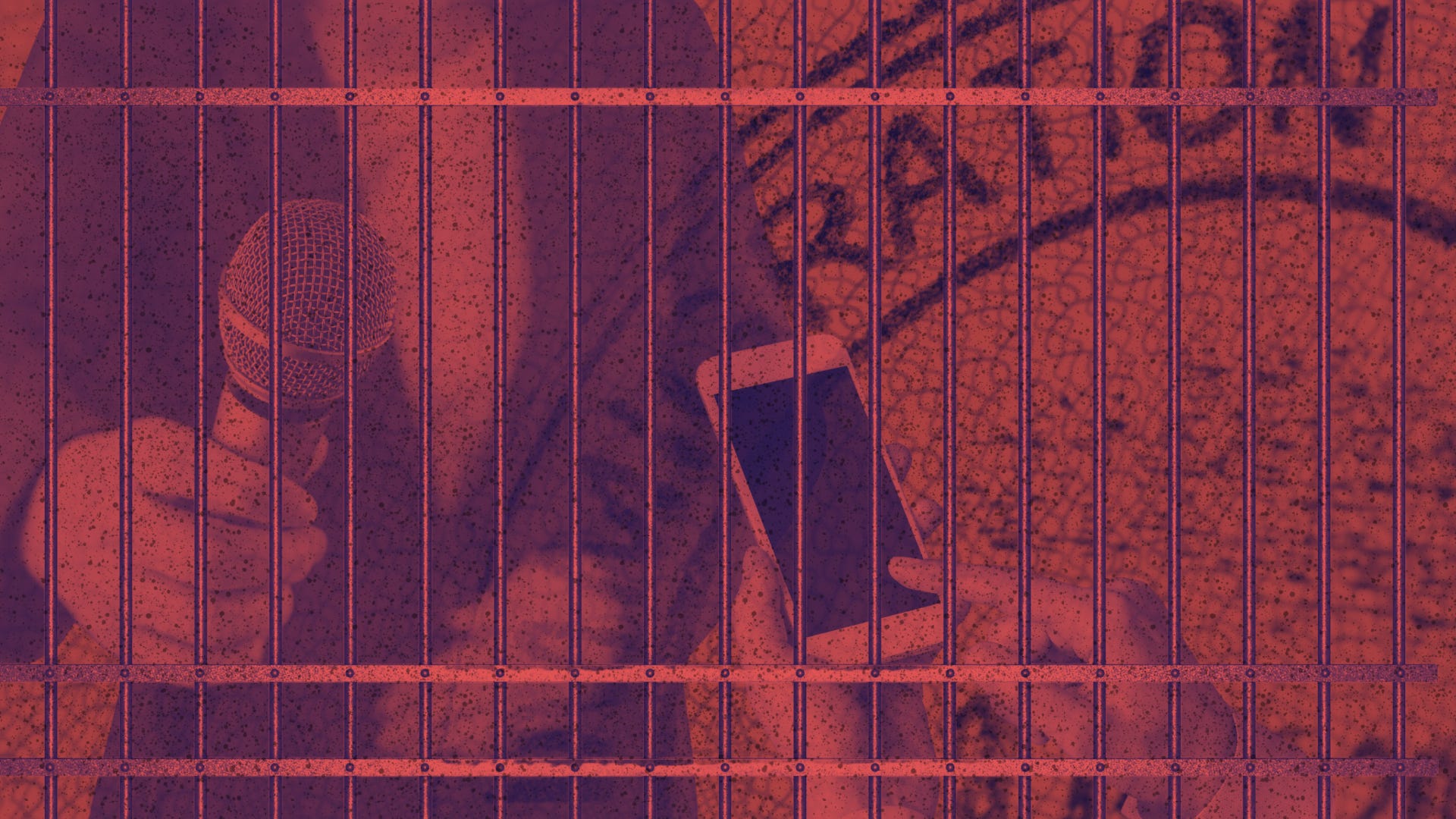
A federal judge has given U.S. Immigration and Customs Enforcement (ICE) until midnight on Thursday, March 12, to file a written justification of its arrest and continued detention of Estefany Maria Rodriguez Florez, a Nashville Spanish-language reporter.
The Arrest:
Rodriguez, a reporter for Nashville Noticias who has reported on ICE activities, was detained on March 4.
In addition to petitioning her immediate release, Rodriguez’s attorneys have filed a First Amendment claim, asking the court to enjoin immigration officials from taking any enforcement actions in “retaliation against her past speech or to chill her future speech.”
She is accused of illegally overstaying her visa, which her attorneys deny, adding that she was not served a warrant at the time of her arrest.
On March 6, government attorneys filed an image of a wrinkled administrative warrant dated March 2, with the “certificate of service” section listing the name and location of the person served by the warrant blank.
Background:
Legal filings from Rodriguez’s attorneys claim that after arriving in the U.S. from Colombia on a tourist visa, she worked under a valid work permit for five years and has filed a petition to adjust her status to that of a lawful permanent resident with her husband, who is a U.S. citizen.
Rodriguez had received death threats for her crime coverage in Colombia, and filed a claim for political asylum before her visa expired. Asylum seekers must be in the U.S. to apply.
She received a notice from ICE in January to appear for a meeting, but it was cancelled due to an ice storm that affected the Nashville region.
She visited ICE offices on February 26 for her rescheduled appointment with her husband and attorney to learn more about its purpose, but her lawyers claim that officials found no record of the appointment.
The meeting was rescheduled for March 17, though officials have declared her a flight risk for missing two appointments.
“ICE’s arbitrary actions serve to punish her for her criticism of ICE,” Rodriguez’s attorneys wrote in their petition.
» WSJ Report: Government Campaign Targets ICE Critics with Public Accusations of Assault
A Wall Street Journal investigation chronicles a campaign by the Department of Homeland Security (DHS) targeting U.S. citizens who criticize Immigration and Customs Enforcement (ICE).
On social media, DHS has publicly accused citizens of attacking federal officers, even when such charges were never filed or dropped.
Background:
Of the 279 people accused on X by government officials in the past year, 181 were U.S. citizens, nearly half of whom were never charged with assault.
Despite no formal charges, accounts from Trump administration officials and departments have posted allegations against individuals, including their names, mugshots, and, in some cases, even the individuals’ home and workplace addresses.
Charged Individuals:
Even though some individuals have been charged, none have been convicted at trial. 15 of those publicly accused have pleaded guilty, 10 of them to lesser charges, while another 51 remain pending.
Federal prosecutors in cities whose immigration operations have drawn nationwide attention have said that the Justice Department has pressured them to pursue assault charges, even if the evidence is contradictory or the case fails to appear worthy of prosecution.
In cases where videos proved charges to be false, some publicly accused individuals had to endure death threats, secure defense attorneys, shoulder the cost of bail, or take days off work to appear in court.
» Lawsuit Claims Administration Unlawfully Targets Noncitizen Social Media Academics
A new lawsuit, filed by Columbia University’s Knight First Amendment Institute, alleges that the Trump administration is engaging in unconstitutional viewpoint discrimination by denying visas to and deporting noncitizens who work on or study social media platforms, fact-checking, or other activities the government considers “censorship” of Americans’ speech.
Details:
The lawsuit, filed by Knight First Amendment Institute and the legal nonprofit Protect Democracy on behalf of the Coalition for Independent Technology Research (CITR), asks a federal judge to declare the policy unconstitutional and direct the government to abandon it.
The complaint details anonymous accounts from members of CITR, including university professors and expert researchers, who have left the country out of fear or have self-censored their work on social media.
The Department of Justice said that if the Secretary of State has reasonable grounds to believe a person’s “presence or activities’ would “have potentially serious adverse foreign policy consequences,” their removal is consistent with the First Amendment.
The Digital Age 🤖
» Anthropic Sues Pentagon Over Alleged Viewpoint Retaliation
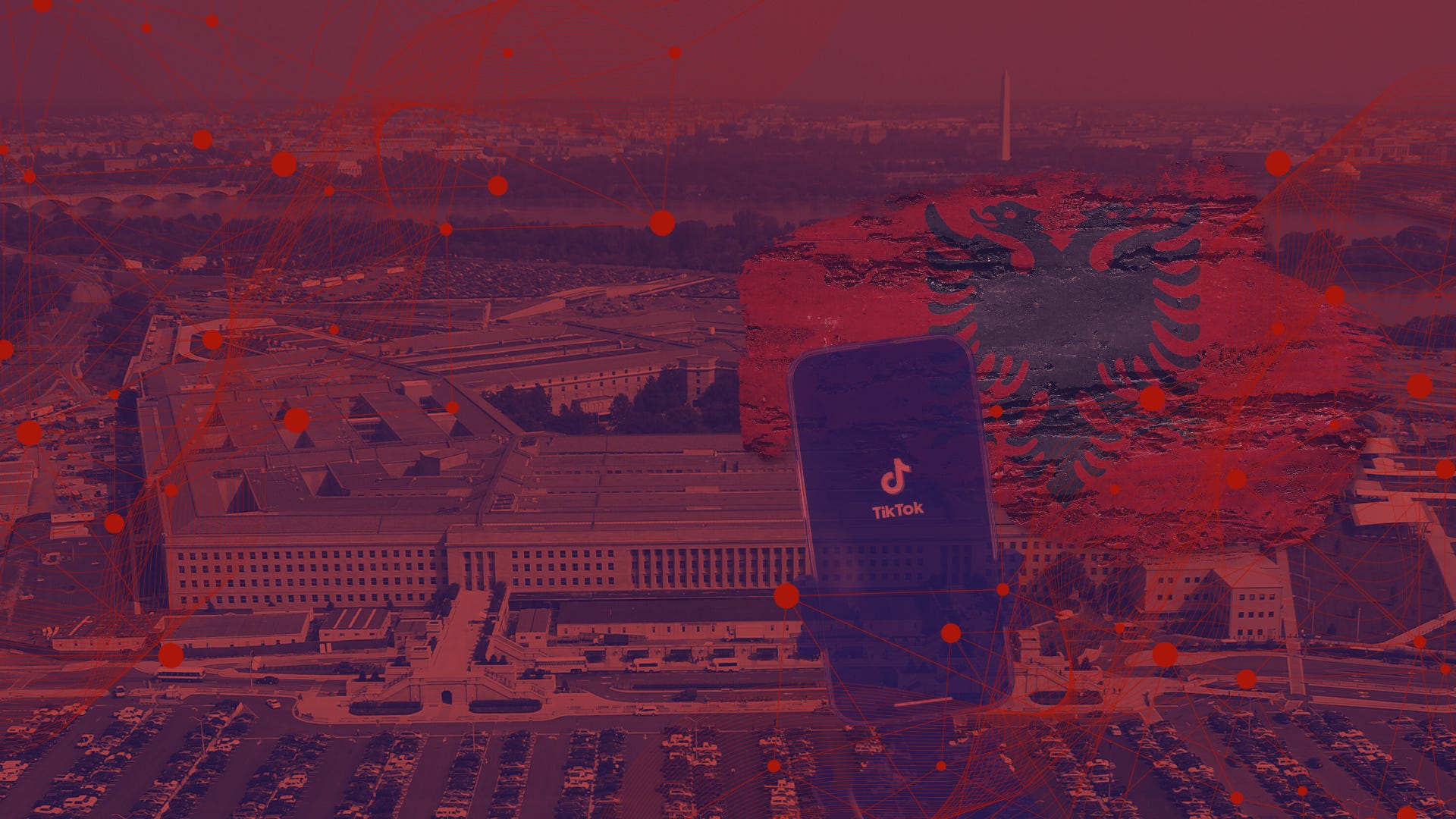
Anthropic has filed two federal lawsuits against the Trump administration, claiming that Pentagon officials illegally retaliated against it for its position on AI safety.
Details:
Last week, the Defense Department designated the company as a “supply chain risk,” a status usually reserved for foreign adversaries that pose a national security risk, and not American companies.
The designation places the company on an effective blacklist by prohibiting Pentagon suppliers from using the company’s AI model in their work with the Defense Department, Claude.
On social media, President Trump announced that all federal agencies would stop using Anthropic’s tools.
The move came after CEO Dario Amodei announced that he would not allow Claude to be used for autonomous weapons or citizen surveillance.
Anthropic has filed two lawsuits alleging the administration violated its First Amendment rights and exceeded the scope of supply chain risk law.
What’s Next?
According to the Financial Times, the administration is working on new government guidelines for civilian AI contracts that would require AI companies to allow “any lawful” use of the models.
They would also mandate that contractors provide “a neutral, non-partisan tool that does not manipulate responses in favor of ideological dogmas such as diversity, equity, and inclusion.”
AI companies would be required to disclose whether their models have been “modified or configured to comply with any non-U.S. federal government or commercial compliance or regulatory framework,” which is reportedly intended, in part, to challenge compliance with the EU Digital Services Act.
» Albanian Court Rules TikTok Ban Violated Free Speech
Albania’s constitutional court has ruled that an almost year-long government ban on TikTok violated freedom of expression and press freedom.
Details:
Following the fatal stabbing of a teenager during a fight linked to a dispute on social media, the Albanian government blocked TikTok in March 2025.
The ban was challenged by the Albanian Journalists Association, an investigative NGO, for breaching constitutional rights to free speech.
The government suspended the TikTok ban in early February, but judges insisted the case should proceed because it was of “public interest.”
The court found that the interruption “constitutes a restriction of freedom of expression and freedom of the press.”
Enforcement of the ban raised questions about its effectiveness after Albanian users reported barely noticing it, since the app remained accessible via VPNs.
» Kenya Court of Appeal Nullifies ‘Fake News’ Sections of Cyber Law
The Court of Appeal of Kenya has struck down provisions in the Computer Misuse and Cybercrimes Act that criminalized the publication of “false, misleading or fictitious information” online, declaring them unconstitutional.
Fake News Provisions:
The contested provisions, Sections 22 and 23, were introduced as part of the 2018 cybercrime law and sparked legal challenges from civil society, who argued that they had been increasingly used to arrest journalists and dissidents.
The measures have been linked to several high-profile arrests, including journalist Peter Maseke Mwita, who was detained for several days and faced a possible 10-year prison sentence for refusing to disclose the sources of information he had shared in a WhatsApp group.
In a landmark ruling, the judges found the provisions were vague, overly broad, and open to abuse, rendering them unconstitutional.
However, the Committee to Protect Journalists (CPJ) Africa Program Coordinator Muthoki Mumo said significant reforms are still needed for the Act, “particularly to provisions providing for lengthy prison terms for the ill-defined offense of ‘cyber harassment’ and sections that threaten citizens’ privacy rights.”
The Brussels Effect: Europe and Beyond 🇪🇺
» Spain Announces ‘Hate Speech Footprint’ Tool, First Step in Legislative Package Targeting Online Speech
Prime Minister Pedro Sánchez has announced the launch of a “hate speech footprint” tool to measure the presence, evolution, and reach of hate speech on Spanish digital platforms.
Details:
The tool, called ‘HODIO,’ will be used by the Spanish Observatory against Racism and Xenophobia, and will combine quantitative analysis and expert review based on academic criteria.
The results will be made public, Sánchez said, so that “everyone knows who is stopping hate, who is turning a blind eye, and who is profiting from it.”
The announcement comes after Sánchez unveiled a proposed legislative package detailed in a previous Free Flow, which would impose criminal liability on platforms for “failing to remove illegal or hateful content.”
The package also targets algorithmic curation and minors’ social media use.
“The digital environment cannot be a space without rules,” Sánchez said as he announced HODIO, “today, social media is a failed state.”
» UK Introduces New, Working Anti-Muslim Hate Definition
The UK Labour Party has announced a new definition of anti-Muslim hate that encompasses violence, harassment, and prejudicial stereotyping in the wake of record levels of hate crimes against Muslims.
Background:
In February 2025, the government set up a working group to come up with a definition of anti-Muslim hatred or Islamophobia, though religious discrimination is already illegal under the Equality Act.
Ministers say the new definition is a working, non-statutory one, meaning it is advisory rather than legally binding. The Labour Party is urging workplaces, schools, councils, and other public and private bodies to adopt it.
The government will also appoint a special representative on anti-Muslim hostility to engage with communities and facilitate understanding of the definition.
Critique:
The new definition moves away from the word “Islamophobia” and towards “anti-Muslim hostility,” but adds that portraying criticism or ridicule of a belief, even “in a manner that some of its adherents might find disrespectful or scandalous,” is still legal speech.
The Free Speech Union is preparing a pre-action letter to send to Communities Secretary Steve Reed, seeking judicial review, claiming that the definition is “vague,” “subjective,” and “weaponized to silence legitimate criticism of the Islamic faith and Muslims.”
The adoption would also intersect with legislation already enacted by Parliament, which breaches public law doctrine, FSU argues.
» UN Special Rapporteur Warns of ‘Erosion of Rights’ in Sweden
Mary Lawlor, Special Rapporteur on the situation of human rights defenders to the Office of the United Nations High Commissioner for Human Rights, has warned of the “gradual erosion of rights” of activists in Sweden, especially the right to peaceful assembly.
Details:
Lawlor said she was “alarmed” about reports of threats, hate speech, stigmatization, and harassment of human rights defenders.
Environmental and climate activists are reportedly facing a heightened risk of prosecution for engaging in protests, while school-aged children, students, and journalists speaking out on the ongoing war in Gaza have been allegedly stopped or faced intimidation.
The news follows a July 2024 report by Amnesty International naming Sweden among the 21 European countries where the right to peaceful assembly was under attack.
Sweden was identified as a country in which activists are required to pay to organize and participate in peaceful assemblies, which could chill dissent, despite strong legal protections.
Free Speech Recession 🌍
» Two Protesters Arrested in Australia Hours After Antisemitism Laws Took Effect
Just a few hours after new Queensland antisemitism laws went into effect, two pro-Palestinian protesters were arrested outside the state parliament building.
The Act: Under the act, uttering banned phrases, including “from the river to the sea” and “globalize the intifada,” is punishable by up to two years in prison if doing so would cause “menace, harassment, or offense.”
The Arrests:
Liam Parry, part of the Students for Palestine group and leader of the protest, said, “I’m not sure if everybody here [knows] the history of the different slogans that the government is trying to ban us from saying, so [in] the interests of education, I want to explain [it] to you.”
He denied that “from the river to the sea” was terroristic or antisemitic, and explained how it is a call for the freedom and dignity of people between the Jordan River and the Mediterranean Sea.
He discouraged others from chanting the slogan, but when protesters began marching, he was arrested and later released from the Brisbane watch house the same evening.
The second person arrested was towards the end of the march, who witnesses described as wearing a shirt that said: “from the river to the sea.”
Both protesters have been charged, according to a police spokesperson, and Parry must appear in court on April 8 for the charge of reciting, distributing, publishing, or displaying prohibited expressions.
» AFP Survey Reveals Tightened Restrictions on Journalists Covering War in the Middle East
A survey of Agence France-Presse (AFP) chiefs, working in the international news agency’s Middle East region, revealed that journalists sharing content on the ongoing conflict are facing arrests, questioning, and increased restrictions.
Gulf Powers Arrest Over Sharing War-Related Content:
In Qatar, the interior ministry announced that more than 300 people have been detained, while Bahrain’s interior ministry reported four arrests for sharing images and misleading information related to Iranian attacks.
In Kuwait, the interior ministry said it had arrested two individuals for sharing video clips that “mocked” the army, and a third for including images of “banned terrorist organizations’ leaders on his profile.”
Journalists Questioned in Iran:
Although imposed internet blackouts have limited user-generated content posted within Iran, interviews with people who have fled the country or with contacts in the country have indicated journalists are being stopped and questioned by security forces, with the risk of detention.
Even journalists with permission from the Ministry of Culture and Islamic Guidance, known as Ershad, which usually regulates the press, have still been subject to questioning and detention.
AFP’s Middle East photo chief, Jewel Samad, said Iran’s intelligence ministry warned that if someone takes “photos of sensitive places or damaged buildings and areas or records the locations of centres with a GPS device or mobile phone and marks the places, they could be an agent of the American-Zionist enemy.”
The ministry also called on people to inform authorities if they witnessed anyone taking such photos.
Restrictions Tighten in Israel, Lebanon, and Saudi Arabia:
Although coverage of air defenses intercepting incoming missiles during the June 2025 war between Israel and Iran was permitted, it has since been prohibited in a tightening of restrictions on content related to the war.
Other bans include live broadcasts of the Israeli skyline when incoming missile or drone warning alarms are sounding and filming at impacts or near security sites (though coverage of civilian damage is permitted as long as exact locations are withheld).
The army’s chief censor also sent guidelines directly to Israeli media outlets, barring journalists from disclosing information about military planning and preparations, air defenses, and impact sites and locations.
In Lebanon, journalists are facing restrictions imposed by the Iranian-backed Shia militia, Hezbollah, which has prohibited reporters from accessing Beirut’s southern suburbs, where it has a hold on power.
Meanwhile, the Saudi Royal Court’s Media Service has pressured reporters to disclose the identities of their anonymous sources, and Jordan’s Media Commission has threatened criminal prosecution over the publication of any videos or information related to defense operations.
» Belarus Sentences Five More Journalists to Prison in Accelerating Crackdown
Belarus has accelerated its crackdown on journalists, jailing five more, and leaving as many as 28 media workers in prison as of this month.
Details:
On March 6, Tsina Palynskaya, a journalist who conducted surveys for an independent Belarusian analytical centre later designated as an “extremist formation” by Lukashenko, was sentenced to two years.
Days earlier, regional journalists Uladzimir Yanukevich and Andrei Pakalenka were sentenced to 14 and 12 years, respectively, on charges of high treason, as reported in a previous Free Flow.
Pavel Dabravolsky, a journalist who had left Belarus in 2021 after serving a 15-day prison sentence for participating in protests against the falsified re-election of Alexander Lukashenko, was detained several months after returning home in 2024 and has remained behind bars. On March 9, he was sentenced to nine years in prison for high treason.
» North Macedonia Appeal Court Upholds Defamation Ruling Against Investigative Reporting Organization
North Macedonia’s Court of Appeal has upheld a defamation verdict against the Investigative Reporting Lab (IRL) for producing a documentary aired in 2021 on the public broadcaster, Macedonian Radio Television.
Details:
Kočo Angjušev, a businessman and former Deputy Prime Minister of North Macedonia, filed a defamation claim following the documentary about a joint investigation by IRL and the Organized Crime and Corruption Reporting Project (OCCRP).
The suit was initially dismissed in 2021, but following a plaintiff appeal, the Court of Appeal ordered a retrial in 2022.
Though no new evidence was presented, a 2023 Basic Civil Court decision ruled against IRL. This sparked pushback for classifying IRL as “non-media” and “members of a group,” rather than professional journalists.
The verdict also suggested that the state open a misdemeanor proceeding to determine the legality of the organization’s work.
The Court has formally upheld the verdict, though it has not published its reasoning, and IRL has announced its intent to appeal.
Ashley Haek is a communications coordinator and research assistant at The Future of Free Speech.