


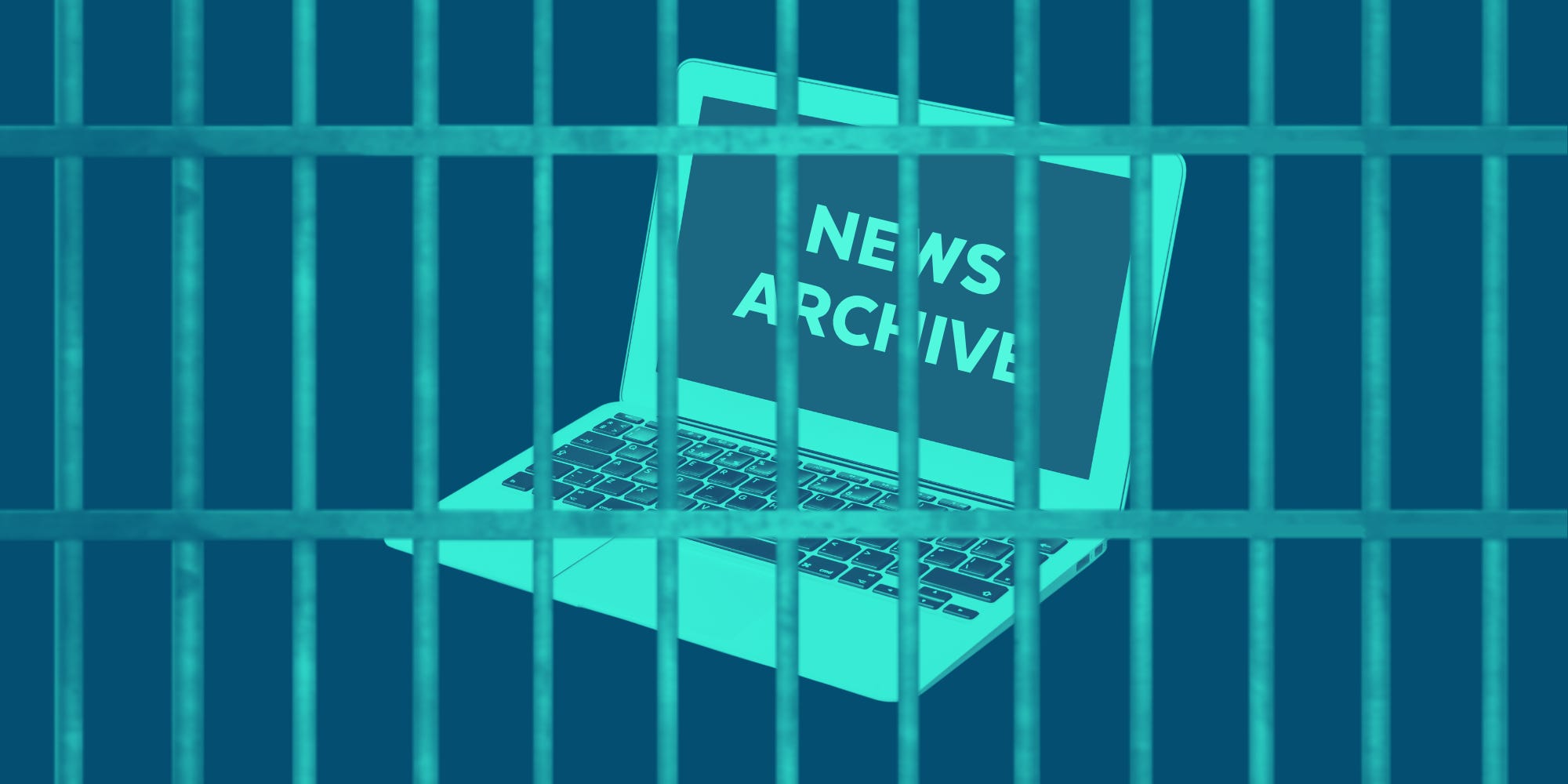
Somewhere in our archive is a video that might get us arrested one day.
I don’t know which one. Neither does anyone on my team. We have published hundreds of videos at Kuest, the independent media organization I founded in Istanbul. Some have reached millions of people. We researched them, checked the facts, argued over the wording, and published them. At the time, nothing happened.
Occasionally, someone on the team will bring up an old video and joke that it might finally be the one that sends us to prison.
We laugh. Then someone asks whether we should take it down.
That part isn’t always a joke.
Publishing in Turkey is a never-ending cortisol roller coaster. You never know which word will cross the red line, well, because the red lines constantly keep moving.
For years, Turkish journalists have learned to live with censorship, lawsuits, investigations, and the occasional knock on the door. But something about the past two years feels different. The danger has spread beyond what we publish now, what we published years ago, and sometimes even what we didn’t publish and weren’t planning to do.
An example is the peculiar case of Murat Ağırel.
Ağırel, a prominent investigative journalist known for his reporting on corruption and organized crime, was working on a story involving allegations about a politically connected family. He received documents, examined them, tried to verify the story with the sources, and then decided not to run it because he believed he did not yet have enough evidence to publish. In other words, he did what journalists are supposed to do when they cannot verify a story. In October 2026, authorities arrested him in a case arising from that investigation.
Prosecutors accused him of assisting a criminal organization through his handling of information. Ağırel maintains that the communications in question were part of his attempts to verify the allegations. The courts will have to determine the legal merits of the case. But for the rest of the ecosystem, he became an example: You can be arrested even for a story you didn’t publish.
And the funny thing is, he was arrested while already under house arrest for reporting on the newest financial scandal that impacted some 500,000 investors and tanked the Istanbul Stock Exchange about $100 billion since last month.
Apparently, staying home wasn’t enough.
A few days later, another journalist offered an equally crazy illustration of how this system works.
İsmail Arı had been summoned to give a statement to the police. He went voluntarily, accompanied by his lawyer. He was detained and then arrested pending trial because they thought he might flee. A man who had walked into a prosecutor’s office of his own accord was considered a flight risk.
Another interesting challenge for Turkey’s speech environment is that the country’s political priorities are hardly fixed. In fact, what power holders deem acceptable can change significantly, even between two election seasons.
Consider the Kurdish question. During the 2023 presidential campaign, Erdoğan showed a manipulated video montage to suggest a direct association between his political opponent and the PKK. Today, the government is in direct talks with their jailed leader.
Governments are entitled to change policies. In fact, sometimes they should. But the problem, for journalists, or even ordinary citizens, is that what they posted without consequence yesterday may become dangerous tomorrow.
And the internet remembers everything. In August 2026, retired admiral Türker Ertürk was arrested after a video of remarks he made years earlier resurfaced online. The comments were old. The investigation was new. A year earlier, journalist İsmail Saymaz was detained in a case involving his reporting and social media activity during the 2013 Gezi Park protests. He was placed under house arrest. Thirteen years is a long time to keep a social media post in reserve.
This is why our jokes about old Kuest videos are not entirely jokes. We are not only assessing the risks of tomorrow’s reporting. We are trying to reassess yesterday’s reporting in the light of today’s newly emerging rules and acceptabilities.
Trying to figure out what the authorities dislike and how to avoid saying it is bad enough. Yet, in Turkey, the uncertainty itself has become part of the pressure. We cannot simply draw a line around forbidden subjects and continue working outside it. This particular uncertainty is the point. The line is constantly moving. Sometimes we can see when it moves. Sometimes we discover it has moved only after someone has been arrested.
And while journalists are busy trying to avoid crossing these invisible boundaries, the infrastructure of independent journalism is being squeezed from another direction: the newsrooms.
In October 2026, Halk TV — one of Turkey’s most prominent critical broadcasters — was placed under the management of the state-controlled Savings Deposit Insurance Fund, or TMSF, interrupting its e live broadcast. It was the 10th television channel to come under TMSF management in approximately 20 months.
A journalist can survive a prosecution and continue reporting. A newsroom can sometimes survive a colleague’s arrest. But what happens when the newsroom itself loses control of its broadcasting operation?
A similar question applies to online outlets when authorities ban their entire website.
In September 2026, authorities ordered an access block to T24, a major independent news website, as part of a newly launched operation called “My Family is Safe,” which targeted LGBTQ+ organizations and LGBTQ+ related coverage. Over 118 pieces of content that they alleged promoted LGBTQ+ identities and undermined the family. Some of the disputed material dated back many years, far before the operation began.
There it was again: the archive.
For an individual journalist, the worry becomes whether an old article can become grounds for prosecution. For an entire news organization, old articles can become the basis for an order affecting access to years of reporting.
And for readers, the consequences extend far beyond the disputed material. Someone searching for an investigation into public spending, an interview about inflation, or reporting on a political scandal may find that an entire source of information has been placed beyond reach. The memory is gone.
This is what makes the present moment so consequential. The pressure is not concentrated at a single point where journalists can resist it, challenge it, or learn to navigate around it.
It follows information through its entire life cycle. Before, during, and even years after the publication! And even when a story survives all that, the institution carrying it may face a takeover or an access restriction to its entire database for years because of its old reporting.
From where I sit, the cumulative intensification in the last two years has an unmistakable direction.
Turkey is approaching its next scheduled presidential and parliamentary elections in 2028. Much will be written about the parties, candidates, alliances, polls, and campaign strategies. There will be endless discussion of who might win and what the result might mean. That is precisely the kind of information independent journalism is supposed to provide. And the conditions for producing and accessing that information are becoming increasingly impossible.
The question is: what will voters still be able to know?
I cannot tell you how many stories have been abandoned, softened, or delayed across Turkey because of these pressures. Stories that never appear are, by definition, difficult to count. But I know what has happened in my own experience. I know how much time we spent navigating risks that have little to do with whether our reporting is accurate.
That is the danger of Turkey’s increasingly uncertain boundaries of expression. It is not only that the authorities can punish what has been published.
It is that the possibility of punishment can reach backward into the archive, forward into an unfinished investigation, and outward into the institutions that allow independent information to reach the public.
By the time Turkey votes in 2028, the most consequential stories may not be the ones that were censored but the ones nobody ever dared to publish.
Medeni Sungur is a media entrepreneur and freedom advocate from Turkey. He uses digital storytelling to make complex democracy and policy debates accessible to the next generation in TikTok era.