


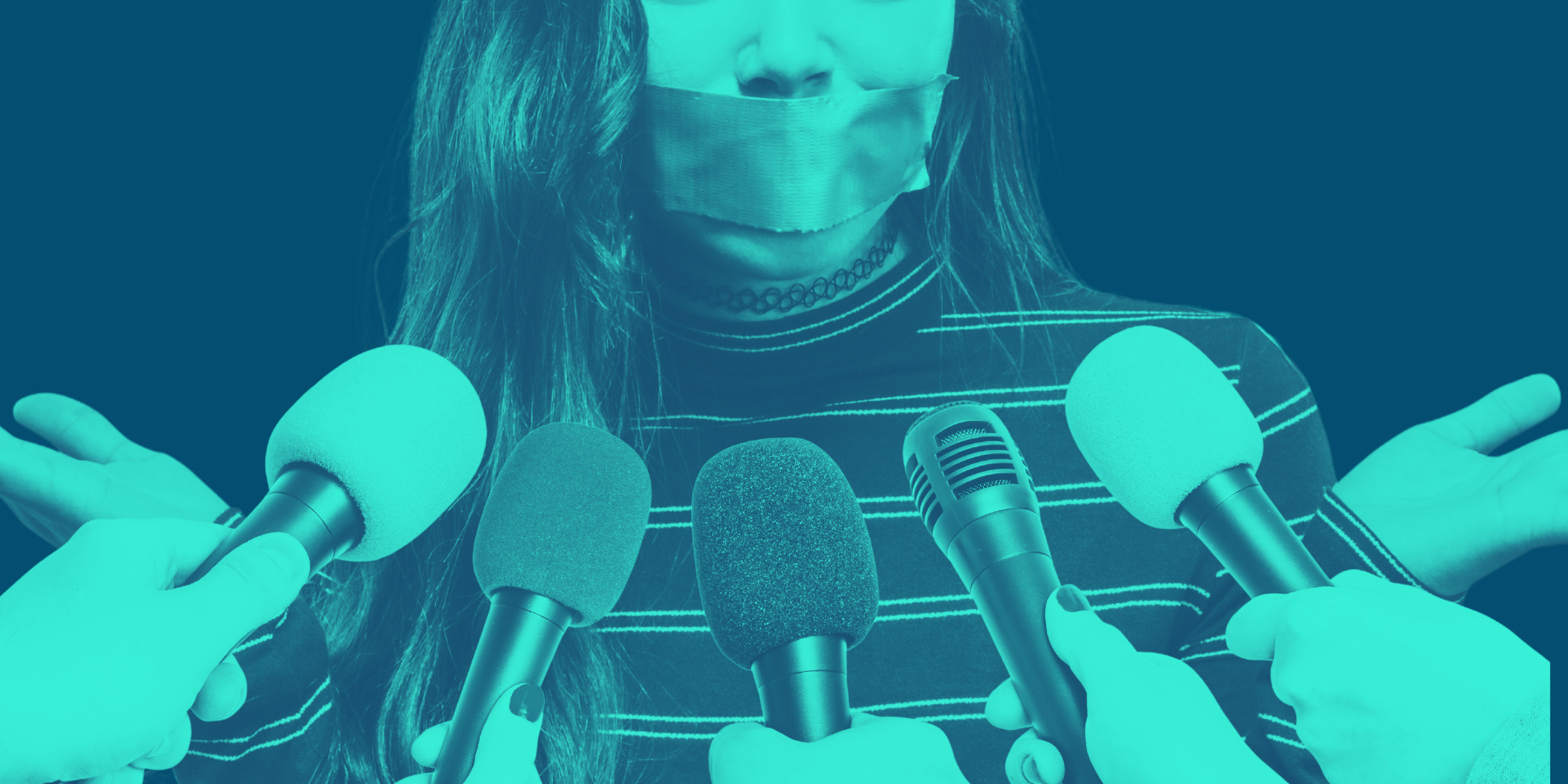
In the hours after a tragedy, the public response now follows a familiar and horrifying cadence: breaking news, statements from officials, and public mourning. And very quickly, social media’s attention shifts from what happened to who has spoken and who has not. “Your silence is deafening” becomes a common refrain.
Followers scroll through stories not only for information, but for evidence of moral alignment. When a creator fails to post about a tragedy, some interpret the absence as indifference, complicity, or cowardice.
This expectation has hardened into a social mandate. And it raises an uncomfortable question about our speech culture — when did speaking become an obligation rather than a choice?
Recently, the killing of Alex Pretti prompted this exact cycle. Followers immediately demanded statements from influencers whose platforms had nothing to do with politics or public policy. When some did not post, backlash followed. The message from the online audience was clear: a celebrity or influencer’s silence can only be interpreted as very loud speech in favor of a view opposite to mine.
After the 2024 U.S. election, fitness influencers found themselves in precisely this bind. As Men’s Health reported, creators whose content focused entirely on workout routines, nutrition advice, and physique updates were suddenly facing demands to declare their political positions. Some complied, posting carefully worded statements. Others stayed silent and watched their comment sections fill with accusations. One influencer told the magazine that followers were combing through his old posts looking for evidence of his politics, analyzing which brands he promoted, and scrutinizing who he followed. In this polarized digital landscape, you must be a political actor, whether you want to be or not.
This represents a fundamental shift in what audiences believe they are owed. A decade ago, followers might have been satisfied with workout tips and motivational content. Now, they want ideological transparency. They want to know not just how their favorite creator trains, but how they vote.
This is where the conversation moves beyond influencer drama and into genuine questions about what free expression means in our culture. In the United States, free speech is not just the right to speak. It is also the right not to. The freedom to choose when, how, and whether to comment is foundational to expressive liberty.
Free speech doctrine, particularly in the American tradition, views compelled speech as one of the most dangerous forms of government overreach. But what happens when compulsion comes not from the state but from the crowd — when the punishment is not legal but social ostracism or economic loss?
Influencers are private individuals with public reach; they are brand-builders rather than elected officials. Yet they are increasingly treated as if they owe their followers civic leadership. Their audiences fund their visibility, and in return, many followers feel entitled not only to content but also to conscience. Followers view their favorite influencers’ platforms as megaphones to amplify their own grievances and causes.
This is where parasocial relationships become philosophically significant. The term “parasocial” was coined by sociologists Donald Horton and Richard Wohl in 1956 to describe the one-sided intimacy audiences develop with public figures. The follower knows the influencer; the influencer does not know the follower. Yet the relationship feels mutual.
The influencer shares vulnerable moments, speaks directly to the camera as if to a friend, solicits opinions, and responds to comments. The follower invests emotionally and often financially. The expectation, then, is rooted in a category error: treating a parasocial relationship as if it were a communal one. Followers expect influencers to be part of their moral community, someone who shares their values, their outrage, and their grief. And in communities, silence during moral crises is noticed and judged.
Here’s the other side of it — influencers trade on authenticity. The most successful ones cultivate trust with their audience and build a personal bond. When tragedy strikes, followers want reassurance that the people they support — and whose lifestyle their engagement funds — also share their values. That impulse is understandable. But there’s a point at which expression stops being authentic and starts being performative. The demand for instant statements often produces checkbox activism.
The demand for speech, then, becomes a kind of loyalty test. It is not enough to refrain from saying harmful things; one must actively affirm the right things. Silence is no longer neutral. It is no longer private. It is no longer a legitimate exercise of negative liberty. Instead, it becomes evidence of hidden vice, proof of moral deficiency, and a gap in the performance that reveals the “real” person underneath.
Consider the case of Alix Earle, a TikTok creator often suspected by her audience of holding conservative political views. When she posted two Instagram stories about a Minnesota tragedy, the online reaction was a surprise that served as social proof, “Even Alix Earle posted.” The implication is that even if someone who is supposedly ideologically unaligned speaks out, everyone else’s failure to do so becomes more damning.
But often, these are cases of compelled speech by social coercion. And it poses a genuine threat to expressive freedom — not because any individual demand for a statement is totalitarian, but because the cumulative effect is a culture in which speech becomes obligatory, silence is punished, and the line between authentic expression and performative compliance disappears entirely.
None of this is an argument that influencers shouldn’t speak. Many do so thoughtfully and responsibly, using their platforms to amplify critical information, fundraise, and educate. But we should ask ourselves what we’re actually creating when we demand speech on command — and when we interpret silence as endorsement for a particular viewpoint. A culture that punishes silence doesn’t make us better informed or more united. It makes us performative. If someone you follow for their makeup tutorials doesn’t share your views on a political tragedy, would you rather know that through authentic silence or a PR-approved statement designed to offend no one?
Influencers typically have expertise in specific niches. There’s no reason to expect that they would have competence in the nuances of politics or policy. Their first encounter with an issue often occurs at inflection points when their audience demands an opinion, a statement, or an action. When people are forced to perform solidarity on an issue they are not well informed about, the pressure may lead them to reject that position, and they might be pushed in the opposite direction.
In The Coddling of the American Mind, Greg Lukianoff and Jonathan Haidt argue that public shaming and call-out campaigns tend to increase polarization rather than reduce it and can push people towards defensive tribalism. Research on prejudice reduction (from Gordon Allport’s 1954 The Nature of Prejudice to modern studies) shows that continuous meaningful contact and dialogue produce durable attitude change. But in a world of shortened attention spans and instant-gratification expectations, that’s not a solution used by most.
Free speech was never meant to guarantee that everyone speaks on cue. It was intended to ensure that, when we do, it is of our own volition. And if we, as listeners or viewers, don’t like what someone chooses to say or not say, we have our answer about whether we want to continue following them. That’s the marketplace of ideas working.
The question isn’t whether influencers have the right to stay silent. They do. And sometimes silence can be just that: silence. The real question is whether we are building a culture where that right can actually be exercised, or have we created a system where silence is so heavily punished that speech becomes compulsory in every circumstance?
Ashkhen Kazaryan is a Senior Legal Fellow at The Future of Free Speech, where she leads initiatives to protect free expression and shape policies that uphold the First Amendment in the digital age.
We want people to speak on things and at the same time when they do, they get told to stay in their lane because they don’t know anything. Nobody knows what they’re asking for.