


Adapted from my keynote at the Amerikahaus in Munich, July 2026. Edited for length and readability. The full talk and the Q&A that followed are here.
It is an honor to speak in Germany, a country where discussions about the limits of free speech are almost existential given its history. I do so knowing that my take is a heretical one from a European perspective, if such a perspective exists, and perhaps that is easier for a European who lives in the United States.
We have heard a great deal about the state of free speech in the United States, and conspicuously little about the state of free speech in Europe. So I will venture to talk about developments in this country, even though I am not an expert in German law, because it is always good to look inward as well.
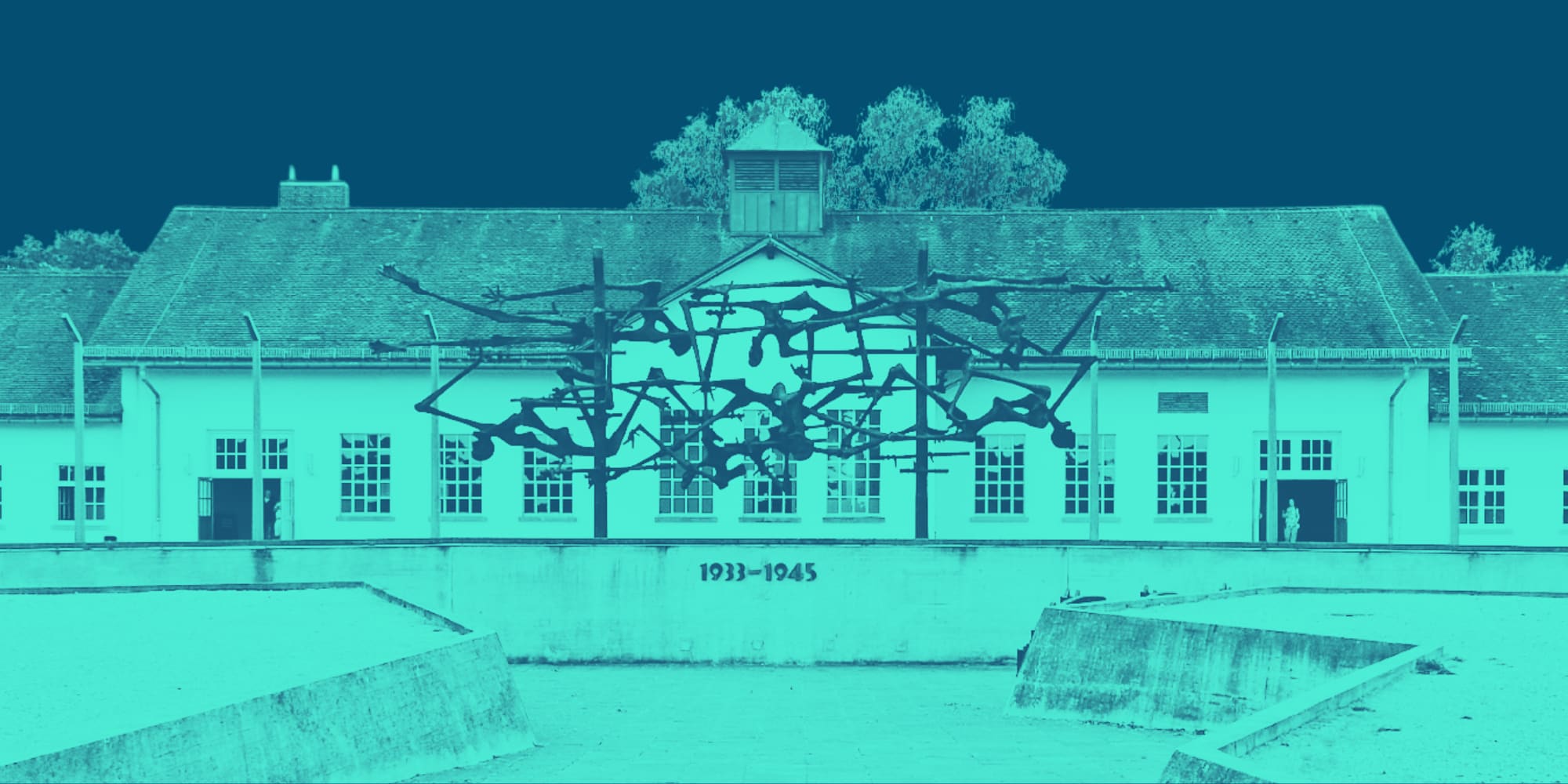
Dachau
The afternoon before this talk, I left this beautiful city and went to one of the darkest places in Bavaria. It struck me how much relevance Dachau has to the question we are here to discuss, not least because in its opening years it was primarily political prisoners who were interned there.
One story struck me in particular. Fritz Gerlich was the Catholic conservative editor of Der gerade Weg, a newspaper published here, and he had become increasingly critical of Nazism, of antisemitism, and of Hitler. In 1932 he published a deeply satirical article which, in a very primitive form of photoshopping, showed Hitler being wedded to a Black African woman under the caption “Does Hitler have Mongolian blood?” It was an effective satirical takedown of Nazi racial-scientific theories.
Unfortunately, Hitler would have the last laugh. Once he came to power, Gerlich was arrested, taken to Dachau, and executed there in 1934. The Nazis, of course, had very harsh rules about spreading so-called fake news and hate speech about Nazi leaders, institutions, and ideas.
That history is relevant in another sense too. Regardless of our different positions, all of us here are united by a deep commitment to keeping Dachau a museum and a warning, rather than reopening it and once again becoming a place where you put people with the wrong ideas, the wrong skin color, the wrong religion.
When it comes to free speech, that poses some questions. Is the best way to avoid new Dachaus to be intolerant of the intolerant, to paraphrase Karl Popper, to build a militant democracy the way Germany has done, and to insist that the enemies of democracy, dignity, and equality should not be allowed to abuse their freedom? Or is that a cure worse than the disease? Does it in and of itself create the risk of an authoritarian state using these powers to entrench itself, paving the way to new camps, or at any rate restricting the freedoms of unpopular minorities in ways that are incompatible with democratic ideals?
This is also, in a generalized way, the competing vision between the American and the European models, and especially between the American and German ones.
He had a point
Someone who mentioned that not far from here was US Vice President JD Vance, who last year launched an incendiary attack on European democracies, saying they had abandoned common transatlantic values, not least free expression. He did so in a way that shocked a lot of Europeans. It was a moment when the transatlantic rupture was made manifest.
I think Vance did so in a calculated way, to demonstrate the contempt the Trump administration has for its European allies. As a Danish citizen, I am not sure how reliable an ally the Trump administration is, given that they want to invade our territory. And it was framed around particular culture war grievances.
Nonetheless, I want to be provocative myself and say that he had a point. Of course, he failed to look in the mirror. But it is the truth, in my opinion, that we are living through what I call a global free speech recession, one that has crashed ashore not only in authoritarian states but in democracies too, including Europe and especially the United States under this administration.
A golden age
To show the drift, I want to start somewhere happier: a golden age, if you like, from around the 1970s to the early 2000s. This was the third wave of democratization, when democracy swept from continent to continent, and there was an optimistic feeling that free speech and democracy went hand in hand. These two values were the north star in the constellation of transatlantic values. They were present in the Helsinki Final Act, the document Western states and the Soviet bloc agreed on, which promoted freedom of expression and became deeply empowering for dissidents behind the Iron Curtain. There were philosophical and doctrinal differences between America and Europe, but they were minor, and they paled in comparison to the systematic censorship of the common geopolitical enemy on the other side.
There were iconic moments of triumph. Václav Havel, the Czechoslovak dissident, playwright, and co-author of Charter 77, stood before a joint session of Congress in 1990 and told the incredible story of how, only a few months earlier, he had been a political prisoner in one of the most reactionary communist regimes in Central Europe. Now he stood there as the democratically elected leader of a country with complete freedom of speech. Many dissidents behind the Iron Curtain saw free speech as the most important freedom.
This was not only a European phenomenon. Before assuming office in 1994 as the first democratically elected leader of a free and multiracial South Africa, Nelson Mandela paid homage to the essential role free speech and a free press had played in shedding light on the evils of white supremacy. Apartheid South Africa had a very harsh censorship system. It had, ironically, hate speech laws that protected the white minority, and which could land you in prison. And of course the regime was not above killing people if that was necessary. Mandela said that free speech would be a cornerstone of the new South African democracy, and that no person, doctrine, institution, or government can claim a monopoly on truth, and that it is therefore a disservice to humanity to adopt any restrictions on free speech.
This is interesting, because thirty years earlier Mandela had given another speech. At the Rivonia trial in 1964, on trial for sabotage, he explained eloquently why the ANC had abandoned nonviolent action and turned to sabotage. Every step until then had been one of protest, speech, civil disobedience, and all of them had been progressively shut down by the apartheid regime. Only then, he said, did we decide we had to use violence.
Mandela gives us what we might call a pressure cooker theory of free speech. Free speech acts as a safety valve for grievances, one that lets them out in a peaceful manner. Remove it, and grievances turn into a pressure cooker that can explode into violence. If a person like Nelson Mandela says that, perhaps we should take heed of what others who are not as committed to democratic values have to say as well.
Then came the World Wide Web, ushering in a techno-optimistic belief that authoritarianism and censorship would be consigned to the ash heap of history, because no country would ever again be able to control what people said.
The recession
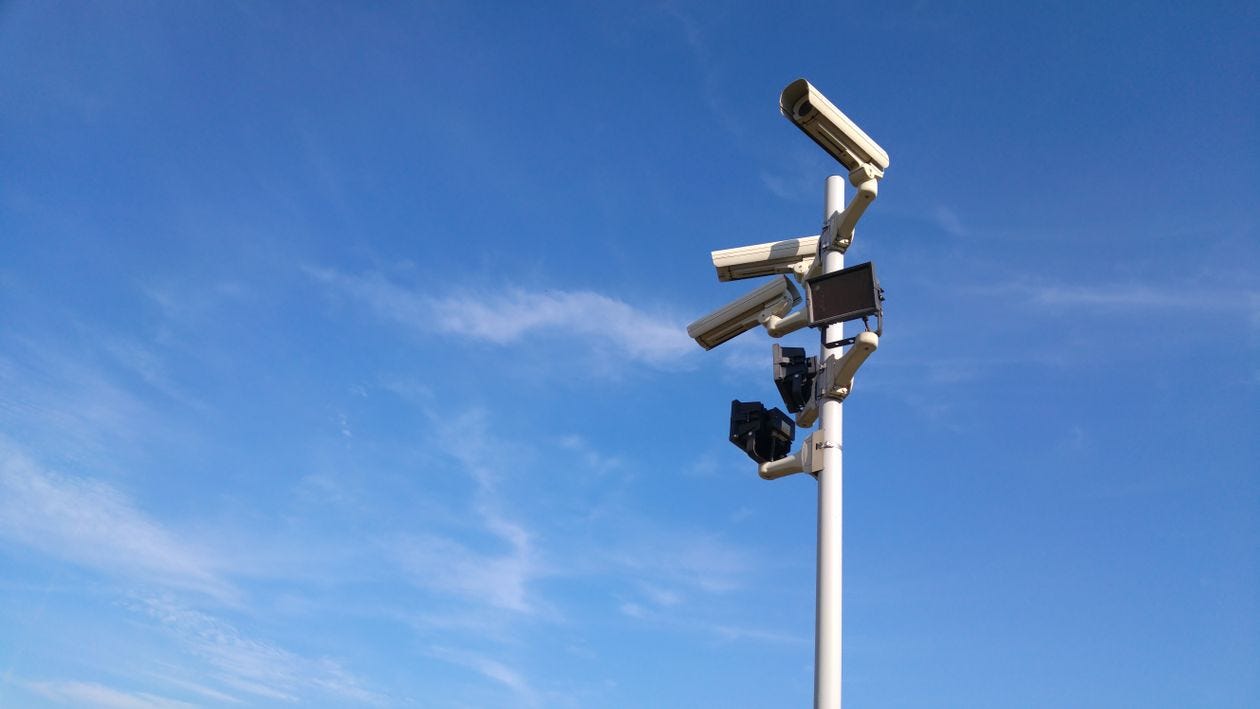
Fast forward to today and the situation looks quite different. According to V-Dem, the biggest data set on democracy, the number of countries where free speech is worsening has grown almost exponentially over the past twenty years. Almost thirty years of democratic gains have been rolled back.
It is no surprise that authoritarian states adopt censorship. That has been page one of the dictator’s playbook ever since the Athenian democracy was first overthrown in an oligarchic coup. You have to control the public sphere; you cannot allow dissent. But some things have changed. Authoritarian states, China most prominently, have learned to reverse-engineer the technological promise and supercharge censorship and surveillance at a scale previously unimaginable. Imagine what an Adolf Hitler or a Josef Stalin could have done with AI, as if their societies were not sufficiently unfree already.
What concerns me most, though, is that democracies have become much more defensive about freedom. Democracies once looked at free speech as a competitive advantage against authoritarian states. Today, and especially in our digital age, they increasingly look at it as a Trojan horse, a tool weaponized against democracy that empowers enemies both within and without, whether Russian disinformation or right-wing extremism.
Germany’s militant turn
This has manifested itself here in Germany, where my argument is that the militant part of German democracy has been re-emphasized and the liberal part de-emphasized.
We all know the historical reasons. There are also more recent developments that I understand can make Germans deeply apprehensive: the attack in Halle in 2019, the assassination of Walter Lübcke, the mass killings in Hanau the following year. These are a few examples of right-wing extremist violence that give many Germans deeply uneasy feelings about repeating history, about whether democracy will hold this time or whether we are living through a Weimar 2.0. That is reinforced by the fact that the AfD is polling well and looks like it might become the most popular party in the country.
So there is a relevant context, and I want to emphasize up front that I am not following the American attacks on Germany. Germany is not an authoritarian state. It has a vibrant political and media landscape, political pluralism, competitive elections, peaceful transfers of power, and judicial independence, all the ingredients that go into a democracy.
Nonetheless, there has been an increasing focus on restricting speech. In 2017 Germany introduced the NetzDG, which required social media platforms to remove manifestly illegal content within twenty-four hours or risk fines of up to fifty million euros. It has now been replaced by the Digital Services Act across the European Union. The flip side is that this makes large private platforms the arbiters of speech and incentivizes them to remove content that may be perfectly legal, without the due process one would normally expect.

It is not only platforms that have been cracked down on. In 2022 the New York Times documented at least 8,500 open online speech cases in Germany. Very often these are coordinated days of action where police go to private homes early in the morning, present people with charges of incitement to hatred, using anticonstitutional symbols, or insulting politicians, and sometimes confiscate laptops and other devices for forensic analysis. I am sure some of these people are genuine neo-Nazis who threaten politicians and incite violence. But there are numerous documented examples of people caught in the dragnet who have engaged in what many would label satire, using Nazi symbols not to advocate for Nazism but to criticize someone, perhaps by making a hyperbolic comparison.
It has also spread to the physical world, and this is where the inherent contradictions of militant democracy come to the fore. Iris Hefets is an Israeli Jew who has lived in Germany for more than twenty years. She is an anti-Zionist on the far left, very critical of the Israeli government, and she believes Israel is carrying out a genocide in Gaza. After October 7, several German cities made blanket bans on pro-Palestinian protests out of fear of antisemitic statements. Hefets went out in a multicultural neighborhood in Berlin with a placard saying “As an Israeli Jew, stop the genocide in Gaza.” Within minutes, two German police officers detained her and put her in a police van, where she spent a couple of hours. She was not charged. On at least four occasions the same thing has happened.
So we have a situation where the descendant of a people subjected to genocide in Germany is being censored by the descendants of those who committed the genocide, all in the name of protecting people like her from antisemitism. And there are other contradictions. These laws are meant first and foremost to protect minorities, yet many Muslims have been caught up in them too.
That is not even the most far-reaching way speech is restricted here. After the assassination of Walter Lübcke, the criminalization of malicious gossip and insult was expanded to persons in political life. In other words, and this is my interpretation, a special protection of politicians against insult. And it is being used by the most powerful people in office in this country.
As leader of the opposition in 2021, Friedrich Merz retained a law firm specializing in scanning social media to identify insulting content and report it to police, and brought hundreds of cases. This has continued since he became chancellor. A few weeks ago someone was fined roughly a month’s wages for calling him a “Lügen-Fritz.” In my view that is a very mild insult of the most senior political leader in the country. And even if Merz might not be in the same class as Donald Trump, I am fairly sure you can find examples of Merz and many other politicians saying things that are not entirely true. Robert Habeck, the former vice-chancellor, had something like 800 cases against people, including someone who posted a meme calling him a Schwachkopf. Again, a very mundane insult. And again, police are being sent to the homes of Germans who criticize their political leaders.
So my question becomes: is this really a defense of democracy, or has it become a tool for protecting those who derive their democratic power from the people against the very people they derive it from? I lean very heavily toward saying this is an indefensible tool, and one not required under any meaningful definition of militant democracy.
Does it work?
Another question I think Germans and Europeans should ask themselves is whether militant democracy is mostly a psychological mechanism, something symbolic, or whether it actually works.
Let us ask the German domestic intelligence services. Their own overview of right-wing extremism shows criminal and violent offenses rising steeply from 2018 to 2025. Look at where that begins. By 2018 the NetzDG was already in place, and several other speech-restrictive measures had already been adopted. You see the same pattern for antisemitism. And the rise of the AfD in the polls, even after members such as Björn Höcke have been convicted several times, does not inspire confidence that this is an effective remedy.
That does not necessarily mean the idea must be abandoned. But you should at least have a conversation about whether the mechanism is defensible, given that Germany is also committed to freedom of expression.
Germany is not alone. Across the European Union there is a push to criminalize hate speech further. The European Commission has proposed making it an EU crime across all twenty-seven member states, harmonizing and further restricting it, with harsher punishments and more emphasis on prosecutions. This would be deeply detrimental to free speech in Europe, because the differences are not only between Germany and the United States; they exist within Europe. My country, Denmark, is very different from Germany. We do not ban Holocaust denial. We do not ban swastikas. We have never banned communist parties; they sat in parliament. We had revolutionary socialists whose platforms were explicitly to overthrow the bourgeoisie and capitalism. The Danish tradition has been to say that it is better to combat these things out in the open. And Denmark has never had any real threat from political violence, nor neo-Nazi parties of any meaningful size.
Forcing a country like Denmark to adopt a militant democracy model is indefensible, and not something a European Union committed to freedom and democracy should be doing. Germany has its historical reasons. But forcing those reasons onto states with a different tradition, a different history, a different reality would, in my view, be illiberal.
European courts have not been willing to extend much protection either. The European Court of Human Rights has long insisted that hate speech is not protected. Even offensive speech, even blasphemy, can be criminalized in Europe. That is incredible to me. Look at the history of free speech. Why was Socrates sentenced to death? One of the reasons was impiety. We have not made progress since the trial of Socrates.
Earlier this year the Court also ruled in a case from Georgia, brought by a food courier who was upset that Georgian officials used bus lanes to race to and from the office while couriers were being fined. He insulted the officials on TikTok. The Court in its wisdom said it is very important to protect the functioning of civil servants and to protect them from offensive and abusive verbal attacks, especially online, because the online sphere is dangerous. So with this in hand, Friedrich Merz could go to Strasbourg and say: if you want to call me a Lügen-Fritz, I can punish you, and this is completely compatible with human rights. That is a simplistic take, since these cases are highly contextual, but essentially that is the message sent.
What America learned
It is worth looking at why the First Amendment, in its current interpretation, differs from the European approach, and at the fact that Americans have grappled with these questions rather than simply inheriting the answer.
In 1949 in Chicago, a former Catholic priest with incendiary views on Jews and Black Americans was to give a speech, and he said a lot of horrific things. A large group of counter-protesters, agitated by his views, broke into the building, and violence ensued. The city fined Terminiello for breaching public order, on the theory that by giving such an offensive speech he had invited others to attack him. The Supreme Court, five to four, said no: the whole point of free speech is to invite dispute. If you allow someone to use violence to stop speech, and reward them for it, you defeat the entire purpose.
One of the justices who disagreed was someone whose views were shaped right here in Bavaria. Robert H. Jackson had been the chief American prosecutor at Nuremberg. He had put Nazi war criminals on trial, including Julius Streicher, the editor of Der Stürmer, sentenced to death for incitement to genocide in his antisemitic writings. Jackson was deeply concerned about how totalitarian movements in Europe had used democratic freedoms to get into power. His democratic bona fides are unimpeachable. He wrote a dissent, often quoted, arguing that if we allow freedom without balancing it with order, the Bill of Rights will be converted into a suicide pact. Democracies that allow too much freedom, in other words, hand totalitarian movements a gun they will use to end freedom. That was not an unreasonable statement for a man who had just tried Nazi war criminals.
But look at what happened. Fourteen years later, in 1963, 187 African American students protested against white supremacy outside the capitol in South Carolina. They used no violence. They sang, they chanted, they held placards. The white police force told them to disband because they were endangering public order. Why? Because white citizens might be so offended that they would use violence against them. The students refused, were arrested, and brought their case to the Supreme Court. The Court said what it had decided fourteen years earlier in Terminiello: that holding and expressing views deeply offensive to others is not a ground for restricting them.
Terminiello did not become a suicide pact. It became a deeply empowering tool for a persecuted minority to speak truth to power in a hostile environment.
That underscores an argument the civil rights movement made again and again. When The Birth of a Nation came out, the NAACP initially campaigned to have it banned, and occasionally succeeded. But they discovered two things. Their campaigning vastly increased the audience for the film and made its director a martyr who could claim the mantle of free speech. And Thurgood Marshall, then at the NAACP’s legal arm, wrote an internal letter saying they could not go to Alabama, Tennessee, Mississippi, and Louisiana to argue that banned films showing interracial marriage must be protected by free speech, and then go to Ohio the next day and argue that The Birth of a Nation must be prohibited. The NAACP changed its position.
Marshall argued against hate speech laws before the Supreme Court. In Beauharnais, about anti-Black leaflets, he said the comments at issue were thoroughly repulsive and nonetheless comments on the burning political and social issues of the day, and that there was a grave danger that such bills, when enacted, would serve to throttle any speaker who sought to champion the cause of minority groups.
By 1969 Marshall had become the first African American justice on the Supreme Court. The canonical case that cements American free speech exceptionalism is Brandenburg v. Ohio: a Klansman, in full regalia and armed, making thinly veiled threats against Black people and Jews in front of cameras. He was convicted under an Ohio law. He was defended, interestingly, by the ACLU, by two staff lawyers, one of them Jewish, the other Eleanor Holmes Norton, who would later become a delegate to Congress for Washington, DC. She defended Clarence Brandenburg on principle. The Supreme Court ruled in his favor, unanimously, and one of the justices was Thurgood Marshall.
We can assume that Norton and Marshall did not do so because they sympathized with a man who wanted to take away their rights, and who knows, perhaps even kill them. They did it because Marshall saw that the values of free speech and equality were not mutually exclusive but mutually reinforcing. The equal dignity of racial minorities depends on a principled and consistent application of free speech. He did not argue that free speech is a sufficient condition for racial equality, or a magic wand that makes racism disappear. He saw it as deeply instrumental and empowering in that fight.
On his first day in office Donald Trump signed an executive order promising to restore the First Amendment. Just about every action he has taken since has repudiated it. Once you see this history, it should not surprise us that his administration is hostile to core principles that have served, however imperfectly, to protect unpopular minorities throughout American history, and that it has tried to repurpose them for its own ideological agenda.
Only a majority away
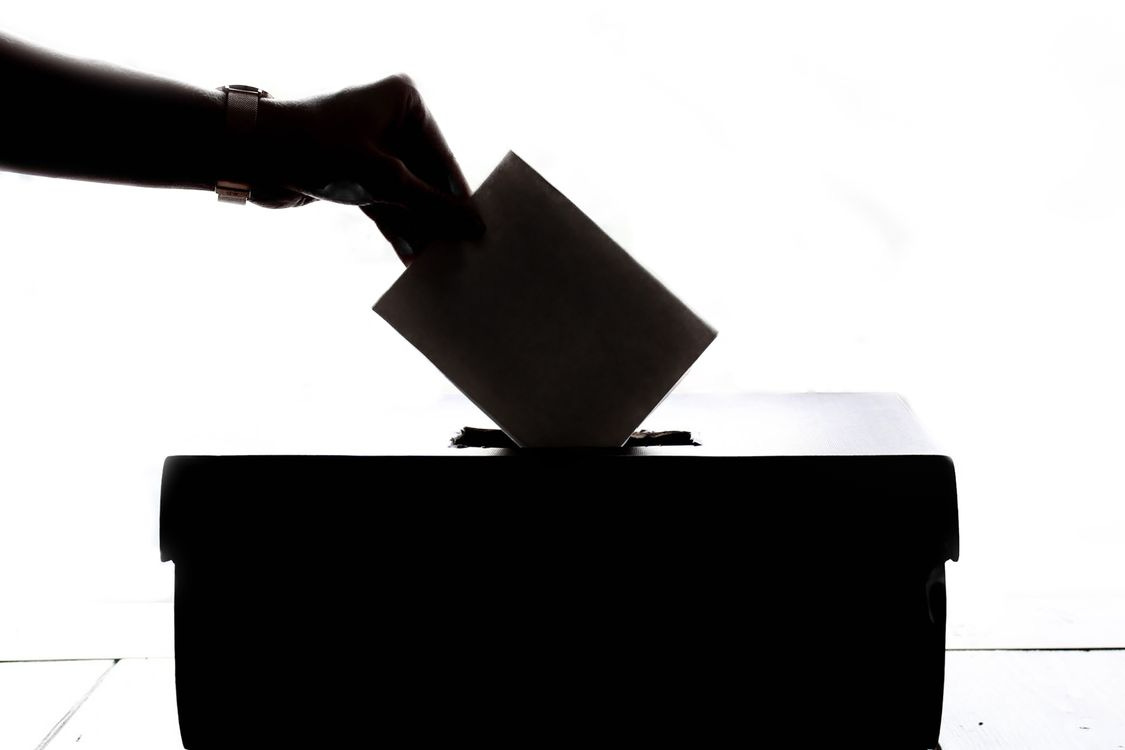
If we accept that free speech and equality go hand in hand, and if we accept that it is dangerous for minorities to advocate restrictions, because those restrictions will always be defined and enforced by majorities, then it follows that if you are a minority you will only ever be a political majority away from being the target rather than the beneficiary of free speech restrictions.
That is not enough, though. There are other assumptions underlying free speech, and one of them is the tired cliché that bad speech is answered with better speech, as though this happens automatically. It does not. It requires effort. And we live in an imperfect world, so we will never have a utopia, not least because we disagree about first principles. Your utopia might be different from mine.
But let me give one concrete and recent example from Europe.
In April, Viktor Orbán was voted out of office after sixteen years, in a landslide. In theory this was not supposed to be possible. Orbán had built an illiberal and increasingly authoritarian state. His allies controlled eighty percent of traditional media and ninety percent of advertising revenue. Universities had been closed down. Civil society groups had been marginalized. LGBT protests were banned.
There was one thing Orbán did not control: the internet. A small group of independent online outlets kept trying to hold him accountable, and they broke a corruption story about child abuse that ultimately led to the resignation of the president and the minister of justice. On the day of that resignation, a Fidesz insider named Péter Magyar went on Partizán, a YouTube channel discussing public affairs, and made incendiary allegations, really tearing into Orbán over the level of corruption built around the state apparatus. Very quickly that interview garnered a million views in a country of ten million citizens. It now has more than two million. He followed up on Facebook. Two years later he had not only built a political party but won a two-thirds majority in a democratic election in which he was heavily outspent and had everything stacked against him.
That was only possible because of the internet, because of the social media we so often treat as a threat to democracy. Here it was a lifeline for democracy. And that is why Xi Jinping and Vladimir Putin would call Orbán a lousy amateur. They know very well that it is not enough to control the press. If you do not control the internet, you cannot be a dictator.
A spirit of tolerance
I want to close with a line from someone who was born in this country and had to flee it, even though he was probably the smartest man in it. Albert Einstein wrote that laws alone cannot secure freedom of expression, and that in order that every man may present his views without penalty there must be a spirit of tolerance in the entire population.
That spirit is difficult. It is challenging, and in many ways counterintuitive. Human beings are not necessarily wired for a principled, consistent approach to free speech. We are very good at telling ourselves why particular kinds of speech should not be protected, why they are really dangerous, and why, purely by coincidence, the dangerous ones happen to align with our underlying ideological priors.
You can have the First Amendment. It can be the greatest paper on earth. But if you do not have a critical mass of people committed to a robust conception of free speech, it will not mean anything. We would go back to the days when you were sent to prison for ten or twenty years for opposing American involvement in the First World War, if you were an anarchist or a socialist.
That is the challenge for us. I think that spirit of tolerance demands an open democracy rather than a militant one. I understand that the German experience speaks in the other direction. But it may be worth a conversation about how militant, and how liberal, that democracy should be going forward.
Jacob Mchangama is the Executive Director of The Future of Free Speech and a research professor at Vanderbilt University. He is also the author of Free Speech: A History From Socrates to Social Media and The Future of Free Speech: Reversing the Global Decline of Democracy’s Most Essential Freedom (with Jeff Kosseff).