


Join Us! The 2026 Global Free Speech Summit returns on October 2–3 in Nashville, TN. Hosted by The Future of Free Speech and Vanderbilt University, this event brings together global leaders, thinkers, and change-makers to confront the most urgent threats to freedom of expression and explore bold, resilient solutions. Guests will have the opportunity to attend networking receptions where they can exchange ideas with speakers and other guests.
🎟️ Spots are limited. Get your tickets here.
This Week at a Glance 🔎
🇺🇲 Pentagon Fires Stars and Stripes Staffers
📲 Meta Settles Child-Safety Case for $18 Billion
🇳🇿 New Zealand Proposes Under-16s Social Media Ban
🇭🇰 Hong Kong Convicts Tiananmen Square Vigil Organizers
🎤 WaPo Ordered to Reinstate Reporter Fired Over Posts
First of All 🇺🇲
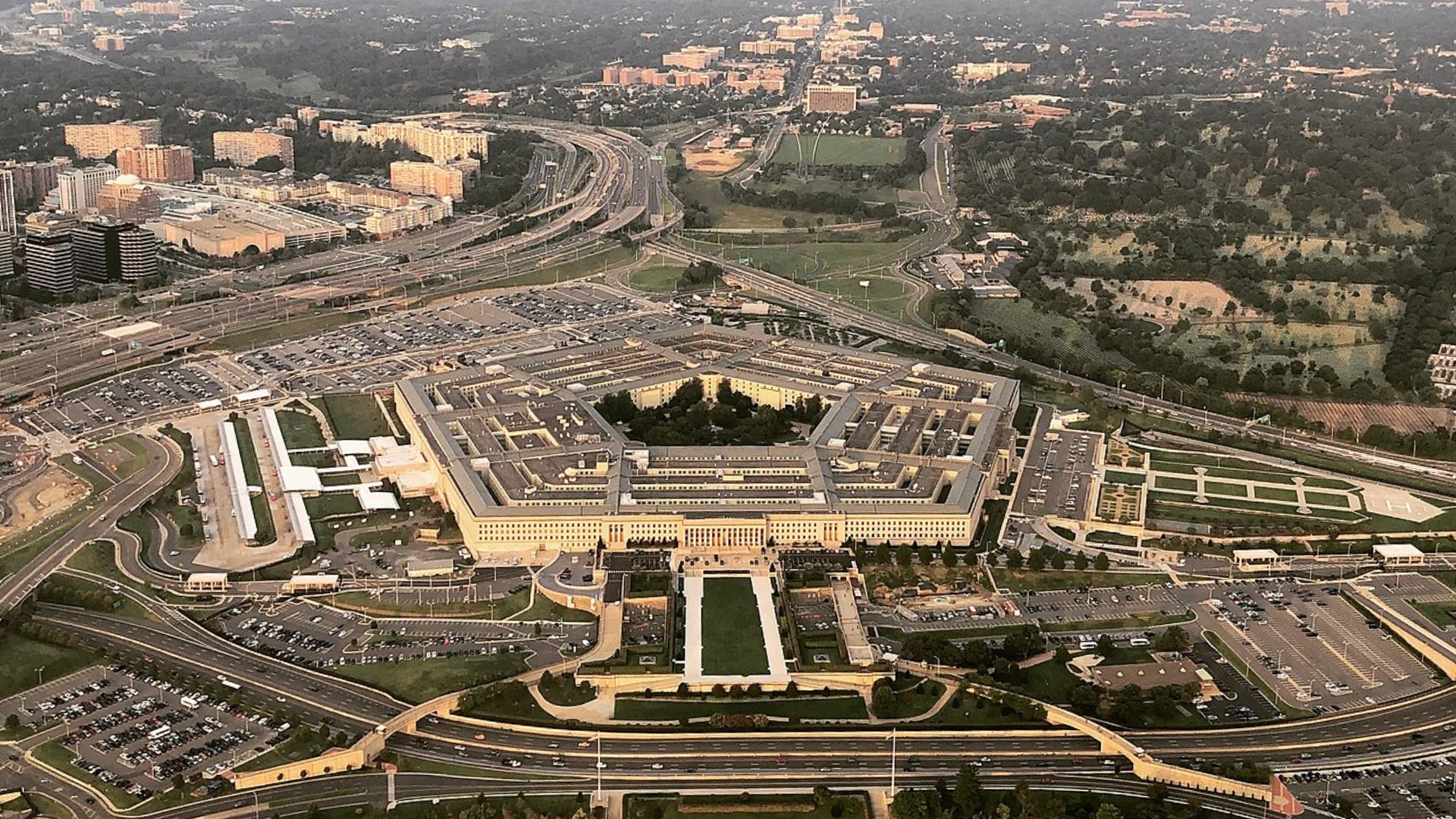

» Pentagon Fires Stars and Stripes Staffers for Insubordination
The Department of Defense fired three employees of Stars and Stripes, a military newspaper, for insubordination over a CBS interview.
Details:
In the interview, Editor-in-Chief Erik Slavin and reporter Lara Korte spoke out against potential interference from the Department in editorial decisions.
The Defense Department issued the pair a notice of separation shortly after.
The Department also dismissed publisher Max Lederer, who recently announced his retirement after disagreements over staffing..
The journalists’ lawsuit against Defense Department officials alleges the move is retaliatory over its comments and reporting on conditions aboard the USS Abraham Lincoln aircraft carrier.
Despite partial Pentagon funding, Stars and Stripes is legally mandated to remain editorially independent.
» CENTCOM Official Confirms Journalist Blacklist
A U.S. Central Command (CENTCOM) public affairs official threatened to add a reporter to a list of “people to disregard” for calling too often.
Details:
An Intercept reporter repeatedly called CENTCOM seeking details about Iranian attacks on U.S. bases.
Richard Allee, an Executive Assistant at CENTCOM, eventually answered, threatening to place the reporter on “a list of people to disregard.”
CENTCOM’s press office emailed a denial that the “blacklist” exists.
The incident follows a wave of press restrictions at the Pentagon, as detailed in previous Free Flows.
» Trump Threatens $5B Lawsuit Against Think Tank
President Trump threatened to sue the Center for American Progress (CAP), a left-leaning think tank, for $5 billion unless it retracts a report about National Guard deployments.
Details:
The report denied that the deployments reduced crime, arguing instead that Trump took credit for already declining crime trends.
Trump’s attorneys demanded CAP remove the report by the end of the week or face a defamation suit.
CAP responded that “truth is not and cannot be defamation.”
The threat fits a pattern of retaliation by the Trump administration over unfavorable coverage.
» WaPo Ordered to Reinstate Reporter Fired Over Posts
An independent arbitrator ordered The Washington Post to reinstate Karen Attiah, an opinion writer fired over posts about Charlie Kirk’s killing.
The Ruling:
After Kirk’s assasination, Attiah wrote several Bluesky posts, including that she rejected “performative mourning for a white man who espoused violence.”
The Post accused her of “gross misconduct” and violating the paper’s social media policies.
An arbitrator found that the paper “did not have good and sufficient cause to terminate” per the collective bargaining agreement with its union.
According to Attiah, the arbitrator ordered the paper to reinstate her immediately with back pay.
» Judge Strikes Down Texas Drag Ban
A federal judge in Texas found a 2023 state law restricting drag shows unconstitutional on First Amendment grounds.
Context:
The law fined business owners who hosted drag events up to $10,000, while performers faced a Class A misdemeanor.
District Judge David Hittner ruled the law was unconstitutional in 2023, but the 5th Circuit Court of Appeals remanded the case back to him with new instructions.
Hittner determined the law was unconstitutional again, and that it was so vague and overly broad that it could criminalize activities like “cheerleading, dancing, live theater, and other public occurrences.”
Attorney General Paxton’s office did not provide an immediate comment.
» Court Voids $130,000 Verdict Against Project Veritas Partly on First Amendment Grounds
A federal appeals court vacated $130,000 in damages against James O’Keefe and Project Veritas over a 2016 undercover sting of Democratic consultant Democracy Partners, ruling the damages improperly punished them for publishing news.
The Ruling:
The U.S. Court of Appeals for the District of Columbia Circuit ruled 2–1.
Judge Henderson wrote that Project Veritas’ lies to enter Democracy Partners’ property was unprotected fraud, but most of the video was lawfully recorded and protected.
Henderson added, “The principal question in this appeal is whether the jury’s damages award violated the First Amendment by punishing the defendants for publishing a news story.”
The case raised questions about the extent of First Amendment protections for undercover reporting based on deceit, a tactic in decline since the 1990s.
» Judge Rules University Violated Protestors’ First Amendment Rights
Federal judge Jacqueline Becerra temporarily blocked a policy against “expressive activities” at Florida International University (FIU).
The Ruling:
FIU disciplined students who wore “ICE OFF FIU” shirts at a campus event, as mentioned in a previous Free Flow, under the policy.
Internal FIU emails confirmed that the students’ protest was not disruptive.
Becerra temporarily barred FIU from disciplining the students and halted enforcement of the policy.
The Digital Age 🤖

» Meta Settles Child-Safety Case for $18 Billion
Meta settled a case brought by multiple states over teen social media addiction and safety for $18 billion.
Details:
The case was brought by California, Colorado, Kentucky, and New Jersey who accused Meta of designing features to addict children and downplaying harm.
The settlement resolves litigation in 47 states (plus DC and and three territories, Texas settled separately), excluding New Mexico and Florida. Meta may still face lawsuits from individuals and school districts.
The company also agreed to add stronger child-safety measures to its platforms, such as two-hour daily time limits, push notification restrictions, and “robust” age-assurance.
What’s Next:
Meta conditioned 30% of the settlement to be be released to states only if YouTube and TikTok implement similar safety features and pay the same amount, split between them.
» New Zealand Introduces Bill Barring Under-16s From Social Media
New Zealand’s Prime Minister announced a proposed law banning children under 16 from social media.
Details:
Platforms would have to take “reasonable steps” to verify user ages, potentially through facial recognition and digital ID services.
Messaging and online gaming platforms, as well as AI apps with productivity uses, are excluded.
Tech firms could be fined up to 10% of global revenue for violations.
Two of the three parties in the PM’s coalition government oppose the law. To pass, it requires the support of opposition lawmakers, who are undecided.
Our Take: Writing about the UK’s proposed ban on social media for under-16s, Jeff Kosseff warned such proposals risk “undermining privacy, anonymous speech, and freedom of expression for everyone,” and there is little evidence to show bans are effective.
The Brussels Effect: Europe and Beyond 🇪🇺


» Ukraine Sanctions Russian Cartoon “Masha and the Bear”
Ukraine sanctioned creators and the distributors of“Masha and the Bear,” a Russian cartoon, for spreading “pro-Russian narratives” and threatening national security.
Details:
The sanctions create legal grounds to block the show in Ukraine, and work to restrict it internationally.
Ukraine’s allies, including the UK, have criticized the popular show – broadcast in about 100 countries – as an instrument of Russian soft power.
Our Take: Europe has also moved to sanction Russian propaganda, and banned Russia Today TV. At The Bedrock Principle, Natalie Alkiviadou argues, “Liberal democracies are often judged not by how they protect freedom of expression in ordinary times, but by how they protect it during periods of crisis. History demonstrates that exceptional measures have a tendency to expand beyond the circumstances that first justified them.”
Free Speech Recession 🌍
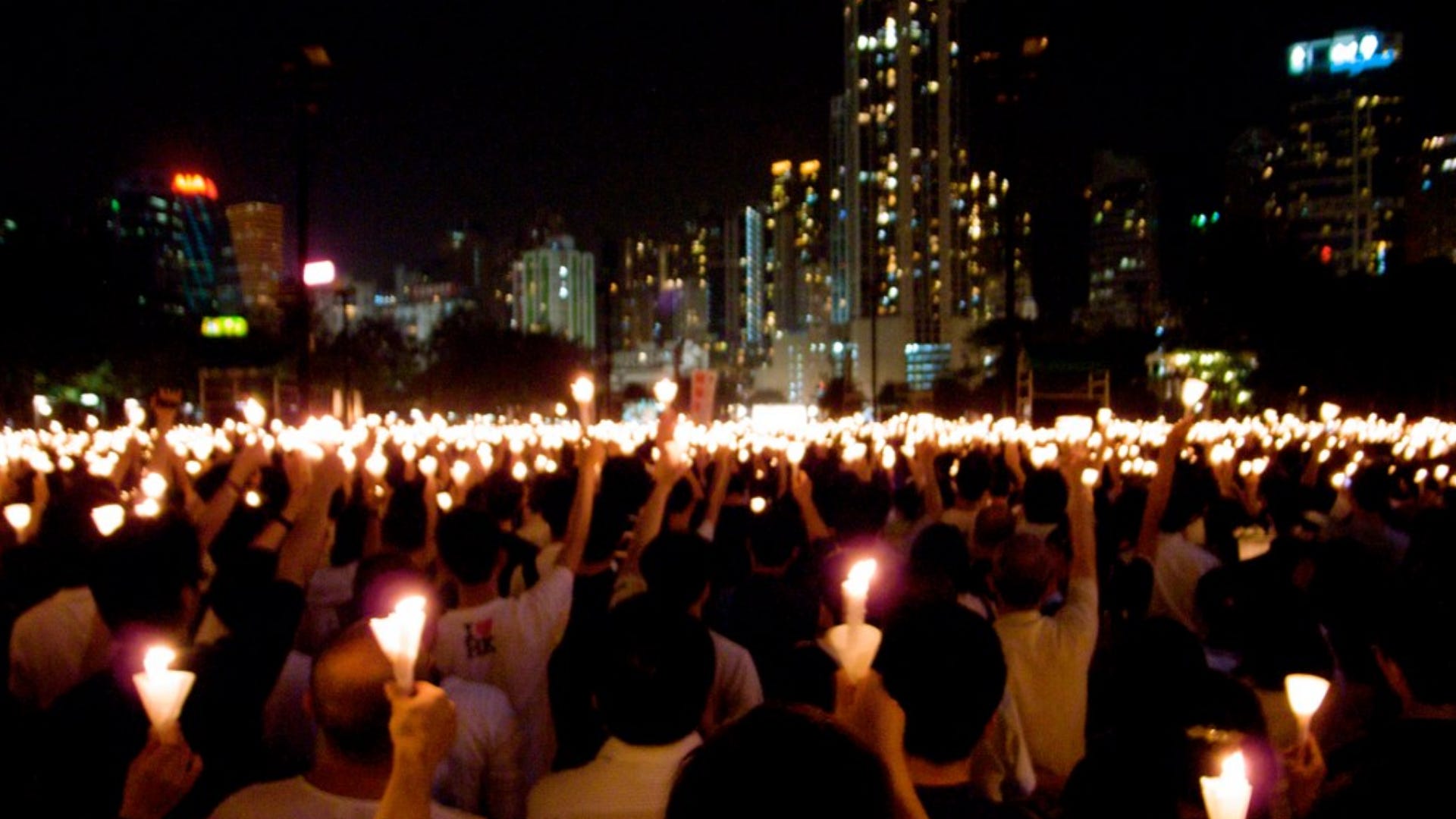
» Hong Kong Convicts Tiananmen Vigil Organizers
A Hong Kong court convicted two pro-democracy activists who organized vigils marking the 1989 Tiananmen crackdown for “incitement to subversion.”
Details:
Lee Cheuk-yan and Chow Hang-tung face up to 10 years in jail.
They have been behind bars since they were charged in 2021.
HK activists held vigils for three decades until China banned the annual event during the pandemic and imposed a security law in 2020 to quell anti-government protests.
The convictions are part of a broader crackdown: an HK Court sentenced media mogul Jimmy Lai to 20 years prison under the national security law.
» China Investigates Comedian Who Altered a Revolutionary Song
Local authorities in Wuhan are investigating Guo Degang, a comedian, for changing the lyrics of a revolutionary song during a performance.
Details:
Guo is the country’s most prominent performer of xiangsheng, a form of Chinese comedic dialogue.
He changed a popular lyric from “it is quiet along Weishan Lake” to “it is quiet in the Forbidden City,” the former home of China’s emperors.
Authorities approved Guo’s performance in advance, but not the lyric change.
Guo’s investigation highlights China’s stricter controls of the entertainment and arts industries. Another comedian Li Haoshi has not performed in China since 2023, following a joke mocking the military that cost his employer over $2 million in fines.
Ashley Haek is a Communications Manager at The Future of Free Speech.
Ajdin Muratovic is the Director of Communications at The Future of Free Speech and the Managing Editor of The Bedrock Principle.