


This Week at a Glance 🔎
— 🇺🇲 Pentagon to Remove Media Offices after Court Rules Against Press Limits
— 📱 Meta and YouTube Held Liable in Social Media Addiction Trial
— 🇬🇧 UK Fines 4Chan Over Age Verification Failures
— 🇨🇳 Hong Kong Book Shop Arrested Over ‘Seditious’ Publications
— 🇬🇳 Guinea Decree Dissolves 40 Political Parties
First of All 🇺🇲
» Rapper Prevails in Defamation Suit Brought by Police
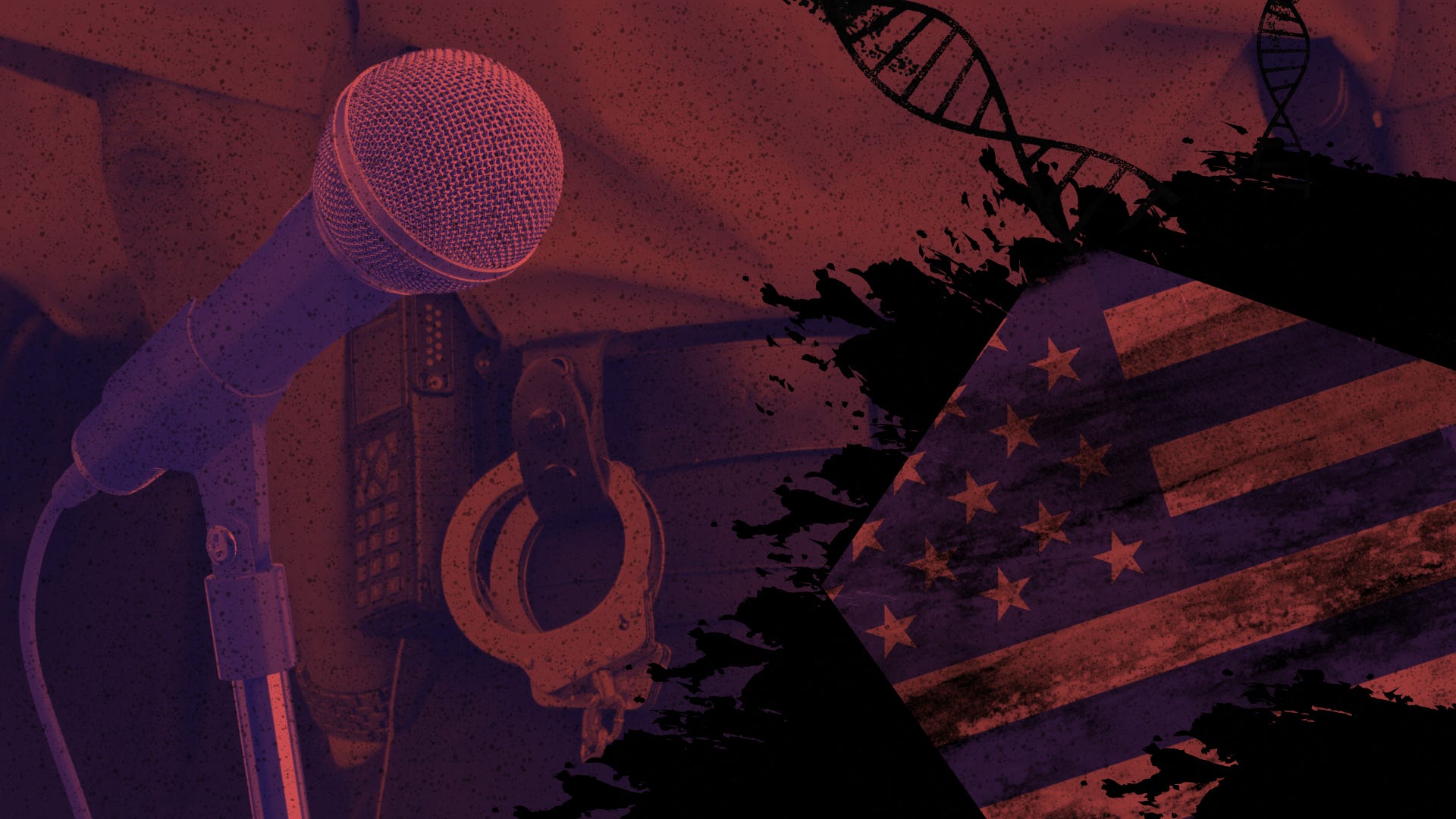
Rapper ‘Afroman’ has prevailed in a defamation lawsuit brought by Ohio police who raided his home in 2022 on suspicion of drug trafficking and kidnapping, whom he had mocked in music videos and social media posts.
Background:
Half a dozen armed officers from the Adams County Sheriff’s Office raided the home of Afroman, whose legal name is Joseph Foreman, on suspicion of drug trafficking and kidnapping, though no evidence was yielded or charges filed.
Foreman claims that the officers broke his gate and security surveillance wiring, took $400 in cash, and frightened his wife and kids, then 10 and 12, who were present during the raid.
According to Afroman, he asked himself, “as a powerless Black man in America, what can I do to the cops,” and found that the only solution was to “make a funny rap song about them.”
This was the starting point for his 14-track album, Lemon Pound Cake, which includes songs like “The Police Raid,” “Why You Disconnecting My Video Camera,” and more, and features footage of the raid he recorded on his home surveillance system in the music videos.
Afroman also posted memes and sold merchandise satirizing the incident, criticizing deputies’ appearances, and even making more serious allegations related to extramarital affairs and pedophilia amongst department members.
The Lawsuit:
Afroman maintained that his reaction to the raid was “the smartest, most peaceful solution,” but law enforcement officers alleged that his unauthorized use of likenesses hurt their reputations and interfered with their official duties and sued him for $3.9 million in damages.
A jury agreed with Afroman’s lawyers that his response was protected speech, and commenters have even remarked that the trial has backfired, drawing more attention to the content.
» Pentagon to Remove Media Offices After Court Finds Its Press Limits Unconstitutional
The Defense Department has said it plans to remove media outlets’ office spaces from the Pentagon after a federal judge found that recent press restrictions on reporters’ access to the building are unconstitutional.
Context:
Dozens of reporters sacrificed their Pentagon access credentials by refusing to sign a revised press pass policy that required journalists to pledge not to gather information that has not been expressly authorized for release, as mentioned in a previous Free Flow.
The New York Times sued Defense Secretary Pete Hegseth and the Pentagon in December, claiming the new policy violates journalists’ constitutional rights.
On March 20, U.S. District Judge Paul Friedman in Washington, D.C., ordered the Pentagon to reinstate the credentials of 7 Times journalists and struck down some of the agency’s restrictions on reporting.
What’s Next:
An area of the Pentagon known as the “Correspondents’ Corridor,” which reporters have used to cover the U.S. military for decades, will immediately close.
Journalists will eventually be able to resume work from an “annex” outside the building, though it is unclear when the annex will be available.
The Times has said it intends to take the Pentagon back to court. The Defense Department is appealing Friedman’s decision.
» ICE Officers Taking DNA Samples From Protesters
Several protesters arrested by ICE officials while observing officers’ activity, who have not been charged, have told NPR that officers took samples of their DNA.
Details:
NPR reviewed footage from an individual named Ben, who was on the side of the road filming officers when he was tackled, held down, and dragged into their vehicle.
He was then held in custody for three hours, where officers collected his DNA sample by swabbing his mouth with a Q-tip.
Ben suffered broken ribs and blunt chest trauma from the impact.
Five other people described similar occurrences under oath as part of lawsuits against the Trump administration: that they were arrested seemingly without provocation while protesting ICE, and then had officers take or attempt to take what appeared to be a sample of their DNA.
The Risks:
It is unclear where the samples acquired from protesters are ending up or how they are being used, and administration officials continue to deny the existence of a protester database.
Previously, DNA specimens collected by immigration officers were stored in a national FBI database, and local law enforcement agencies could access these tests, which can reveal broad information about a person, including their likelihood of having certain personality traits.
» Nashville Reporter Released on Bond from ICE Custody
Estefany Rodríguez Flórez, a reporter for Nashville Noticias, has been released from ICE custody after she was detained on March 4, as mentioned in a previous Free Flow.
Details:
Rodríguez was accused of violating her visa conditions, although her attorneys have cited court records showing that she lawfully entered the U.S. and has applied for political asylum and legal status through her husband, who is a citizen.
She also has a valid work permit and no criminal history, and her attorneys argue that she was targeted for her reporting that was critical of ICE.
Flórez was held in the South Louisiana ICE Processing Center in Basile, Louisiana, and released on $10,000 bond.
The habeas case against her allegedly warrantless arrest will continue, including claims that her First Amendment rights were violated in retaliation for her critical reporting of ICE activity.
» FIU Student Sues University Over Investigation into Group Chat
Florida International University law student Abel Carvajal has sued the school over its investigation into an offensive group chat he created with conservative students and leaders.
Details:
The Miami Herald and The Floridian reported on the leaked WhatsApp conversations, where variations of the N-word were mentioned more than 400 times, and descriptions of ways to violently kill Black people were included.
Following the controversy, Carvajal resigned as secretary of the Miami-Dade Republican Party and received notice from FIU that he was being investigated for creating and managing the group chat in which “individuals posted statements threatening to harm others.”
Carvajal’s lawsuit argues that FIU’s investigation constitutes viewpoint discrimination and that “no illegal speech or categories of unprotected speech” were included in the group chat.
The Digital Age 🤖
» Meta and YouTube Held Liable in Social Media Addiction Trial
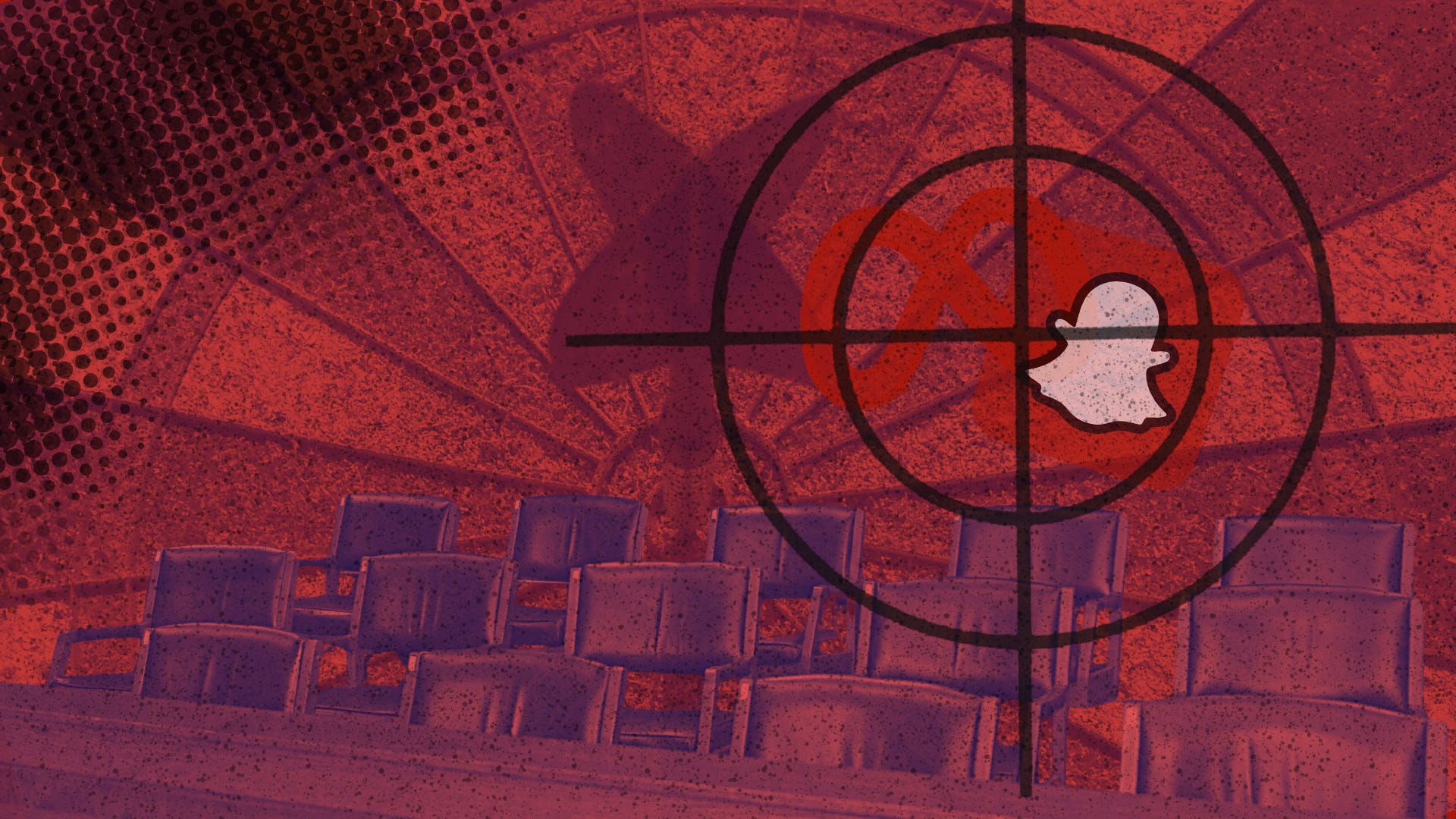
A California state court jury has found both Meta and YouTube liable in a lawsuit accusing the platforms’ design and operation of harming their child users.
Background:
The case was brought by a 20-year-old known as “KGM” in documents, who claims her addiction to social media exacerbated her mental health struggles.
Meta and Google’s YouTube were the only two remaining defendants in the case, following settlements by TikTok and Snapchat.
In Court:
Lawyers for KGM argued that design features intended to “hook” young users, such as infinite scroll, autoplay, and notifications, amounted to negligence in causing her harm.
Jurors were told not to consider the content of the posts and videos KGM was exposed to per platforms’ liability shields provided in Section 230 of the Communications Decency Act.
The juries found that the companies acted with malice and awarded KGM $3 million in damages, while they head back to decide on punitive damages.
In another case in New Mexico, a jury determined that Meta knowingly harmed children’s mental health and concealed what it knew about child sexual exploitation on its social media platforms.
Our Take: Separating “addictive design” from editorial judgment shouldn’t be a workaround for the First Amendment and Section 230. The real causality, if this trend continues, won’t be Meta or YouTube, which can bear the costs, but small and mid-sized companies that can’t. — Ashkhen Kazaryan
» Kentucky Social Media Ban under 16 Bill Advances
HB 227, a Kentucky law that would ban children under 16 from accessing social media sites without parental consent, has passed the House and awaits a vote by the Senate Judiciary Committee.
Details:
The legislation would require sites with $1 billion in annual ad revenue to verify users’ ages at account setup.
Platforms would be required to estimate the ages of users who have used the platform for 25 or more hours within the first six months of the legislation’s enforcement.
Users’ ages must be re-estimated after every 100 hours spent on the platform, though users with more than 7 years of continuous use on a specific platform will be exempt from estimation.
If companies have 80% confidence that the user is over 15, the account can be considered “adult,” and if a user is a minor with parental consent, platforms must disable addictive features and profile-based advertisements.
Users identified as minors who have not provided parental consent will have 30 days to dispute account deletion or provide consent.
The bill’s sponsor, Rep. Matt Lockett (R-Nicholasville), defended the legislation against free speech concerns, arguing the bill doesn’t contain restrictions on specific content and is “100% content neutral.”
The Brussels Effect: Europe and Beyond 🇪🇺
» UK Regulator Fines 4Chan Over Age-Verification Failures
4chan, an image-board website, has been fined £450,000 ($602,360 USD) by the UK’s internet regulator Ofcom for failing to comply with age-check requirements under the Online Safety Act.
Details:
4chan faces an additional £50,000 (approx. $66,920 USD) fine for failing to assess the risk of users encountering illegal material.
It also faces a £20,000 (approx. $26,770 USD) fine for failing to specify in its terms of service how users are to be protected from such content.
These come after 4chan was previously fined £20,000 for failing to respond to Ofcom’s requests.
The company has until April 2 to implement age-assurance measures, conduct a “suitable and sufficient” assessment of the risk of illegal harm, and rewrite its terms of service.
If it fails to do so, it could face daily penalties of up to £20,000.
4Chan has refused to pay all previous fines from OfCom, and the company’s lawyer, Preston Byrne, responded to the demands with an AI-generated cartoon image of a hamster.
“In the only country in which 4Chan operates, the United States, it is breaking no law and indeed its conduct is expressly protected by the First Amendment,” Byrne wrote on X.
» EU Commission Investigates Snapchat Under DSA
The European Commission has launched an investigation into Snapchat over concerns that the social media platform isn’t doing enough to protect kids under the Digital Services Act (DSA).
Details:
Although it is Snapchat’s own policy to require users to be at least 13 to use the platform, the commission said Snapchat’s “age assurance” system is “insufficient” at effectively enforcing this age requirement.
Under the DSA, platforms must deliver an “age-appropriate” experience to users under 17, which the Commission argues Snapchat cannot do without effective age-verification systems in place.
The Commission alleged Snapchat may not be doing enough to protect minors from being contacted by “users with harmful intent, such as sexual exploitation or recruitment for criminal activities.”
The app is also accused of not adequately scrubbing underage users’ feeds of content about illegal or restricted products, including drugs, vapes, and alcohol.
Free Speech Recession 🌍
» Hong Kong Book Store Staff Arrested Over ‘Seditious’ Publications
Four staff members at an independent book shop in Hong Kong have been arrested on suspicion of selling ‘seditious’ titles, including a biography of Jimmy Lai, a convicted activist.
Details:
“Knowingly selling a publication that has a seditious intention” is a criminal offense under Article 23 of Hong Kong’s Safeguarding National Security Ordinance.
Violators of the offence could face up to seven years behind bars, and 10 years if they are found to have colluded with an external force.
National security police reportedly arrested the staff and raided the bookstore, known as Book Punch, seizing allegedly seditious publications.
» Guinea Government Dissolves 40 Political Parties
Guinea’s Ministry of Territorial Administration and Decentralization announced the dissolution of 40 political parties for their “failure to meet their obligations,” stripping them of their legal status and banning them from political activity, including the use of their names, logos, emblems, and other symbols.
Details:
The decree has sparked backlash from the country’s main opposition figure, Cellou Dalein Diallo, who accused President Mamadi Doumbouya of trying to build a “party state.”
Several political parties and media outlets have been suspended, and numerous opposition leaders and civil society figures have been arrested or exiled under Doumbouya’s rule.
» Russian Authorities Thwart Protests Over Telegram Restrictions
Authorities in nearly a dozen regions across Russia have refused to authorize protests over the blocking of the messaging app, Telegram, and internet blackouts.
Details:
Officials have used various excuses to block rallies, including “tree inspection,” snow removal, ongoing COVID-19 restrictions, and even claims that the protests have no underlying cause.
Activists have scaled back protests into smaller, indoor gatherings, even if demonstrations are not focused on the war, while some have gone to court to challenge officials’ refusals.
This is the latest example of such demonstrations being limited or restricted, from protests against the jailing of local activists, cattle culling, labor demands, car registration fees, animal cruelty, and more.
An activist from the Siberian city of Novosibirsk said that the city has allowed small, authorized rallies because “the authorities are trying to give people an opportunity to vent, so that the tension doesn’t build up.”
However, even there, protesters against internet censorship were arrested at a square that did not even require authorization for demonstrations, but had been taped off for a purported “tree inspection.”
» CNN Segment Discussing Chinese Censorship Censored in Real-Time
While CNN’s Beijing correspondent, Mike Valerio, began describing topics that trigger censorship in China, the feed was interrupted with colored bars that say “Please stand by.”
Details:
Valerio warned audiences in China about what they would see if their feeds were censored, and as he went on to discuss how President Trump’s strikes in Iran are perceived to serve Chinese interests, viewers in China saw their feeds interrupted in the exact way Valerio described.
“Anddd we’re being censored right now, just so you know,” Valerio reported, “Color bars are up,” while the feed to U.S. audiences was uninterrupted.
The footage shows the real-time capabilities of Chinese monitoring and censorship, as Valerio’s interview with Elex Michaelson was repeatedly cut as soon as they mentioned specific topics.
» Filmmaker on Trial in Turkey for Screening Armenian Genocide Film
Rojhilat Askoy, a Kurdish filmmaker, has gone on trial on charges of “publicly insulting the Turkish nation and state institutions” for screening “Aurora’s Sunrise,” an animated film about the Armenian genocide, in Turkey.
Details:
Turkish courts have previously ruled that using the term “Armenian genocide” is a protected expression, and have acquitted two journalists of similar charges in July 2024.
However, the Chief Public Prosecutor’s Office in the Diyarbakir province indicted Askoy, citing scenes and dialogues that portrayed the events of 1915 as genocide.
Ashley Haek is a communications coordinator and research assistant at The Future of Free Speech.
Ashkhen Kazaryan is a Senior Legal Fellow at The Future of Free Speech, where she leads initiatives to protect free expression and shape policies that uphold the First Amendment in the digital age.