


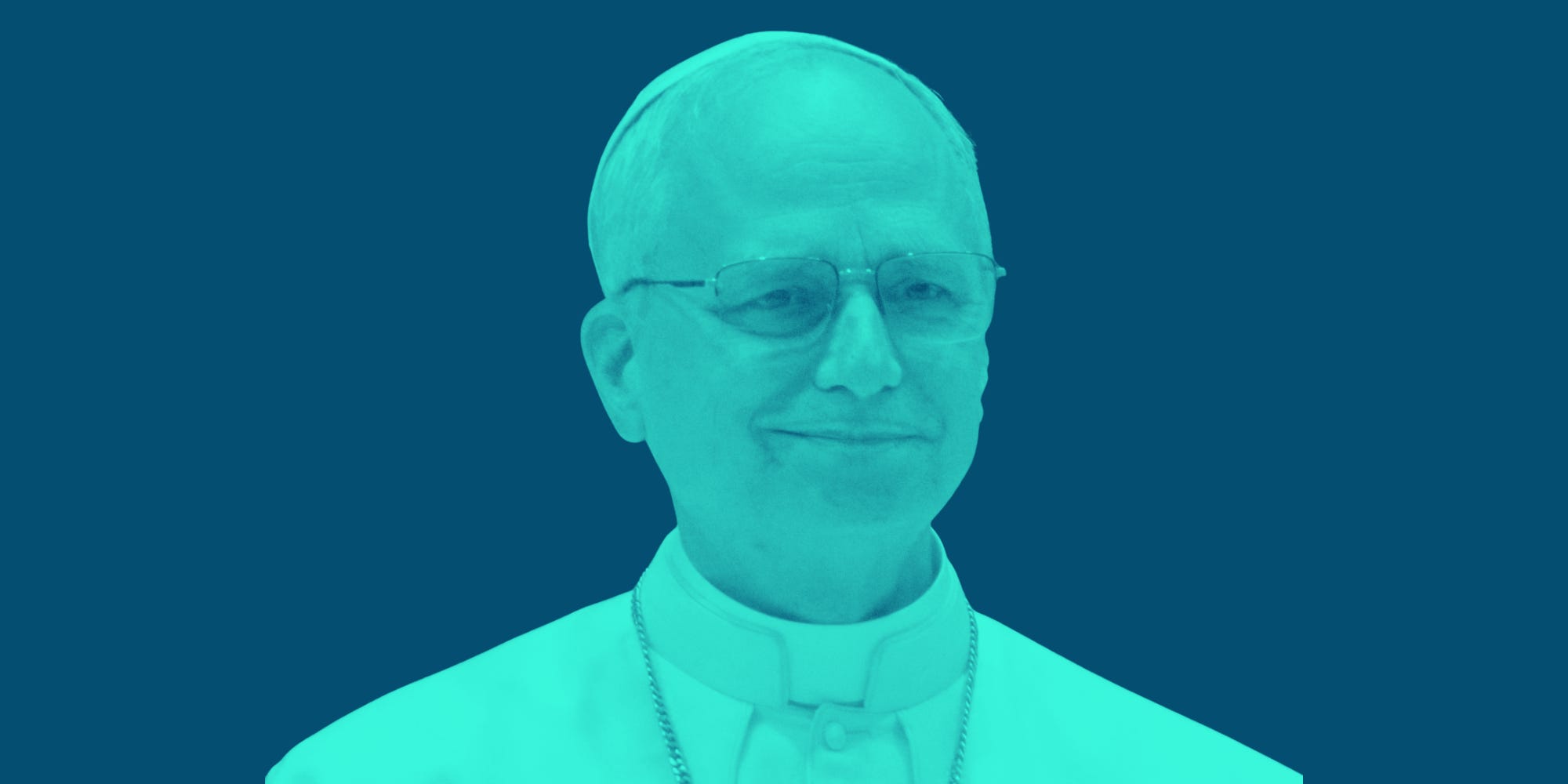
Pope Leo XIV gave some interesting remarks on freedom of expression in his “State of the World” speech today. At the center is a worry that semantic drift is turning language into a weapon—and that appeals to free expression are used to justify duplicity rather than to advance understanding:
Today, the meaning of words is ever more fluid, and the concepts they represent are increasingly ambiguous. Language is no longer the preferred means by which human beings come to know and encounter one another. Moreover, in the contortions of semantic ambiguity, language is becoming more and more a weapon with which to deceive, or to strike and offend opponents. We need words once again to express distinct and clear realities unequivocally. Only in this way can authentic dialogue resume without misunderstandings. This should happen in our homes and public spaces, in politics, in the media and on social media.
[ . . . ]
We should also note the paradox that this weakening of language is often invoked in the name the freedom of expression itself. However, on closer inspection, the opposite is true, for freedom of speech and expression is guaranteed precisely by the certainty of language and the fact that every term is anchored in the truth. It is painful to see how, especially in the West, the space for genuine freedom of expression is rapidly shrinking. At the same time, a new Orwellian-style language is developing which, in an attempt to be increasingly inclusive, ends up excluding those who do not conform to the ideologies that are fueling it.
Ironically, I find the message itself quite ambiguous. When was this period when language did not convey “semantic ambiguity” and was used solely to express “distinct and clear realities unequivocally”?
I have no doubt that Pope Leo is a deeply caring man who views all human beings — regardless of faith or origin — as possessing equal dignity and rights.
But the Church he heads has always been deeply concerned about language and people being led astray by “falsehood” and strife. In previous ages, it has gone to extreme lengths to shield Christendom from the contamination of “heresy” and “heretics”.
Truth is certainly a powerful and compelling justification for freedom of expression, and the Pope is right to care about a common moral commitment to truth among citizens, political institutions, and the media. But Pope Leo, in my mind, goes too far when he says that “freedom of speech and expression is guaranteed precisely by the certainty of language and the fact that every term is anchored in the truth.”
Freedom of expression is humanity’s best available instrument for the pursuit of truth. But inherent in that concept is that no one ever gets the last word or the right to authoritatively define and enforce Truth. This is especially important in the realms of philosophy, science, religion, and politics, where the civilizational stakes are highest.
This is why freedom of expression is such a disruptive idea and anathema to those who believe that a stable and well-ordered society must be organized according to a specific and compulsory belief system. But anchoring freedom of expression to a particular religious or secular doctrine has been tried and failed many times.
In fact, the Catholic Church was instrumental in defeating one such disastrous experiment in the shape of European Communism, whose proponents believed it to be the very manifestation of scientific truth and justified — nay, demanded — that all dissent be silenced and crushed. Millions of Eastern and Central European Catholics were stirred to resist their Communist overlords by Pope John Paul II and his synthesis of Christianity and human rights.
The Pope’s ambiguity (or my inability to properly understand his message) is why I’m uncertain about what to think about his “deep concern” that the space for “genuine freedom of expression” is shrinking in the West. Does he mean that genuine freedom of expression is shrinking due to the spread of misinformation and divisive rhetoric? Or is he alluding to the way that Western democracies are adopting ever more speech-restrictive laws and policies?
The latter could plausibly be inferred from the Pope’s compelling observation that the language of inclusivity is being used to exclude those who do not conform to dominant ideologies. Christians have frequently been on the receiving end of such laws when expressing their religious beliefs on issues such as abortion, gender identity, and sexual orientation (of course, several Western countries also punish blasphemy). If that’s what the Pope is criticizing, then I’m with him all the way.
But if the Pope’s real concern is how freedom of expression is used to justify the employment of language as a “weapon” that spreads lies and causes offense, then I think he overlooks a crucial point. It is exactly those concerns that — when translated into law and policy — contribute to “Orwellian” developments where ideological exclusion is justified by the language of inclusivity.
Either way, it is certainly refreshing and welcome to have a Pope who prompts discussions about first principles. It’s a powerful testament to the progress that freedom of expression has brought to the countries that have come to accept this counterintuitive, difficult, but most consequential principle.
Jacob Mchangama is the Executive Director of The Future of Free Speech and a research professor at Vanderbilt University. He is also the author of Free Speech: A History From Socrates to Social Media and The Future of Free Speech: Reversing the Global Decline of Democracy’s Most Essential Freedom (forthcoming with Jeff Kosseff).
Very perceptive. He evokes what I call the fallacy of halcyon days.