


This Week At A Glance 🔎
— 🇮🇷 Thousands Killed in Iranian Protests Amid Internet Blackouts
— 🇬🇧 U.K. Threatens to Ban X, Sparks Criticism from U.S.
— 🇦🇺 Australia Accelerates Crackdown on Antisemitism, Hate Speech
— 🇺🇬 Uganda Blocks Internet Services Ahead of Election
— 🇵🇱 Poland President Vetoes Digital Services Act
First of All 🇺🇲

» Arizona Senator Sues Defense Secretary for Speech Retaliation
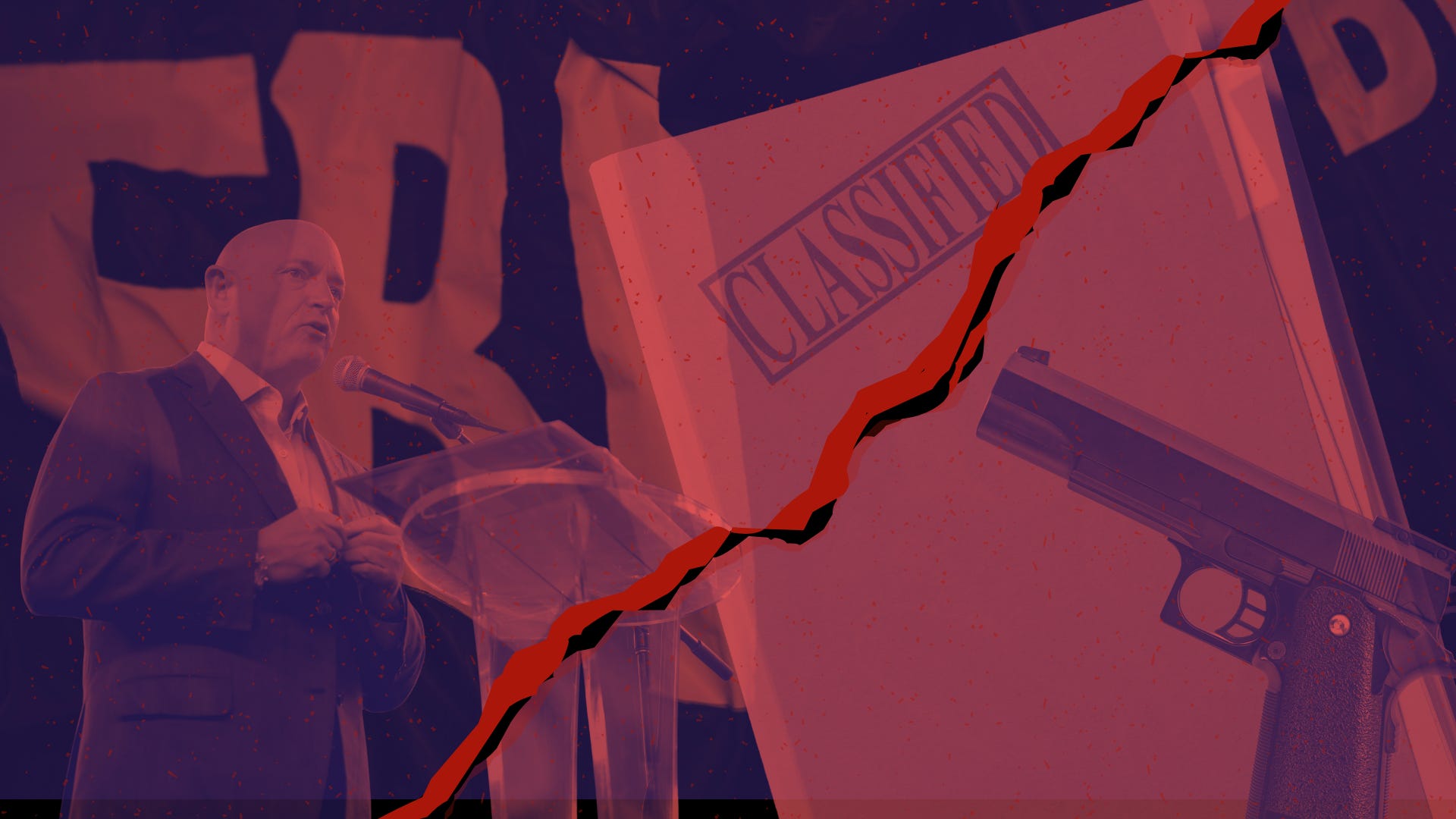
Senator Mark Kelly (D-AZ) has filed a lawsuit against Defense Secretary Pete Hegseth and the Pentagon after Hegseth said they were taking steps to downgrade Kelly’s military retirement rank and pay because of his “seditious statements.”
Context:
Hegseth is referring to a video featuring Kelly and other retired service members urging military personnel not to comply with illegal orders, as detailed in a previous Free Flow.
On January 5, Hegseth announced that the Department of War had initiated retirement-grade determination proceedings, which would result in a reduction in his retired grade and pay.
Kelly’s lawsuit alleges that Hegseth’s actions violate Kelly’s First Amendment rights and seeks a court order declaring them unlawful.
While speaking on the Senate floor, Kelly said, “If Pete Hegseth succeeds in silencing me, then he and every other secretary of defense who comes after him will have license to punish any retired veteran, of any political persuasion, for the things that they say.”
Meanwhile, Senator Elissa Slotkin (D-MI), who also appeared in the video urging resistance to illegal orders, told the New York Times that federal prosecutors are investigating her as well, noting that she received an interview request from Jeanine Pirro, the U.S. attorney for the District of Columbia.
» FBI Probes Anti-ICE Protesters Following Minneapolis Shooting
The Federal Bureau of Investigation is reportedly investigating the “organizers and funders” of anti-ICE protests following the death of an unarmed woman shot by a federal agent in Minneapolis.
The Investigation:
FBI Director Kash Patel said the agency “is investigating paid protest campaigns throughout the country, including organizers, protesters, and funding sources, that drive illicit activities.”
Patel’s remarks were published on the pro-Trump media outlet, Just the News.
The Just the News article also claimed that the protests appear to be organized by a financial network linked to the Chinese Communist Party, though no evidence was provided.
In an interview with Steve Bannon, Just the News writer John Solomon said Patel told him that organizers and funders of the anti-ICE protests in Minneapolis are “under criminal investigation for impeding lawful law enforcement activities and endangering public safety.”
The news follows viral footage of Renee Nicole Good, a U.S. citizen who was fatally shot by an ICE official through her car windshield and car doors.
» FBI Searches Washington Post Reporter’s Home for Obtaining Classified Materials
The FBI searched the home of Hannah Natanson, a reporter for the Washington Post, as part of an investigation into a government contractor who has been accused of illegally obtaining classified materials.
The Accused Contractor:
Navy veteran and system administrator Aurelio Perez-Lugones has been charged with “unlawful retention of national defense information.”
The complaint accuses Perez-Lugones of searching databases containing classified information without authorization and printing or taking screenshots of the material.
Investigators had searched Perez-Lugones’ house in Maryland when they found a document marked “SECRET” in the basement and another labeled the same way in a lunchbox in his car.
The complaint does not mention any ties between Perez-Lugines and Natanson.
Hannah Natson:
Attorney General Pam Bondi wrote in a post on X that the Pentagon requested the search “at the home of a Washington Post journalist who was obtaining and reporting classified and illegally leaked information from a Pentagon contractor.”
Agents seized Natanson’s phone, work, personal laptops, and smartwatch to uncover her sources, despite telling her she is not the focus of the probe.
Former top Department of Justice spokeswoman Xochitl Hinojosa said Bondi had rescinded regulations that protect journalists from subpoenas, and that “The reporter is NOT the ‘leaker’.”
Our Take: We should all be paying attention as more details about this case emerge. What we already know is very alarming, because even in leak investigations, the First Amendment and longstanding precedent require the government to proceed with extreme restraint. The chilling effect on free speech and the escalation of tension between the US government and the free press should be deeply concerning to everyone who values the First Amendment. - Ashkhen Kazaryan
» Texas Teacher Union Sues Over Investigations of Kirk Posts
The Texas branch of the national labor union American Federation of Teachers (Texas AFT) announced that it is suing the Texas Education Agency (TEA) over its investigations into hundreds of educators’ social media posts in the aftermath of Charlie Kirk’s assassination.
Details:
The lawsuit seeks a judicial order to halt TEA’s investigations and to retract the policy requiring districts to report educators for inappropriate social media posts.
Four anonymous educators are included in the lawsuit as having been reported to the TEA.
Three of these educators are still teaching, while one was terminated by their school board and received a settlement from the school district on their wrongful termination lawsuit.
The Digital Age 🤖
» Uganda Blocks Internet Services Ahead of National Election
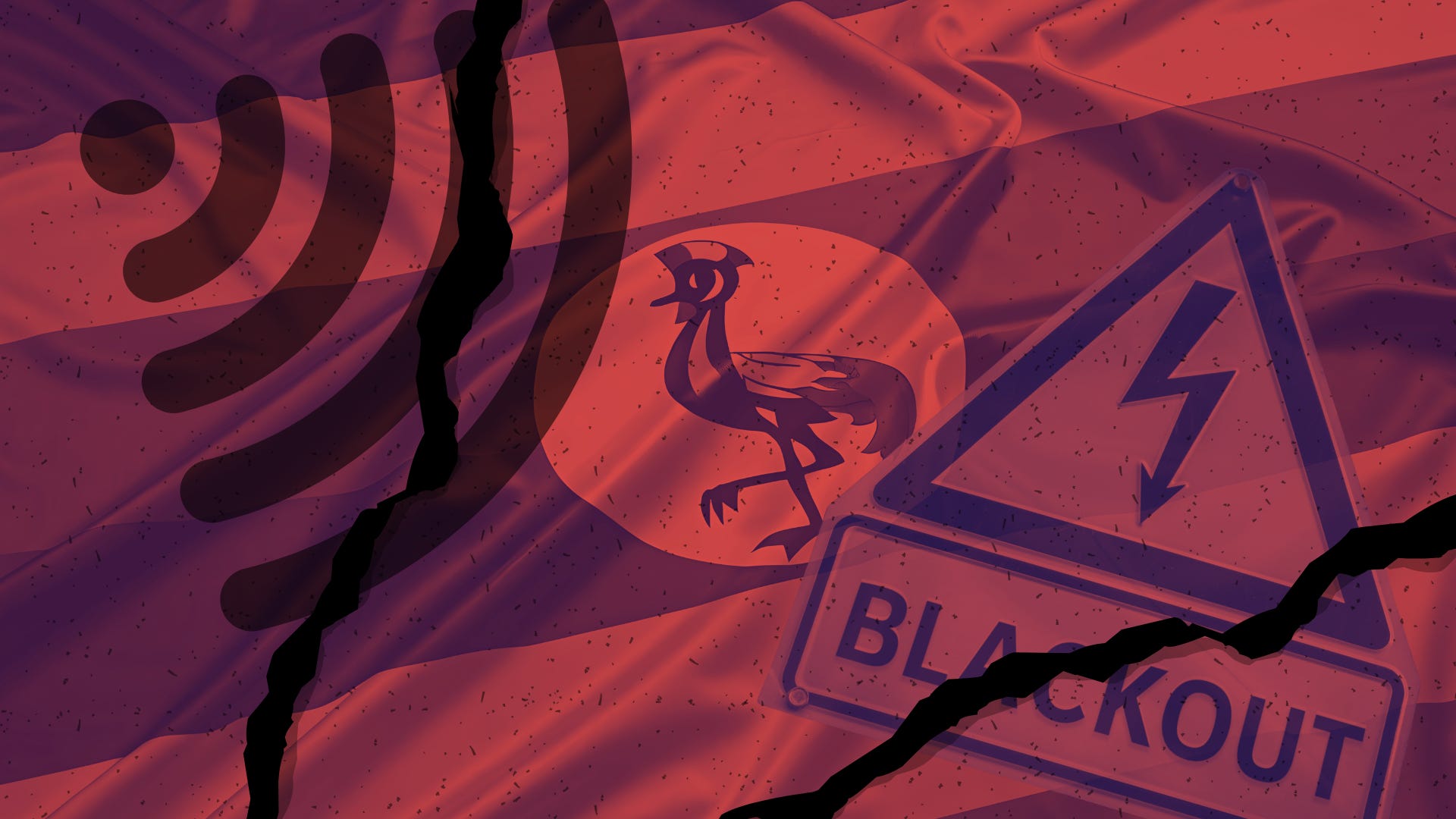
The Uganda Communications Commission has blocked internet service nationwide to prevent the “weaponization of the internet” and the spread of misinformation ahead of the country’s national election.
Details:
In the upcoming Ugandan national election, President Museveni, who has led the country since 1986, will be seeking his seventh term.
Nyombi Thembo, the head of the Uganda Communications Commission, said in an interview, “People wanted to start using the internet to promote hate speech.”
Critics of the president argue that the decision is an attempt to rig the vote, although the incumbent Museveni is expected to secure another term.
The shutdown has also prevented people from contacting friends and loved ones on apps like WhatsApp and Instagram, using search engines, transferring money, or using ride-hailing apps.
Increased Use of Internet Blackouts:
Uganda’s Internet blackout comes as several other African nations have used such measures as a tool of political control.
When Tanzanian authorities engaged in a brutal post-election crackdown on protests in October, the government imposed an internet shutdown that lasted several days and banned sharing videos of protests.
The Brussels Effect: Europe and Beyond 🇪🇺
» U.K. Threatens to Ban X, Sparks Criticism from U.S.
The UK has drawn criticism from members of the U.S. Department of State after it threatened to ban the American-based social media platform X over concerns of its chatbot, Grok, generating sexualized deepfakes.
Context:
The UK’s media regulator, Ofcom, is currently investigating whether the social media platform X failed to comply with its Online Safety Act after its AI chatbot, Grok, was used to create and distribute sexualized images of real people, including children.
Technology Secretary Liz Kendall said Ofcom can invoke the full extent of its powers, which include financial penalties of up to $24 million or 10% of the company’s worldwide revenue.
In the most serious cases, Ofcom can seek a court order to block X from functioning in the U.K.
In a meeting with Labour lawmakers on January 12, Prime Minister Keir Starmer said, “If X cannot control Grok, we will [control it], and we’ll do it fast…”
U.S. Response:
U.S. Under Secretary of State for Public Diplomacy Sarah B. Rogers said, “nothing is off the table” if X is banned in Britain, adding, “Let’s wait and see what Ofcom does, and we’ll see what America does in response.” ‘
U.S. House Rep. Ann Paulina (R-FL) said she was drafting legislation to sanction the U.K. if X is banned, and said the British government is seeking “the ability to curate a public square, to suppress political viewpoints it dislikes.”
X owner Elon Musk wrote that the UK government “just wants to suppress free speech.”
» Polish President’s Veto Stalls Country’s Implementation of Digital Services Act
Poland’s President Karol Nawrocki vetoed national legislation aimed at implementing the Digital Services Act, Europe’s flagship social media law, arguing it was a form of “Orwellian” censorship.
A Political Deadlock:
The veto prevents Poland’s national regulators from implementing the DSA law in the country, which was passed by Prime Minister Donald Tusk, whose parliamentary majority introduced the legislation in Poland.
Tusk’s four-party coalition does not have enough votes to override Nawrocki’s veto.
Nawrocki’s Criticism:
Nawrocki argued the bill would grant excessive power to government officials over online content and “resembles the construction of the Ministry of Truth from George Orwell’s novel 1984.”
He advocated for a revised draft that would achieve the DSA’s goals of protecting minors online while ensuring that independent courts handle disputes over online speech.
Thomas Regnier, the European Commission’s digital spokesperson, said Poland has faced ongoing infringement procedures, including a referral to the Court of Justice of the EU, for failure to designate and empower a Digital Services Coordinator as mandated by the DSA.
» President Macron Urges Strengthening Digital Services Act
In a recent speech to ambassadors, French President Emmanuel Macron urged the EU to strengthen the Digital Services Act (DSA) in light of “sustained pressure from authoritarian regimes and the algorithms controlled by a powerful few.”
The Speech:
The speech comes after Macron previously criticized the EU’s implementation of the DSA as being “way too slow.”
In his most recent speech, Macron insisted, “We are going to continue to pursue an agenda focused on the protection of our children and our young people – the Government has put forward a text and initiatives in this area – but also on the protection of the values and the European democratic space.”
The DSA and the Digital Markets Act, he argued, “are two regulations that need to be defended and consolidated, in addition to the European Democracy Shield.”
Read More: Read our submission in response to the European Commission’s Call for Evidence on the European Democracy Shield.
Free Speech Recession 🌍
» Death Toll from Iran’s Protest Crackdown Surpasses 2,500 Amid Internet Blackouts
Activists say more than 2,500 people have been killed in a sweeping crackdown on nationwide protests in Iran, marking the deadliest unrest in decades.
Background:
Protests over soaring inflation and the collapse of the Iranian currency began in December 2025 and have continued into the new year, as mentioned in last week’s Free Flow.
Human Rights Activists News Agency reported that the number of dead had climbed to at least 2,571.
Iranians made international calls for the first time in days amid internet blackouts and severed phone lines.
With ongoing blackouts, authorities are now hunting and confiscating Starlink satellite dishes in Tehran, which are currently the only means of getting information out about the scale of the protests and accessing the Internet.
The activist group said 2,403 of the dead were protesters and 147 were government-affiliated, and more than 18,100 people have been detained.
What Witnesses Say:
Protesters, medical workers, and residents report security forces firing live ammunition, seemingly indiscriminately, into largely unarmed crowds.
Families retrieving bodies are reportedly pressured to sign statements blaming “terrorists” rather than state forces for the killings.
» Australia’s Accelerating Crackdown on Antisemitism Threatens Speech
Australia’s Prime Minister Anthony Albanese has announced an early end to the national parliament’s summer break to fast-track the passage of a legislative package targeting antisemitism following the fatal attack at a Jewish celebration in Bondi Beach on December 14.
The announcement comes as institutions and states take their own steps towards navigating the aftermath of the mass shooting.
Albanese’s Hate Speech Package:
Parliament will return ahead of schedule on January 19 to pass a series of hate speech laws detailed in last week’s Free Flow.
Albanese said while Australians are entitled to express different views about the Middle East, they are not entitled “to hold someone to account for the actions of others because they are a young boy wearing a school uniform going to a Jewish school or a young woman wearing a hijab.”
NSW Expands Rules:
And, New South Wales, Australia’s most populous state, has added to its blanket ban on public gatherings in designated areas following a terrorism incident.
The state’s premier, Chris Minns, unveiled new rules to curb “hate preachers” that allow authorities to cut off power and water to illegally operating prayer halls.
According to Minns, the move was prompted by challenges closing a Muslim prayer hall linked to a clergy member who a court found to have made statements intimidating Jewish Australians.
Mayor Frank Carbone of the Sydney suburb Fairfield, which has a large Muslim population, pushed back on the proposal, saying, “Freedom of speech is something that should always be allowed, as long as it is done in a peaceful way.”
Institutional Crackdown:
Meanwhile, 180 authors have withdrawn from the Adelaide Festival, a prominent Australian arts event, after it disinvited Randa-Abdel Fattah, an Australian-Palestinian author, from its February Writers’ Week.
The Festival board said the decision was because “it would not be culturally sensitive to continue to programme her at this unprecedented time, so soon after Bondi.”
Our Take: Jacob Mchangama and Samantha Barbas recently wrote at MS NOW about the crackdown on hate speech in Australia: “Laws that promise safety by policing words may satisfy a public appetite for action, but they do not stop violence. What they do is corrode democratic culture and hand extremists the grievance they crave.”
» Complaints to Police Target Indonesian Comedian’s Religious Satire
Indonesian stand-up comedian Pandji Pragiwaksono is facing multiple complaints filed with police following his new Netflix special Mens Rea, recorded in Jakarta in December 2025 before an audience of about 10,000.
Details:
The show featured sharp satire aimed at Indonesia’s political elite, including President Prabowo Subianto, Vice-President Gibran Rakabuming Raka, and former president Joko Widodo.
However, complaints were filed over his jokes about Nahdlatul Ulama (NU) and Muhammadiyah, the country’s two largest Muslim organizations.
Groups claiming to represent youth wings of the NU filed complaints of public incitement and blasphemy, though NU and Muhammadiyah distanced themselves from the complaints, stressing the youth organizations were not officially affiliated.
The youth groups claimed that his jokes implied the organisations were received mining concessions in exchange for political support.
Jakarta police have said they will consult experts and pledged to protect artistic freedom during the investigation, and analysts note that criminal incitement requires actively urging criminal acts, which Pandji’s performance did not do.
» Bahrain Jails Opposition Leader Over Israel Criticism
Bahraini authorities sentenced opposition figure Ebrahim Sharif to six months in prison and fined him 200 Bahraini dinars after he criticized Arab states’ normalization with Israel in a televised interview.
Background:
Sharif, a prominent left-wing activist and head of the now-dissolved National Democratic Action Society (Wa’ad), has been detained since November.
Prosecutors accused him of “spreading false news” and making “offensive remarks” after he condemned Arab governments for ties with Israel and their failure to support Palestinians.
Bahrain normalized relations with Israel in 2020 under the U.S.-brokered Abraham Accords, a move that has drawn sustained domestic criticism—especially since the war in Gaza began in October 2023.
Bahrain Institute for Rights and Democracy called the sentence a “chilling precedent,” warning it marks a further escalation in the repression of speech critical of government policy.
» Slovak Journalist Violently Attacked While Officials Blame His Public Criticism of Government
After Slovak journalist and political commentator Peter Schutz was violently attacked in a shopping mall, two members of the Slovak government criticized and blamed his writing and public statements.
Slovak Ministers Respond:
Although Interior Minister Matúš Šutaj Eštok condemned the violence, he added, “it must be noted that the public space [in Slovakia] has long faced polarizing and dehumanizing statements, which increase tensions in society. Not even an alleged attack on a commentator can diminish his responsibility for words that helped inflame emotions and divide the public.”
In a post on social media, Environment Minister Tomáš Taraba commented that Schutz was known for his “extremely aggressive statements toward people” and that violence should be condemned, “even with people who belong in the hands of the law,” even though the Slovak justice system “pretends that journalists are above the law.”
Ashley Haek is a communications coordinator and research assistant at The Future of Free Speech.
Justin Hayes is the Director of Communications at The Future of Free Speech and the Managing Editor of The Bedrock Principle.