


This Week at a Glance 🔎
— 🇺🇲 Trump Administration Proposes NDAs for Federal Workers
— 🇨🇳 Study Reveals China Silently Censoring WeChat Messages
— 🇻🇳 Vietnamese Police Summon 45 Social Media Users for Engaging with Disinformation
— 🇳🇱 Dutch LGBTQ+ Organizations Take Legal Action Against Meta
— 🇬🇧 UK Says TikTok, YouTube ‘Not Safe Enough’
First of All 🇺🇲
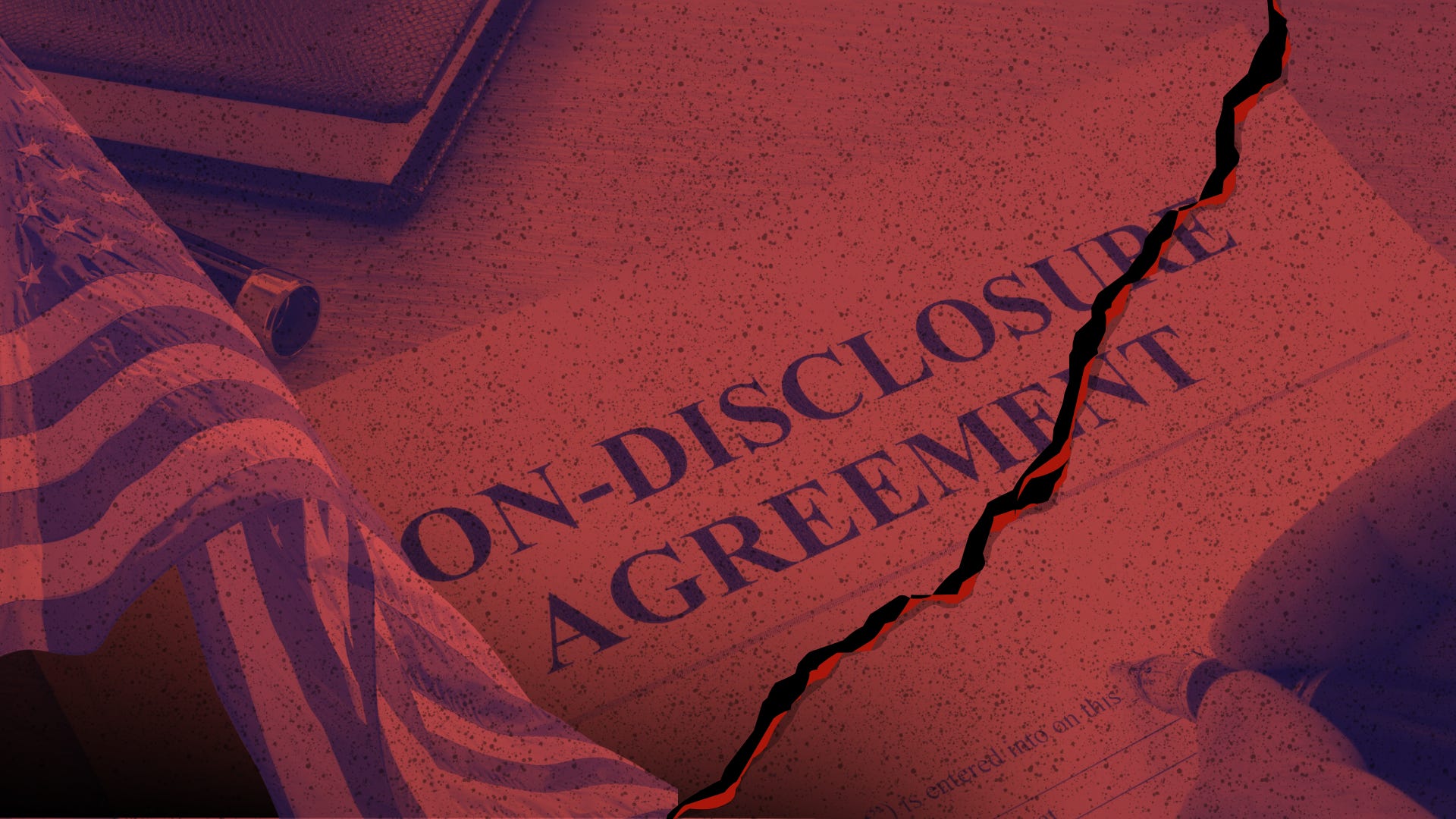
» Trump Administration Proposes Sweeping NDAs for Federal Workers to Crackdown on Press Leaks
The Office of Personnel Management (OPM) has proposed a draft non-disclosure agreement for use by federal agencies with both new and existing employees.
Details:
Former government employees would need “written permission from an authorized agency official” to speak to journalists about information that the administration determines to be “confidential” after leaving their positions.
Federal law prohibits the government from retaliating against federal workers who disclose fraud, abuse, and misconduct in their workplaces to internal government watchdogs and Congress— disclosures that the draft agreement exempts.
The administration could pursue civil and criminal penalties against employees who violate the agreement and would be entitled to all “royalties” that employees received from disclosing information.
The proposal comes after President Trump has banned the Associated Press from the White House press pool and restricted reporters’ access at the Pentagon, which has itself allegedly planned random polygraphs and NDAs to stop leaks to the press.
» Dozens of Organizations Respond to FCC’s Inquiry into Warning Labels on ‘Gender Identity’ Programming
More than 40 civil liberties, LGBTQ advocacy, and free expression organizations filed comments with the Federal Communications Commission (FCC) opposing a proposal that could require television programs featuring LGBTQ themes to carry special content warnings.
Background:
The FCC’s inquiry, launched by Chairman Brendan Carr in April, asks whether current TV ratings systems provide parents with enough information about programming involving “gender identity themes” or “transgender and gender non-binary programming.”
In a comment submitted last week, The Future of Free Speech argues that the inquiry is “unconstitutionally vague” and raises serious First Amendment concerns involving viewpoint discrimination, compelled speech, and government coercion of private actors.
The filing argues that the FCC’s framing fails to clearly define what programming would qualify for additional labeling, making meaningful public participation difficult and risking arbitrary enforcement.
It also warned that labeling programs featuring transgender or non-binary individuals alongside descriptors for violence or sexual content would stigmatize an entire category of protected expression.
Separately, a coalition led by groups including GLAAD, the Human Rights Campaign, PFLAG National, and PEN America submitted a joint filing denouncing the proposal as discriminatory and politically motivated.
The coalition argued that “content warnings that specifically single out LGBTQ+ people, including transgender and non-binary people, or mentions of gender identity on screen are unnecessary, unhelpful, and discriminatory,” adding that parents — not government regulators — should decide what content children watch.
» Public Employees Fired for Charlie Kirk Social Media Posts Receive Settlements in Free Speech Cases
Following an $835,000 award to a former police officer in Tennessee, who spent 37 days in jail for social media posts following the assassination of Charlie Kirk (as mentioned in last week’s Free Flow), two public employees have received settlements after facing termination over similar online posts.
In Tallahassee, Florida:
Brittney Brown, a biologist for the Florida Fish and Wildlife Conservation Commission, was fired in September after she posted an Instagram story criticizing Charlie Kirk in the wake of his assassination.
The state of Florida must pay $485,000 to Brown, who has, in turn, agreed not to apply to, or seek reinstatement with, the FWC in the future.
In Indiana:
Suzanne Swierc, former health director at Ball State University, was terminated after making a social media post on a private Facebook account where she called his death a tragedy and critiqued his political activism.
“Charlie Kirk’s death is a reflection of the violence, fear, and hatred he sowed,” Swierc wrote. “It does not excuse his death, AND it’s a sad truth.”
The University did not admit to any wrongdoing, and President Geoffrey Mearns said in an email to university leadership that he stands by his decision to terminate Swierc, though the institution will pay Swierc $225,000.
The Digital Age 🤖
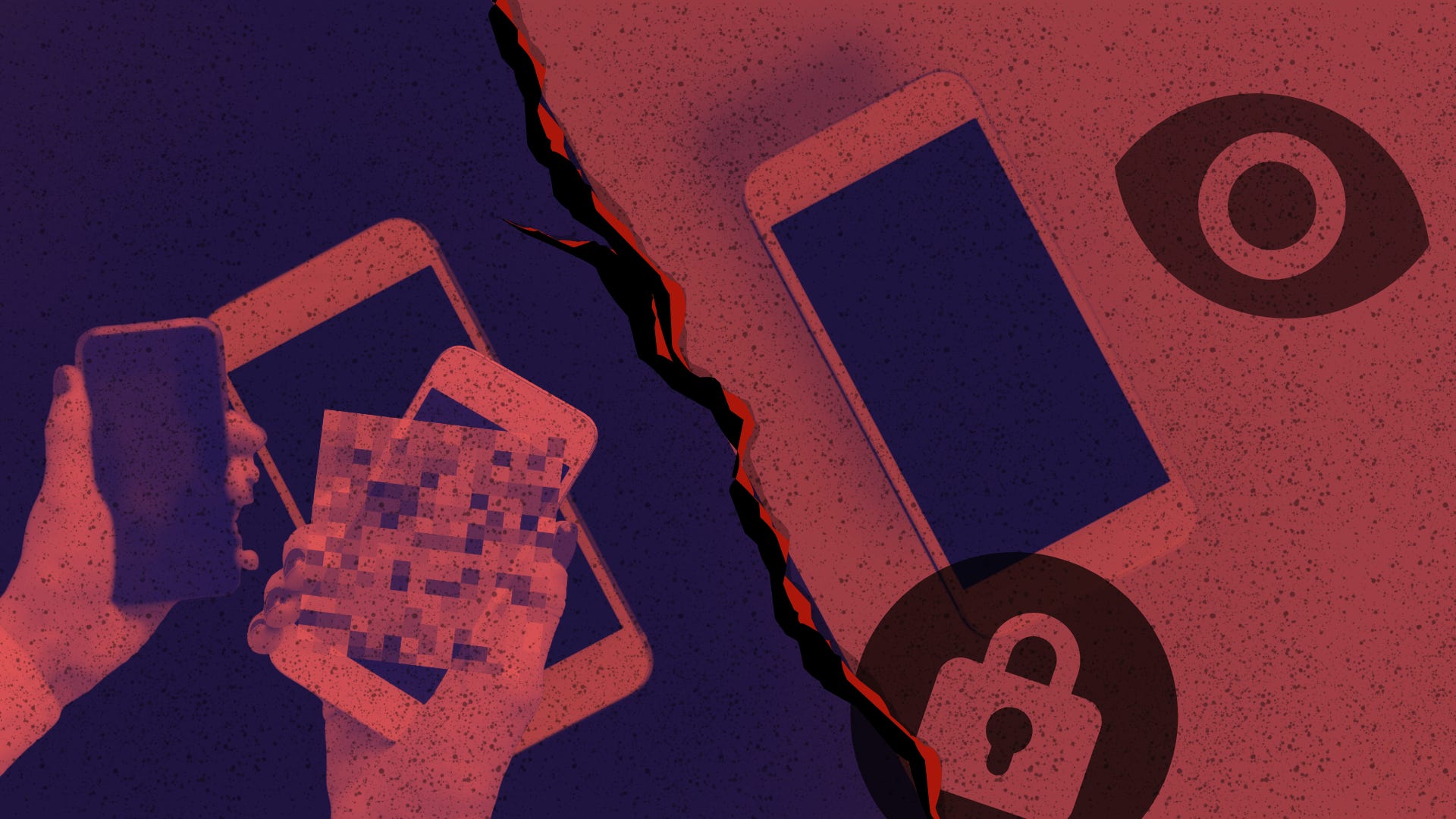
» Texas Sues Discord, Seeking Court-Ordered Age Verification Under SCOPE Act
Texas Attorney General Ken Paxton has filed a lawsuit against Discord, a social media platform, alleging that it violated the Texas Deceptive Trade Practices Act by falsely advertising the platform as safe.
Details:
The suit, filed on May 22 in Collin County District Court, seeks an injunction requiring Discord to default new accounts to maximum safety settings and adopt age-verification measures under Texas’s Securing Children Online through Parental Empowerment (SCOPE) Act.
The complaint alleges that Discord “built and maintains one of the internet’s most efficient hunting grounds for manipulation, grooming, and predatory behavior towards children,” citing design features the state says enable predation, including private servers, reliance on unpaid volunteers for moderation, and safety features that require users to opt in.
Last year, Discord announced that hackers stole 70,000 users’ government IDs from a third-party service used to verify ages and identities.
» University of Florida Law Student Expelled for Antisemitic Posts Will Argue Free Speech at Trial
The University of Florida will defend its expulsion of law student Preston Damsky, a self-described white nationalist, over an antisemitic X post.
Background:
Damsky was banned from campus and expelled after quoting a historian saying, “Jews must be abolished by any means necessary.”
He sued UF, arguing the punishment violated the First Amendment because his post was offensive political speech, not a true threat.
UF argues that the post disrupted the law school and threatened the student body.
A federal judge previously ordered Damsky reinstated, but the 11th Circuit paused that order, with one dissenting judge warning that the case turns on whether “offensive off-campus political speech” is protected.
» University of Toronto Lab Study Reveals China Censoring WeChat Messages in Real Time
A recent study conducted by the Citizen Lab at the University of Toronto reveals that Chinese users of WeChat, an instant messaging service, are being unknowingly censored in real time.
Details:
WeChat users have received messages informing them that a message they attempted to send was blocked for using government-restricted words, but now that censorship is happening without warning, the report claims.
The results showed that messages on WeChat accounts linked to mainland China phone numbers were silently filtered, and international accounts could be censored, though the censorship was not as extensive as on these accounts.
It also found that group chats are censored more heavily than one-on-one chats, and that on particular days or during certain periods, new words or phrases can be added to the list of restricted terms.
When messages pass through a server that scans for restricted words before transmitting them to the receiver, the messages are not sent, and neither party is notified, the report determined.
» Vietnamese Police Question Social Media Users for Engaging with ‘False Information’
On May 20, Vietnam’s Hue City police “invited in for questioning” 45 account owners who had “regularly followed, accessed, and interacted with” information deemed to be “false, fabricated, distorted, and anti-state content from exiled reactionary elements.”
Details:
The provincial police justified the summonses by claiming the users had “limited political awareness” and lacked the skills necessary to identify “false information” and “malicious schemes,” unintentionally helping the spread of “negative and distorted content about the country.”
Authorities added that after being educated by officers, the users “clearly recognized their violations,” removed related posts and comments, left the pages and groups in question, and “signed pledges not to reoffend.”
» Kenya Proposes $20.8 Million AI Initiative for Social Media Monitoring
Kenya’s State Department for Broadcasting and Telecommunications has presented a proposal to parliament seeking $20.8 million USD to implement AI tools for social media monitoring, online sentiment analysis, and government communications management.
The Proposal:
The proposal aims to counter misinformation, disinformation, and organized online narratives across platforms.
$2.96 million of the budget is allocated in the proposal for AI software to monitor social media discussions, which officials claim will provide insights into public opinion and improve communication strategies among ministries and agencies.
However, critics and digital rights advocates have raised concerns that the analysis tools can be abused to track dissent, stifle criticism, or shape public discourse.
The proposal follows earlier legal battles in the country regarding attempts to regulate or limit access to social media platforms.
The request is under examination by the Budget and Appropriations Committee before parliament reconvenes.
» Amnesty International Report Shows Indonesia Using Online Disinformation Campaigns to Brand Critics as ‘Foreign Agents’
A report from Amnesty International reveals that since President Prabowo Subianto took office in Indonesia in 2024, state and state-aligned actors have launched coordinated disinformation attacks to portray human rights defenders and critics as ‘foreign agents.’
Details:
The report claims that through public rhetoric and coordinated online campaigns, the government is seeking to delegitimize civil society, activism, and independent journalism.
Individuals accused of “entering into relations with persons or organizations domiciled abroad” to “overthrow or take over the government” can also face up to 10 years imprisonment under Indonesia’s newly enforced Criminal Code.
Four disinformation campaigns are outlined in the report, targeting human rights defenders protesting revisions to Military Law, participants in the ‘Indonesia Gelap’ protests that began in February 2025, the media outlet Tempo, and the Centre of Economic and Law Studies (CELIOS).
Three of the campaigns involved social media accounts allegedly belonging to at least 63 military-affiliated entities.
To paint entities as “foreign agents,” allegations often used references to international partnerships, cross-border solidarity, or donor relationships.
The Brussels Effect: Europe and Beyond 🇪🇺
» UK’s Ofcom says YouTube and TikTok ‘Not Safe Enough’
British Internet regulator Ofcom published a new report into how five large social media platforms responded to its calls for stronger action on children’s online safety and said TikTok and YouTube “failed to commit to any significant changes to reduce harmful content being served to children, maintaining that their feeds are already safe for children.”
Details:
“Our wealth of evidence, published today, suggests they are still not safe enough,” Ofcom added.
TikTok and YouTube both pointed to safety features in their apps, including TikTok’s prohibition of direct messaging for under-16s and YouTube’s short-form video timer, which allows parents to set time limits for scrolling shorts.
Ofcom spokesperson said the regulator was “ready to take the toughest enforcement action” if platforms do not comply with its rules, adding “we will absolutely move into a formal investigation if we need to.”
The report highlighted changes made by Snap (owner of Snapchat), Roblox, and Meta that focused on reducing grooming risks, including Snap’s decision to block adult strangers from contacting children by default in the UK as well as introducing “highly effective” age checks this summer.
Roblox plans to let parents switch off direct chat entirely for under-16s, and Meta plans to hide teens’ Instagram connection lists by default and develop AI tools to detect likely sexualized conversations in DMs.
Broader Concerns:
The report found that 84% of children aged 8 to 12 were still using at least one major service with a minimum age requirement of 13.
A government spokesperson said Ofcom had its “full backing” to ensure that companies prevent and remove harmful content from their platforms and feeds, adding that age limits, app curfews, and an outright ban are being considered.
» Dutch LGBTQ+ Organizations Take Legal Action Against Meta’s Content Moderation
Dutch LGBTQ+ organizations are pursuing legal action against Meta after a series of Instagram account suspensions affecting queer clubs, artists, publications, and communities in the Netherlands, alleging the company’s moderation practices are discriminatory.
Details:
The coalition’s formal legal demand to Meta, issued on May 20, argues that the moderation systems have targeted LGBTQ+ accounts and “may have violated European fundamental rights law, the Digital Services Act (DSA), GDPR, and Dutch anti-discrimination law.”
A lawyer for the coalition said, “Removing queer accounts without reason, without warning, and without any possibility of appeal constitutes a violation of European law. Platforms are not allowed to structurally exclude minority groups from public debate.”
The lawyer added: “This is the first case in which the Digital Services Act is being used to challenge discriminatory content moderation by a Very Large Online Platform.”
Meta has previously denied accusations that it targets LGBTQ+ users or content, as mentioned in a previous Free Flow.
Free Speech Recession 🌍
» Journalists Jailed in Mexico Under New AI-Image Law
Journalists Erendira Reyes and her daughter Alejandra Hermosillo were arrested by state police in San Luis Potosí, Mexico, on May 21 over alleged illegal use of AI.
Details:
Reyes, founder and editor of the Facebook-based news page San Wicho Times and the magazine Capital, and Hermosillo are being held at the “La Pila” state penitentiary, according to Mexico’s National Registry of Detentions.
In a May 21 statement, the San Luis Potosí state prosecutor’s office confirmed the arrests and alleged “deliberate and illegal manipulation of the digital identity of the victim,” without naming the alleged victim.
Sources report that the pair’s arrests are related to a widely circulated video on Facebook last year of a local criminal gang accusing Gov. Ricardo Gallardo of corruption.
Gallardo denounced the video as containing AI-manipulated images of him, and the next month, the state penal code was amended to criminalize AI-manipulated images, punishable by up to three years in prison.
Sources also shared with the Committee to Protect Journalists a photo that appeared to be an arrest warrant for several journalists, among 11 people, and they believe they are on the same charges.
» Egyptian Filmmaker Detained for Spreading ‘False News’
Egyptian director and screenwriter Omar Salah Marei has been held behind bars in Cairo since May 11, when he was arrested for “deliberately spreading false news” based on posts from his social media accounts.
Details:
Marei is known for blending humor with sharp social and political commentary in his short films.
Plainclothes security officers reportedly broke down the door to his apartment, seizing four laptops, two phones, cash, and scripts for future projects, before taking Salah Marei to an undisclosed location without a warrant.
Salah Marei reappeared on May 16 before Egypt’s Supreme State Security Prosecution, and it was confirmed he had been held for 15 days of pretrial detention on charges of “deliberately spreading false news, based on posts on his social media accounts.”
Marei remains behind bars until his next judicial hearing on May 25, which will determine whether his pretrial incarceration is extended.
The International Coalition for Filmmakers at Risk affirmed that Omar “is a filmmaker who came to cinema from engineering through his own initiative, and who uses comedy as a vehicle for social commentary.”
» Belarus’ Banned Books Lists Surpasses 250 Titles
Belarus’ Ministry of Information has added 17 more titles to its list of publications that are banned in the country.
The List:
The list of total banned books that “may harm the country’s national interests” now contains 258 titles.
Among the banned titles is Christopher Isherwood’s “Goodbye to Berlin,” which was prohibited for its LGBTQ+ themes, and “It’s Perfectly Normal: Changing Bodies, Growing Up, Sex, and Sexual Health” by Robert H. Harris.
Books by historians, including “Iron Curtain: The Crushing of Eastern Europe” by Anne Applebaum, the wife of Polish Foreign Minister Radoslaw Sikorski, as well as her earlier book on the Gulag, appear on the blacklist.
Ashley Haek is a communications coordinator and research assistant at The Future of Free Speech.
Justin Hayes is the Director of Communications at The Future of Free Speech and the Managing Editor of The Bedrock Principle.