


Join Us! The 2026 Global Free Speech Summit returns on October 2–3 in Nashville, TN. Hosted by The Future of Free Speech and Vanderbilt University, this event brings together global leaders, thinkers, and changemakers to confront the most urgent threats to freedom of expression and explore bold, resilient solutions. Guests will have the opportunity to attend networking receptions to exchange ideas with speakers and fellow guests.
🎟️ Spots are limited. Get your tickets here.
This Week at a Glance 🔎
— 🇺🇲 New Rules Target Foreign Journalists’ Visas
— 🇦🇺 X Appeals Block on Footage of Aftermath of Bondi Beach Attack
— 🇬🇧 UK Report Labels Political Claims ‘Misinformation’
— 🇹🇳 Tunisian Journalist Jailed Over Social Media Posts
— 🇯🇵 Japan Bans Desecration of National Flag
First of All 🇺🇲
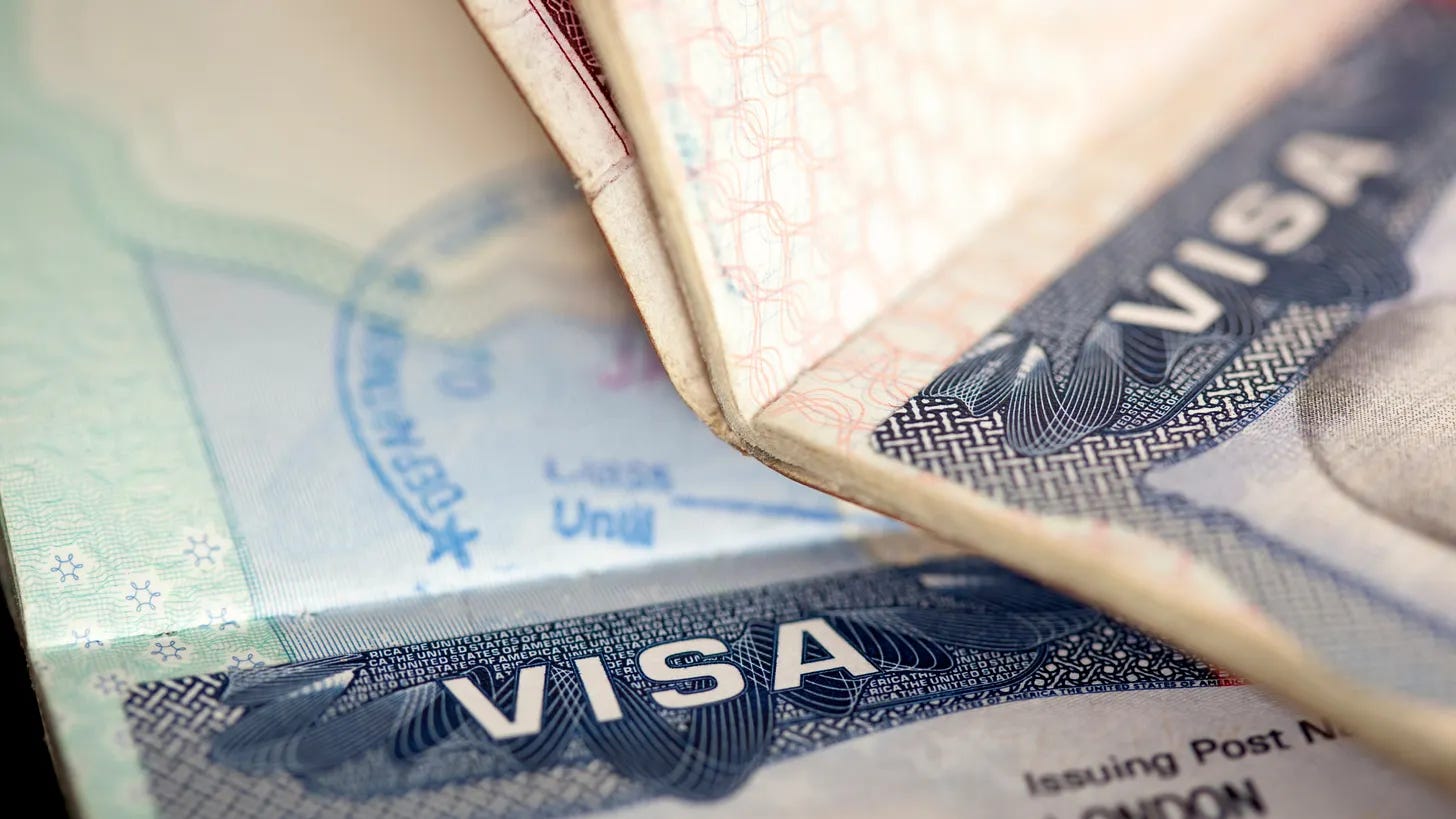
» New Rules Target Foreign Journalists’ Visas
The Trump administration announced new visa rules that will cut the duration of foreign journalists’ visas from five years to 240 days.
Details:
🇨🇳 Visas for Chinese journalists will be shortened to 90 days.
The new rules will also introduce “clear, finite limits” on visas for exchange visitors and foreign students.
Our Take: In a statement, Jacob Mchangama argued, “Press freedom is enshrined in the Constitution, yet these policies treat journalists with suspicion, leaving foreign correspondents to weigh honest reporting against the risk of losing their ability to work in the country.”
» D.C. Circuit Upholds Pentagon Journalist Escort Policy
In a case brought by The New York Times, the D.C. Circuit Court ruled that the Pentagon can continue enforcing its journalist escort policy in a split 2-1 decision.
Details:
The decision pauses a district judge’s preliminary ruling suspending the policy, as mentioned in a previous Free Flow.
The majority found the policy did not constitute unlawful retaliation because The Times did not argue that the policy unfairly targeted it.
✍️ Judge Bradley Garcia dissented, saying a “retaliatory government policy should not be immunized simply because it is broadly and evenly applied.”
The Times plans to continue litigation on the merits.
» DOJ Seeks Phone Records of Journalists and Their Families
The Department of Justice is reportedly seeking the phone records of three journalists who covered security concerns over the Qatar-gifted Air Force One jet.
Details:
The news comes after the department issued subpoenas to the reporters, summoning them to testify before a grand jury.
The New York Times reports the DOJ is seeking records from third-party communications companies, including those of two of the reporters’ spouses.
The DOJ insists that “reporters are not the targets, those leaking classified information are.”
The Digital Age 🤖
» X Appeals Bondi Shooting Video Ban
X has appealed a decision by the Classification Review Board that a video showing fallen and dying victims in the aftermath of the December 14 shooting on Australia’s Bondi Beach could not be shown in the country.
Context: The Classification Review Board is a statutory body that guides Australia’s national classification of various content.
Regulators’ Perspective:
Regulators claim that the video is too violent and that platforms are attempting to monetize harmful content.
Richard Lancaster, lead lawyer for Australia’s antisemitism royal commission, questioned: “whether X Corp has or ought to have a social license to operate in Australia.”
X’s Perspective:
🇦🇺 X said the decision violates Australia’s free speech protections and argued the film provides evidence “against anyone seeking to deny” or minimize the event.
It also noted that graphic depictions of historical events — the Holocaust, the Vietnam War, Australian special forces’ war crimes in Afghanistan — are permitted in Australian media.
» Meta Report Warns of Cross-Border AI Restrictions
A Meta Oversight Board study found that AI systems are more likely to refuse to criticize restrictive governments or leaders.
Details:
💻 The study asked 10 large language models to give reasons to join a protest, write a critical pamphlet, or write a limerick.
The report said models responding to an Australia-based user were less likely to generate political criticism of leaders from places where such criticism is penalized.
A separate report from American universities found that models gave different responses to questions when asked in different languages.
Together, the reports indicate that speech restrictions and biases could be extending beyond the borders where they apply,
Our Research: For more, view our report that examines safeguards for freedom of expression in AI policies from six global jurisdictions, and measures openness of the world’s leading AI models.
The Brussels Effect: Europe and Beyond 🇪🇺
» France Bans Social Media For Under-15s
France’s Parliament passed a bill banning social media for children under 15.
What’s Next:
In September, age verification will be required on all new accounts, and under-15s will be prohibited from opening accounts.
Beginning January 2027, users will undergo age verification for all existing accounts.
Social media platforms must use age-verification tools approved by the country’s privacy regulator.
» Digital Rights Groups Warn Over DSA Draft Rules
🚩 The Electronic Frontier Foundation and ARTICLE 19 have submitted joint comments to the European Commission on draft guidelines for the Digital Services Act’s trusted flagger mechanism.
Details:
New guidelines could allow governments to suppress speech without securing a court order or providing a legal basis, according to the orgs.
The “trusted-flagger” mechanism requires platforms to prioritize illegal content flagged by designated organizations.
Under Article 9 of the DSA, national authorities can issue legally binding removal orders to platforms–but only with a legal basis, a legitimate aim, and evidence of necessity.
The draft guidelines would let police and prosecutors bypass those safeguards by designating them as trusted flaggers.
The organizations argue that combining those powers “creates a risk that platforms may treat trusted flagger notices as de facto removal orders.”
» UK Report Labels Political Claims as ‘Misinformation’
🇬🇧 A study commissioned by the UK government classified ideas, including “anti-LGBTQ+ narratives” and “electoral fraud claims,” as “misinformation.”
The Report:
The study, conducted by a group of seven academics, urges the government to use psychology to prevent spreading narratives deemed potentially “misleading.”
Public communications and schools are encouraged to implement these methods to prevent the spread of “false” ideas.
The government said the report did not represent official policy.
Categories of ‘Misinformation’:
Anti-LGBTQ+ narratives, gender ideology claims targeting institutions, Pride event misrepresentation, and transgender athlete controversies.
🇪🇺 Electoral fraud claims and the “institutional delegitimization” of the EU.
False claims about migrant entitlements, arrival demographics, and criminal acts.
Content “associating minority communities with crime or cultural threat.”
» Georgian Journalist Jailed for Facebook Post
Vakho Sanaia, a journalist and TV host, was sentenced to 14 days of administrative detention over Facebook posts flagged by Georgia’s Hate Speech Department.
Details:
Sanaia was initially fined for posting about a lawmaker: “I hope no one called [Vladimer Bozhadze] d**k, because the law prohibits calling Lado d**k. I would also like to urge everyone not to call Lado a d**k.”
A subsequent post resulted in administrative detention: “I wrote a post saying, ‘Don’t call Papuashvili and Bozhadze d**k,’ and I was fined 6,000 lari. Am I missing something? Give them a call.”
Georgia’s recently formed Hate Speech Department can initiate administrative cases over public speech.
Our Take: This comes after the European Court of Human Rights upheld a fine against a Georgian man who criticized local public transportation. At Persuasion, Jacob Mchangama wrote, “The implication is stark: online speech, precisely because it travels further and faster, warrants more restriction, not less. That gets the logic of democratic accountability exactly backward. “
Free Speech Recession 🌍
» Japan Bans Desecration of National Flag
🇯🇵 Japan enacted a law prohibiting the desecration of its national flag in ways that “cause extreme discomfort or sense of disgust to others.”
Details:
Violators could face up to two years in prison or fines of up to 200,000 yen ($1,230 USD).
Legal experts warn the law’s vague wording criminalizes speech based on hurt feelings and could be turned against government critics.
Critics also note that flag desecration laws in the U.S., Europe, and elsewhere come with clearer criteria and stronger free speech protections.
» Tunisian Journalist Sentenced to Prison Over Social Media Posts
🇹🇳Tunisian journalist Haythem El Mekki was sentenced to one year in prison over posts on social media criticizing conditions at a public hospital morgue.
Details:
The Habib Bourguiba University Hospital filed a public lawsuit against Mekki in 2023 for saying its morgue exceeded its capacity.
A lower court dismissed the case, but an appeals court convicted him of “insulting others through public telecommunications networks.”
Mekki has been prosecuted three times since 2023 for remarks made online or in the media.
» Crackdown on New Delhi Education Protests Escalates
Social media videos and accounts allege police in New Delhi threw stones, fired tear gas, and beat peaceful protesters.
Details:
On July 20, protesters marched to the Parliament of India to demand the resignation of Dharmendra Pradhan, the Union Education Minister.
Demonstrators demanded accountability after alleged leaks of medical school entrance exam questions forced officials to cancel all results.
Protesters also seek compensation for families whose students committed suicide following the distress.
Amnesty International reports that police also installed barricades and suspended metro services and mobile internet to curb the protests.
» Cambodia Imprisons Journalist Over Water Shortage Report
Cambodia sentenced journalist Luot Sophal to two years’ imprisonment for reporting that frontline soldiers lacked water.
Details:
He was convicted on charges of demoralizing the armed forces and incitement to commit a felony.
Sophal was arrested after posting a video on his personal Facebook page in February discussing the shortage.
Authorities ordered him to delete the post and apologize while in custody.
Cambodia has punished critical coverage of its conflict with Thailand with sentences as harsh as 14 years for treason.
Ashley Haek is a communications coordinator and research assistant at The Future of Free Speech.
Audrey Campbell is a communications intern at The Future of Free Speech and an international relations major at American University.
Isabella Dail is a communications intern at The Future of Free Speech and a recent graduate from Princeton University with a bachelor’s in philosophy.