


This Week at a Glance 🔎
🇺🇲 White House Official Threatens Politico Over Wiles Stories
🇮🇳 India’s Top Court Rejects Blanket Internet Restrictions on Children
🇦🇺 Australia to Sue Platforms Over Social Media Ban Enforcement
🇬🇪 Georgia Jails TV Anchor Over Posts
📱 Meta Faults AI Tool for ‘No Kings’ Suspension
First of All 🇺🇲
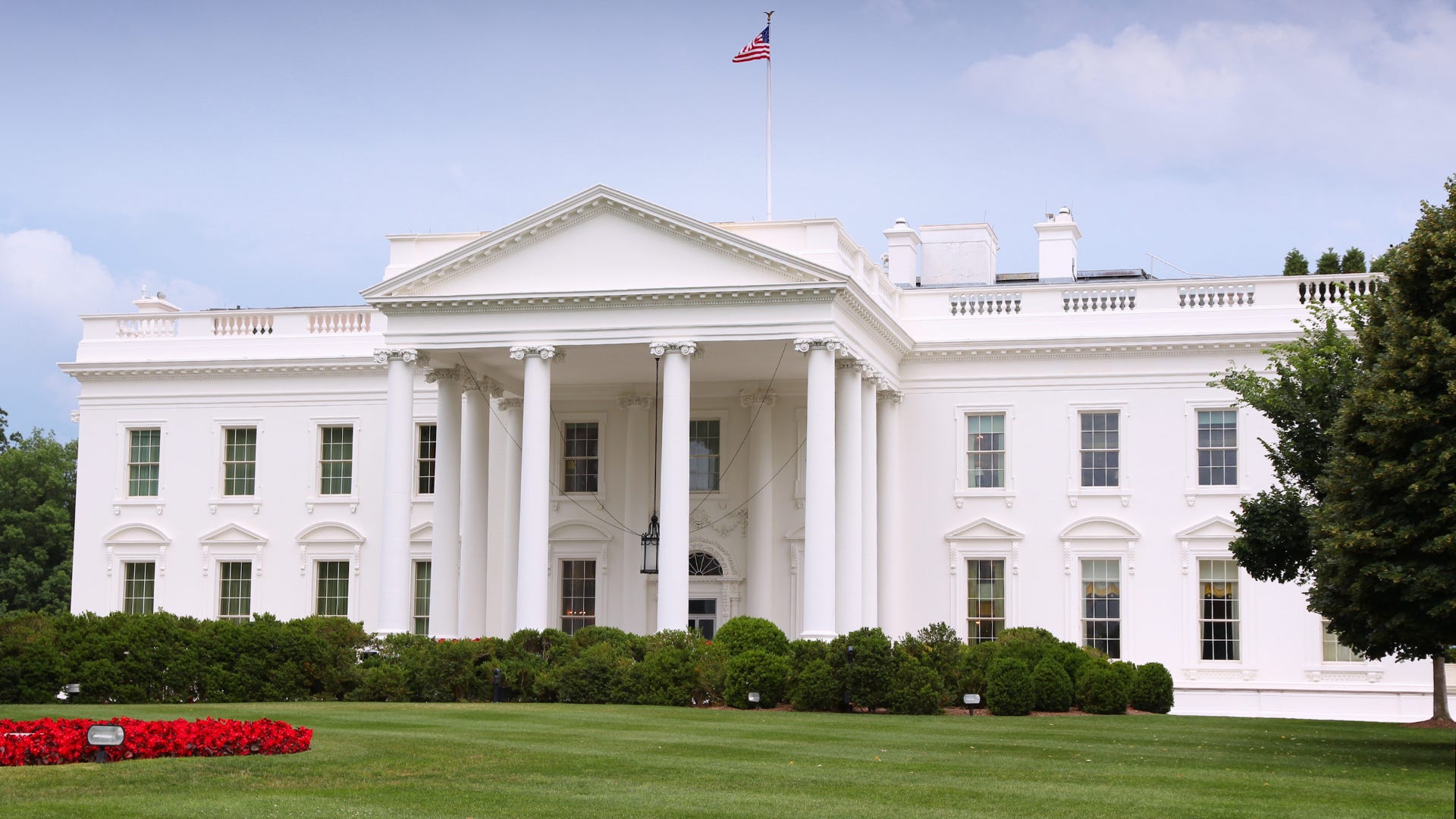
» White House Official Threatens Politico Over Wiles Stories
In an Oct. 19 letter, White House Counsel Will Scharf warned Politico it had 48 hours to retract or correct three stories about Chief of Staff Susie Wiles or face “legal remedies.”
The Letter:
Scharf said the stories ran despite “on-the-record refutations” or contrary evidence from senior staff and President Trump.
He demanded Politico retract the stories and issue a public apology to the president and Wiles.
If Politico refuses, Scharf wrote the White House would review its relationship with the outlet and consider all available legal remedies. The deadline expires Oct. 22.
Context:
Independent reporter Andrew Feinberg also received notice he is barred from serving as the designated representative for the out-of-town print pool for Trump’s Oct. 22 Iowa trip.
The letter comes days after the Trump administration appealed the preliminary injunction against the White House’s ban on journalists from CNN, MS NOW, and Politico.
U.S. District Judge Timothy Kelly granted an injunction on Oct. 13, finding that the revocations likely violated the First Amendment and that the government did not offer evidence that national security drove them, last week’s Free Flow noted.
The injunction remains in effect until Kelly issues a final judgment, unless an appeals court lifts it.
CNN gave the White House until 5 p.m. ET Oct. 22 to lift its exclusion of the network from Air Force One press coverage or face further legal action.
» Court Says School Board Can Be Deposed Over Book Removals
A federal appeals court ruled that school board members in Escambia County, Florida, may be deposed about why they removed library books and classroom materials, rejecting their claim of legislative privilege.
Details:
According to a 2023 lawsuit, the board voted to remove books deemed to have “‘extreme sexual content,’ ‘LGBTQ agenda,’ ‘race-baiting,’ ‘graphic rape scenes,’ and ‘language,’” at a teacher’s and the superintendent’s request.
A divided 11th U.S. Circuit Court of Appeals panel agreed with the trial judge that board members acted as administrators, not legislators, when removing the books.
Judges Jill Pryor and Andrew Brasher wrote that the decisions resembled “nothing about” what a legislator does, namely “the ‘proposal, formulation, and passage of legislation.’”
Chief Judge William Pryor dissented, writing that because board members “exercise discretion over a matter of public policy when voting to remove books from school libraries, the majority wrongly strips them of their privilege to avoid testifying about those votes.”
The Digital Age 🤖
» Appeals Court Revives Georgia Social Media Law
On Oct. 15, the 11th U.S. Circuit Court of Appeals lifted a lower court’s injunction on a Georgia law restricting minors from creating social media accounts.
The Law:
SB 351 requires platforms to verify users’ ages, bars under-16s from opening accounts without parental consent, and limits the personal data used to show them ads.
A federal judge blocked it in June 2025, as covered in a previous Free Flow.
The Ruling:
The court found NetChoice, a tech trade group, failed to show that the law violated its members’ First Amendment rights.
Judge Kevin Newsom wrote that not all social media sites engage exclusively in “fully protected speech,” and some “do host at least some pornography,” which is not protected for minors.
“Even if most expression on most social media platforms is protected by the First Amendment, not all of it is, at least not with respect to all users,” he wrote.
The court agreed the law’s applications raise First Amendment questions, but said different types of speech may draw different levels of scrutiny, leading to different outcomes.
Context:
A day earlier, the 11th Circuit vacated a preliminary injunction against Florida’s law banning social media for children under 14 and requiring parental consent for 14- and 15-year-olds.
A judge blocked that law in June 2025, as covered in a previous Free Flow, before the circuit let it take effect pending appeal, as covered in a previous Free Flow.
NetChoice has challenged similar laws in nearly a dozen other states; most remain blocked on a preliminary or permanent basis.
» India’s Top Court Rejects Blanket Internet Restrictions on Children
India’s Supreme Court rejected a social media ban for children and other age-based restrictions, holding that children have a fundamental right to access and use the internet.
The Ruling:
The court called age-based restrictions an overreach and cited a disproportionate risk of misuse and surveillance.
It also set out a proposed framework for detecting, removing, and reporting child sexual exploitation and abuse material (CSEAM), and sought the central government’s response.
The CSEAM Framework:
A national database of perpetual hashes and URLs of reported and identified CSEAM content, potentially built on the Sahyog portal, India’s government takedown tool.
Standard operating procedures for building and running the database, a reporting format, and designated authorities to receive reports.
A dedicated grievance mechanism and designated officials for CSEAM content, with monthly compliance reports.
Financial penalties beyond intermediary liability, and stricter enforcement against CSEAM behind paywalls.
What’s Next: The framework is not yet in effect. The government must file an affidavit before the next hearing on Dec. 10 regarding steps taken to comply, including progress on the database and procedures.
The ruling comes after an Oct. 10 Ministry of Electronics and Information Technology (MeitY) advisory to Meta, asking it to ensure its recommendation systems do not expose users to “a single or limited set of narratives.”
» Australia to Sue Platforms Over Under-16 Ban Enforcement
Australia plans to sue Facebook, Instagram, TikTok, Snapchat, and YouTube for allegedly failing to comply with its under-16 social media ban.
Details:
In March, the eSafety Commissioner opened investigations into whether the platforms took “reasonable steps” to keep underage users off.
In April, the regulator faulted platforms for poorly deploying age-assurance products, as covered in a previous Free Flow.
A July eSafety report also found most underage users kept their accounts or created new ones.
Communications Minister Anika Wells said she expects legal action to proceed.
Context:
Since the ban first took effect, the government doubled the maximum penalty to A$109.2 million ($76 million).
It also granted eSafety Commissioner Julie Inman Grant power to demand documents and summon current or former employees.
“She’s now using those powers to prepare her case,” Wells said.
Our Take: Jacob Mchangama and Jeff Kosseff warned that youth social media bans and age-verification mandates “carry serious implications for the freedoms of speech and access to information, as well as the right to privacy, for children and adults alike.” Jeff also argued that when most children circumvent the ban, “the policy primarily succeeds in increasing surveillance rather than reducing access.”
» Australia Introduces Digital Duty of Care Bill
Australia’s Labor government introduced its digital duty of care bill Oct. 15, amending the Online Safety Act to require online service providers to protect users from harmful material.
The Bill:
Covers everything from messaging and gaming apps to social media platforms. Providers must protect Australians from seriously harmful material and conduct, and protect children from harmful material, conduct, and algorithmic design features.
The minister could require platforms to give users tools to manage design features and offer recommendation controls.
Harmful material for adults includes “the encouragement, promotion or incitement of gender-based violence,” nonconsensual fake nude material, and posting or threatening to post intimate images without consent.
Material that is a Commonwealth criminal offense falls under the duty only if it is likely to cause serious harm.
What’s Next:
The Liberal-National Coalition, the main opposition bloc, remains critical and is unlikely to support it.
Sen. Sarah Hanson-Young of the Greens, an environmentalist party, said her party supports the bill in principle but wants steeper penalties for big tech and a right for Australians to sue companies directly.
The bill goes to a Senate inquiry, with a findings and recommendations report expected by year’s end.
» Meta Faults AI Tool for ‘No Kings’ Suspension
Meta said an automated security system suspended the No Kings coalition’s Instagram account for about 90 minutes during the group’s nationwide day of action.
Details:
Meta said the system was triggered after a Claude tool read profiles, posts, and hashtags at high volume.
The suspension hit as nearly 3,000 events took place across the U.S. on Oct. 17 to encourage early voting in the November midterms.
Administrators lost backend access for about four hours even after the account was restored, organizers said.
Meta spokesperson Andy Stone said the “intense bursts” of reading activity resembled automated bot traffic, causing the system to “incorrectly take the No Kings Instagram account offline.”
Our Take: Our 2024 research on removals in France, Germany, and Sweden found that platforms “largely rely on algorithms and artificial intelligence (AI)” to flag content, that more than 99 percent of removed comments were first flagged by AI, and that the overwhelming majority of deleted comments were legal speech, concluding “over removal of legal content may be a bigger problem than under removal of illegal content.”
The Brussels Effect: Europe and Beyond 🇪🇺
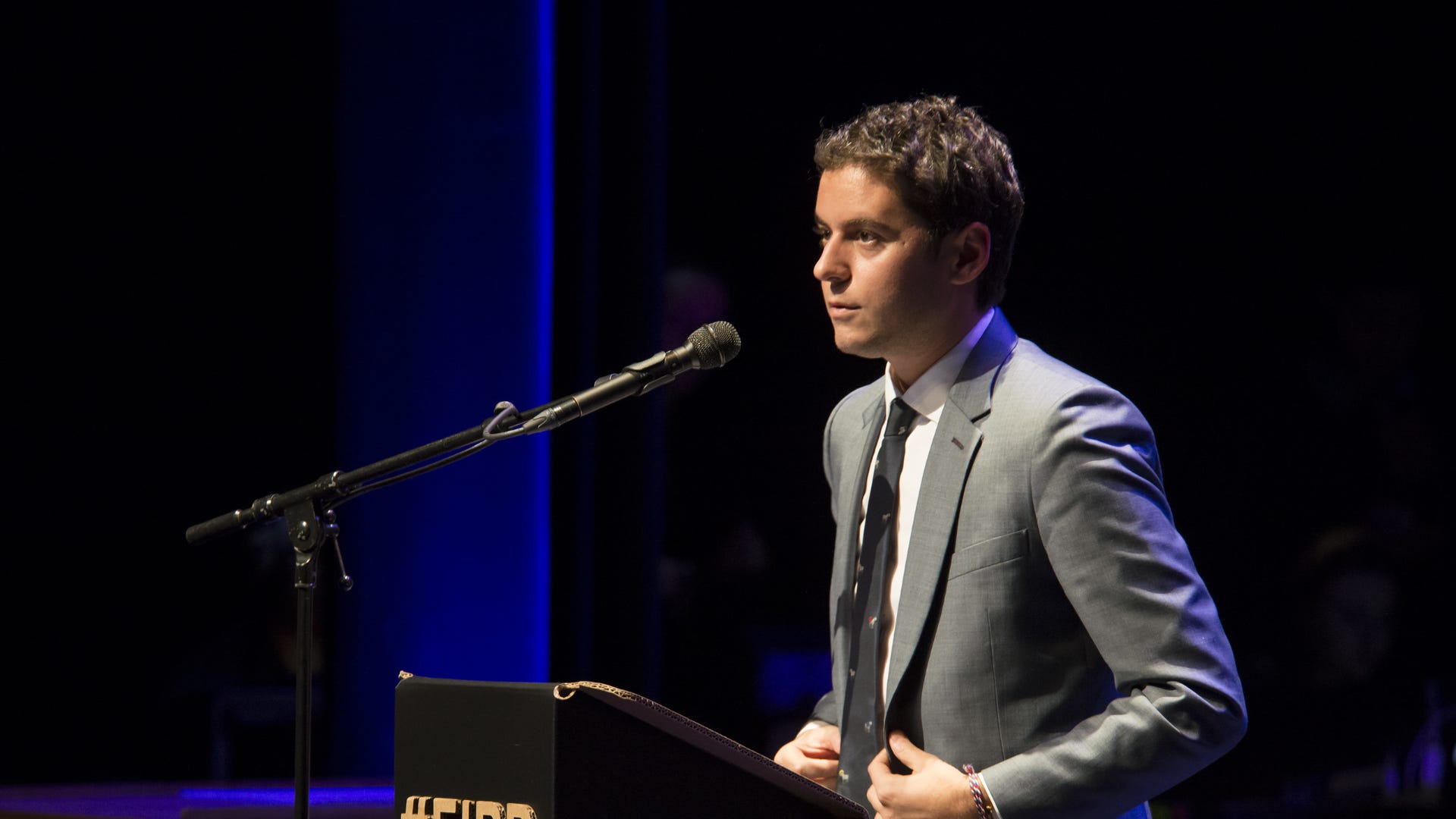

» French Presidential Candidate Urges Selective Social Media Blackouts to Quell Riots
French presidential candidate Gabriel Attal called for government power to selectively block social media platforms to quell riots.
Details:
Hundreds of thousands of students and demonstrators protested across France on Oct. 18, demanding better study conditions, more teachers, more funding, and relief from the cost of living.
Fires, looting, and clashes with riot police occurred.
Attal said young people watching friends loot online “gives them the impression they’re getting away with it … and then they go out too.”
He said any blocks must be “temporary” and “limited to the area where the riots are taking place.”
When Attal was prime minister in 2024, France blocked TikTok in New Caledonia, a French territory, during protests. France’s highest administrative court later ruled the suspension “disproportionate.”
Free Speech Recession 🌍
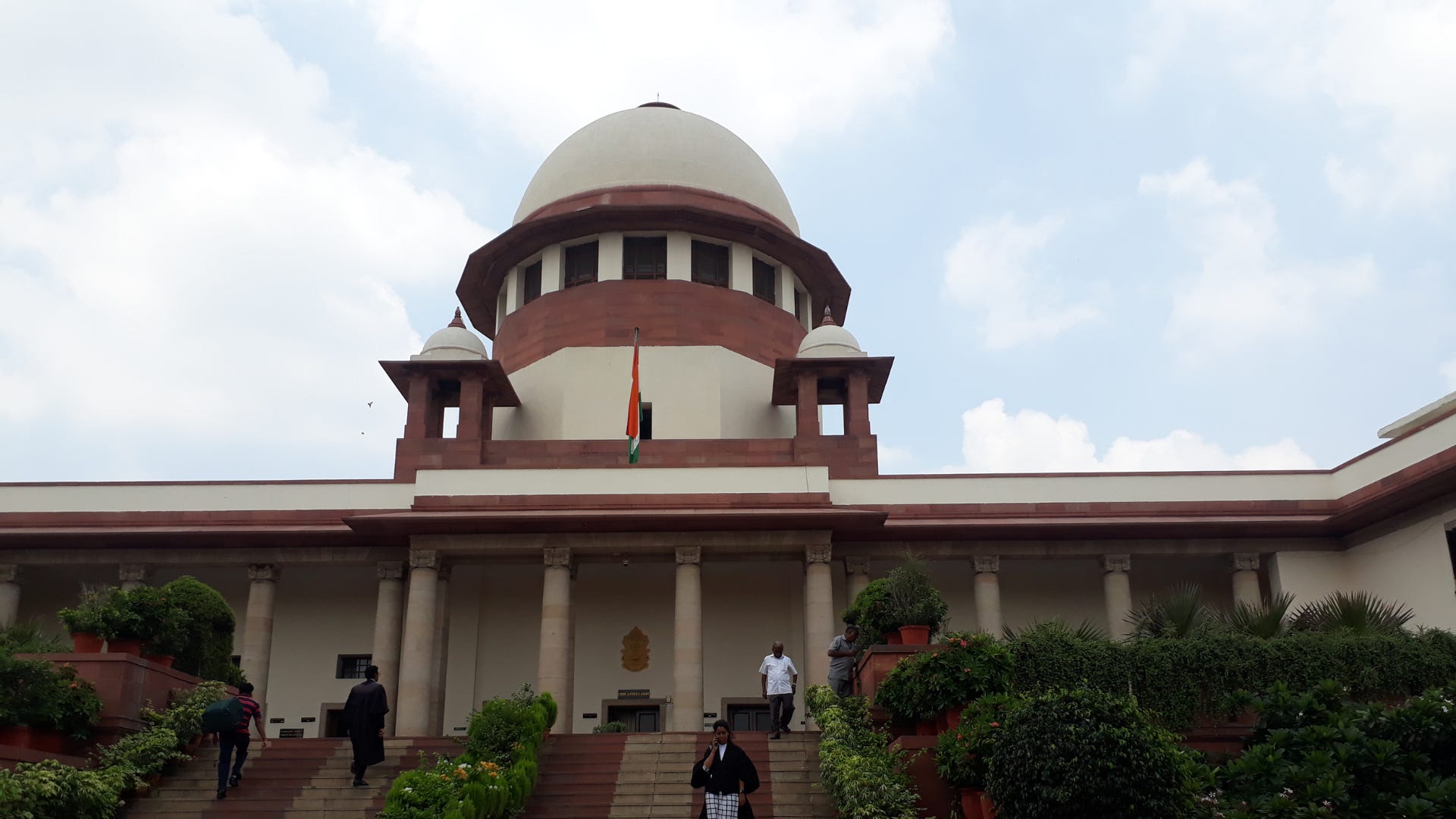

» India’s Top Court Weighs Police-Press Guidelines
India’s Supreme Court sought responses from the central government and Delhi Police on a plea to set guidelines for how police treat journalists during protests.
Context:
The plea follows reports that journalists were mistreated while covering demonstrations against changes to India’s voter rolls.
Senior advocate Indira Jaising, representing a female journalist who says a senior Delhi police officer molested her, told the court police refused to register her complaint.
She added that the officer instead sought an atrocity case against her for alleged casteist remarks. The court barred coercive action against her and ordered police to complete an inquiry.
Jaising said several women journalists were pushed and assaulted. Other advocates said police seized several journalists’ electronic devices.
The Plea:
Jaising asked for an independent committee to review complaints. The bench suggested a panel of retired judges or police officers, predominantly or exclusively women.
Solicitor General Tushar Mehta argued, “The problem is we don’t know who is a reel-maker and who is an independent journalist.”
» Publisher Pulls Sally Rooney Books in UK
Irish novelist Sally Rooney said her e-books were withdrawn from sale in the United Kingdom because of her public support for Palestine Action, a group the UK designated as a terrorist organization.
Details:
The UK outlawed Palestine Action in July 2025 after activists broke into an air base and sprayed red paint on two aircraft to protest Britain’s military support for Israel’s war in Gaza, as covered in a previous Free Flow.
Membership or support is punishable by up to 14 years in prison.
Her publisher, Faber, said Oct. 14 that the withdrawal stemmed from “circumstances where Faber cannot pass on UK earnings to Sally Rooney for her work.”
Rooney told BBC News that further publication of her work could constitute a “serious criminal offense.”
E-book editions have been removed from sale in the UK; some physical copies remain in shops.
Rooney has said she would use earnings from her novels and adaptations to support the group. In September 2025, she skipped a UK award ceremony for fear of arrest.
» Georgia Jails TV Anchor Over Posts
A Georgian court sentenced opposition TV anchor Vakho Sanaia to 30 days in jail for online posts criticizing ruling-party Georgian Dream politicians.
Details:
This marks Sanaia’s second detention and third penalty connected to a string of posts containing vulgarities directed at politicians.
Sanaia served 14 days in July for similar posts, as mentioned in a previous Free Flow.
Context:
In June, the government created a hate speech monitoring body that has referred hundreds of social media posts to courts, as mentioned in a previous Free Flow.
The Constitutional Court will hear a Georgian Dream lawsuit next week seeking to ban the largest opposition parties outright.
Our Take: Natalie Alkiviadou analyzed the European Court of Human Rights’ ruling that Georgia did not violate Irakli Miladze’s rights by fining him for a TikTok video criticizing officials, arguing the court’s approach weakens protections for online political expression across Europe.
» Philippine Police Attack Reporter at Farmers’ Protest
Quezon City police used force against Bulatlat reporter Ernest Cruz as he covered an Oct. 19 farmers’ protest.
Details:
Video from the College Editors Guild of the Philippines shows at least five officers restraining Cruz and pulling at his clothing and bag.
Cruz displayed identification and repeatedly shouted he was from the media.
The farmers called for land reform and protested environmental harms.
Context:
The incident marks one of several cases of Philippine police aggression against journalists.
During September 2025 anti-corruption protests, police grabbed and hit photojournalist Zedrich Xylak Madrid, while other media workers were exposed to tear gas.
In July, police attempted to arrest photojournalists Bullit Marquez and Rene Dilan at a Pasay City protest.
Ashley Haek is a Communications Manager at The Future of Free Speech.
Ajdin Muratovic is the Director of Communications at The Future of Free Speech and the Managing Editor of The Bedrock Principle.