


This Week at a Glance
—🇺🇲 ICE Using Technology to Target Protesters
—🇮🇷 Iranians’ Internet Access Faces Continuous Threats
—🇪🇸 Spain to Launch Sweeping Internet Crackdown
—🇮🇹 Italian Senate Approves Ban on Antisemitic Rallies
—🇬🇪 Georgia Legislative Proposal Threatens NGOs
First of All 🇺🇲
» ICE Using Technology for Identifying Immigrants to Target Citizen Protesters
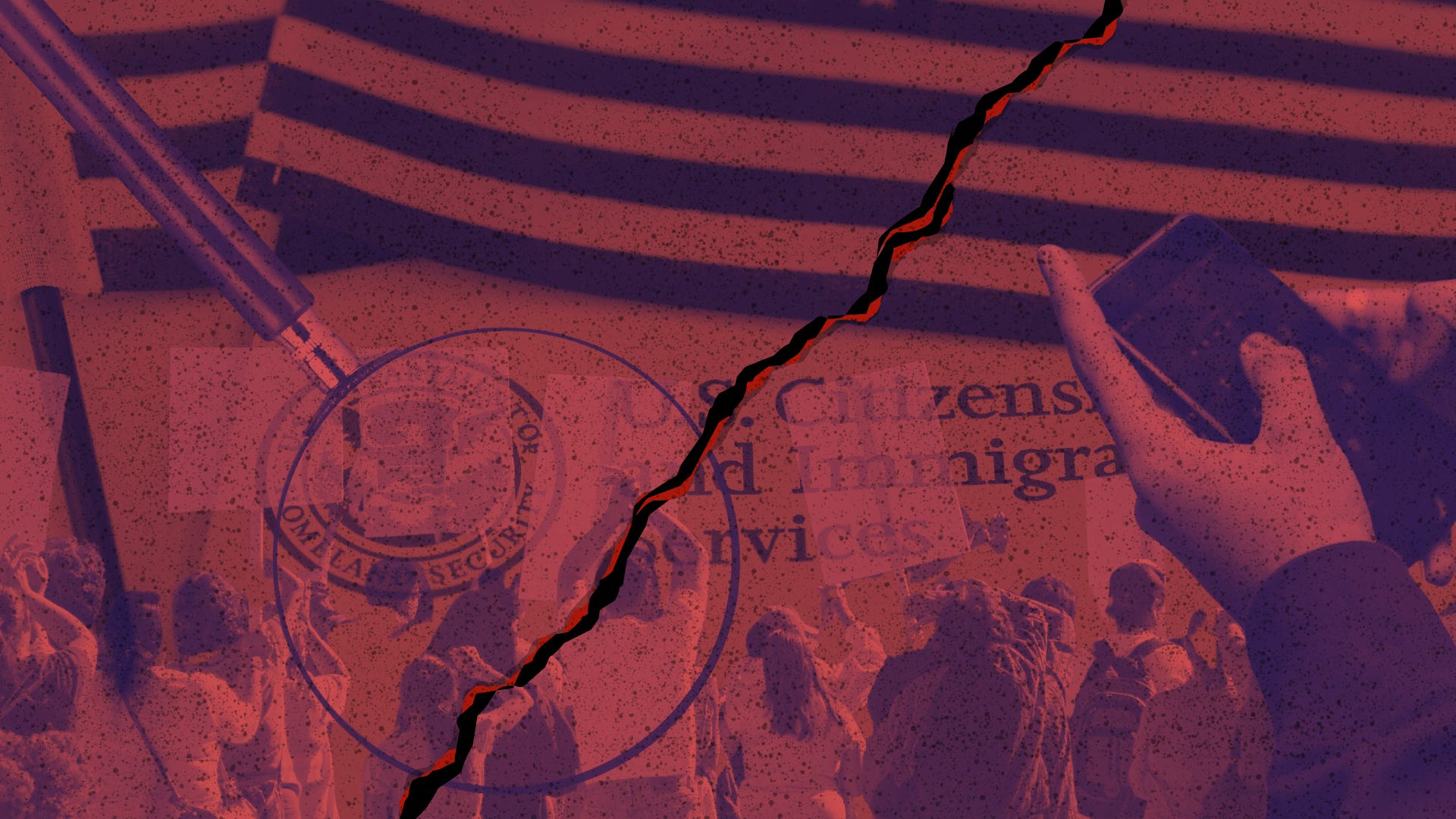
Immigration and Customs Enforcement (ICE) agents in Minnesota are using facial recognition and other technologies designed to identify undocumented immigrants to also track citizens who have protested ICE’s presence, according to current and former Department of Homeland Security officials who spoke to the New York Times.
Facial Recognition:
Local activist groups documented agents using Mobile Fortify, a facial recognition technology developed for Customs and Border Protection and used by DHS.
The agency has not disclosed the technologies it has deployed in Minneapolis, though Democratic senators have requested more information about its facial recognition software and called for suspending its use in cities.
» ICE Observer’s Global Entry Revoked
Nicole Cleland, a Minnesota resident and volunteer with an ICE and Customs and Border Protection vehicle-tracking group, has had her Global Entry and TSA PreCheck privileges revoked after observing agents’ activity.
Observation of ICE Agents:
On January 10, Cleland observed “a white Dodge Ram being driven by what I believed to be federal enforcement agents” and followed the vehicle “with the intent of observing the agents’ actions.”
Cleland followed the car for a short time from a safe distance before the Dodge Ram and two other vehicles driven by federal agents pulled over, blocking her path.
An agent approached Cleland and informed her that they had “facial recognition” and were recording her with body cams.
The agent also stated that they were giving Cleland a verbal warning for “impeding their work” and that, if she was found to be impeding again, she would be arrested.
Cleland separated from the agents and drove in the opposite direction.
Global Entry Revocation:
On January 13, Cleland received an email notification that her Global Entry and TSA PreCheck privileges were revoked.
A notification letter on Cleland’s Global Entry site account said reasons for revocation can include “the applicant has been found in violation of any customs, immigration, or agriculture regulations, procedures, or laws in any country,” though they can’t always disclose the specific reason for revocation.
» Administrative Subpoenas Used to Investigate Online Speech
The Department of Homeland Security has been using administrative subpoenas — which agencies can issue without a judge or grand jury — to investigate those engaged in online criticism.
Details:
Both Google and Meta received a record number of subpoenas in the U.S. during the first half of 2025, when the Trump administration began its second term.
Google reported receiving 28,622 subpoenas, a 15% increase over the previous six months.
Email Triggers Investigation:
One such subpoena targeted Jon, a 67-year-old retiree who sent an email to the Florida Attorney General urging against the deportation of an Afghan asylum seeker, “H.””
Five hours later, Jon received a message from Google that it had “received legal process from a Law Enforcement authority compelling the release of information” related to his account.
Then, federal agents showed up at his door to ask about the email.
Targeting Anonymous Accounts:
Last week, DHS sought to unmask an anonymous Instagram account in Montgomery County, Pennsylvania, which posted information about local immigration enforcement and raids.
The agency ordered Meta to turn over the personal information associated with the account, but withdrew its subpoena without explanation after the American Civil Liberties Union, which represented the account owner, said the speech was legal and protected.
Other Cases:
March: Two subpoenas sought information on a student to deport for participating in pro-Palestinian protests.
July: DHS demanded employment records from Harvard University, another college swept up in a crusade against ideological bias in academic institutions.
December: DHS requested personal information on around 7,000 workers in a Minnesota health system whose staff protested ICE intrusion in one of its hospitals.
» University of Illinois Student Group Under Investigation Over Social Media Post
The University of Illinois Urbana-Champaign campus is reviewing the Illini Republicans student group’s social media post under Title VI, after administrators said it “appears to glorify violence.”
Details:
The post, which has since been removed, expressed support for U.S. Immigration and Customs Enforcement and featured a cartoon image of an armed agent pointing a gun at a person on the ground with text that read “Only traitors help invaders.”
The caption referenced the fatal shootings of ICE protesters in Minnesota, and said, “Traitors such as Alex Pretti and Renee Nicole Good had voided their liberties the moment they decided they were above the law and popular opinion.”
A university spokesperson said, “hate and intolerance are not aligned with our university values,” and although student organizations are independent, they are required to follow campus policies.
Our Take: The investigation by the University of Illinois is steering into very murky First Amendment waters. As a public university, they are bound by the First Amendment, and under Brandenburg v. Ohio (1969), the government may only restrict advocacy for violence when such speech is “directed to inciting or producing imminent lawless action and is likely to produce” such action. However morally repugnant, the student group’s post doesn’t meet this standard. — Ashkhen Kazaryan
The Digital Age 🤖
» Nationwide Internet Outages Continue in Russia
Cellular internet outages have become routine across Russia as authorities justify the disruptions as necessary for defense against Ukrainian drones.
What’s Happening:
Outages extend to regions far from Ukraine’s drone target sites in Russia, reaching as far as Kamchatka, which is 4,350 miles from the Ukrainian border.
Information during outages has been limited to websites on the “white list,” a registry of government-approved websites, though some reports claim that even those fail to load during blackouts.
The “white list” includes primarily government services such as the post office and weather information, as well as state-run media outlets, search engines, and social networks.
The blackouts follow bans on social media, including Instagram and Facebook, YouTube throttling, restrictions on messaging apps such as WhatsApp and Telegram, and VPN shutdowns.
» Internet Access in Iran Faces Continued Threats
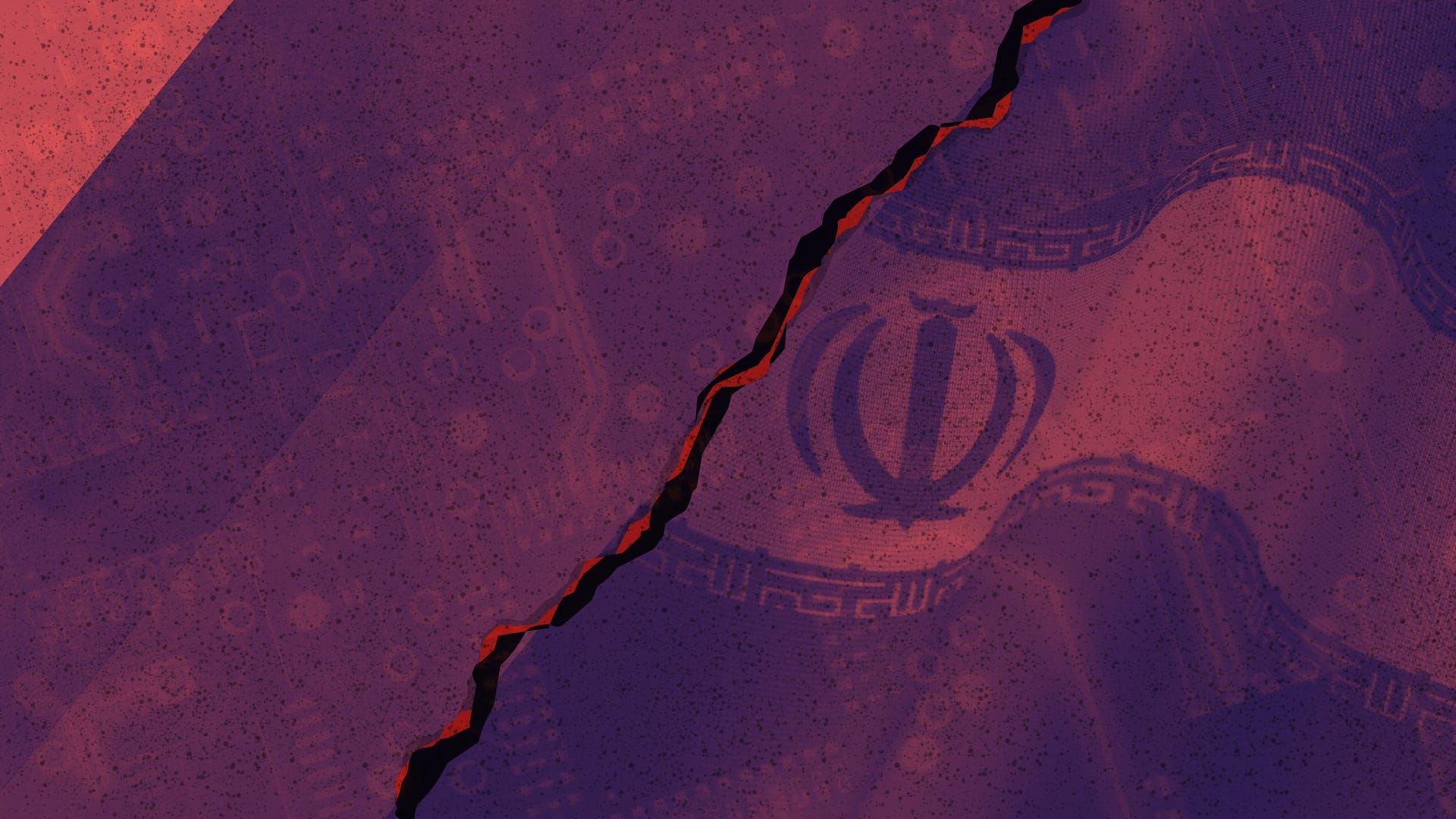
Nearly 20 days after the Iranian government blocked the internet and international calls during a crackdown on anti-government protests, connectivity has been partially restored.
However, the Iranian regime has advanced plans to “retire” access to the international internet completely, threatening what experts say is “a new age of digital isolation” for the country.
Details:
The government has made strides toward implementing a system that restricts access to the international web exclusively to people with security clearance.
The process, known as “whitelisting,” makes SIM cards or other permissions that enable unrestricted internet access available to a small subset of users, while everyone else is limited to the national internet.
Whitelisting differs from blacklisting specific websites or apps by limiting access to domestic internet use only, allowing the regime to track users and approve or block sites.
Crackdown on Alternatives:
Citizens had bypassed shutdowns to share content from the past 20 days using Starlink, Elon Musk’s satellite internet, as mentioned in a post from Research Assistant Hirad Mirami on The Bedrock Principle.
The Iranian government has begun arresting those smuggling satellite terminals into the country and introduced prison sentences for possessing one.
For years, the U.S. government has funded VPNs in Iran, but the Trump administration’s foreign-assistance budget cuts reduced funding for these efforts.
The Brussels Effect: Europe and Beyond 🇪🇺
» Spain to Launch Sweeping Online Crackdown
On February 3, Spanish Prime Minister Pedro Sánchez announced a sweeping legislative package targeting social media platforms, hateful content, and algorithmic curation, which will take effect next week.
Announced Measures:
The legislation will change existing law to hold platform executives criminally liable for “failing to remove illegal or hateful content.”
It will also create a new criminal offense for algorithmic manipulation and amplification of illegal content, Sánchez said, adding that “we will go after…the platforms whose algorithms amplify the disinformation for profit.”
A hate and polarization footprint system will “track, quantify and expose how platforms fuel division and amplify hate,” that will “provide the basis for undertaking future penalties.”
Minors under the age of 16 will also be prohibited from accessing social media through “effective age-verification systems— not just checkboxes, but real barriers that work.”
Global Efforts to Ban Social Media for Minors:
In December, Australia became the first country to bar minors under the age of 16 from social media, targeting 10 platforms, as noted in a previous Free Flow.
Five European countries began testing age-verification systems in July 2025, as noted in a previous Free Flow, and both France, Denmark, and Norway have announced plans to ban access for users under 15.
Our Take: In a post on The Bedrock Principle, Jacob Mchangama argued: “It’s particularly disappointing that such proposals come from Spain—a country that knows what it means to live under stifling top-down censorship, and understands the difference between a population whose ideas and information are tightly controlled and a population allowed to think and speak for itself.”
» French Prosecutors Raid X Offices, Summon Elon Musk For Questioning
French prosecutors raided X’s French offices and summoned Elon Musk for questioning as part of an ongoing investigation into its chatbot, Grok, for generating explicit imagery.
Details:
X owner, Musk, and former CEO Linda Yaccarino have been requested to attend “voluntary interviews” in April. Employees have also been summoned to appear as witnesses.
The investigation was opened in January 2025 after reports from a French lawmaker alleged that the platform’s biased algorithms likely distorted the operation of an automated data-processing system.
The probe widened in July after global outrage last month, when Grok generated sexualized deepfake images.
The charges extend beyond “complicity” in possessing and spreading pornographic images of minors and sexually explicit deepfakes to denial of crimes against humanity and manipulation of an automated data processing system.
Raid Comes Amid UK Investigation:
The UK’s Information Commissioner’s Office also said it was looking into the company’s processing of personal data and safeguards against generating “harmful manipulated images” the same day.
A separate investigation by the UK’s internet regulator, Ofcom, which began last month, is also progressing.
» Italian Senate Advances Bill Allowing Authorities to Ban Antisemitic Rallies
The Italian Senate has approved a bill that would allow authorities to ban antisemitic rallies and incorporate the International Holocaust Remembrance Alliance’s (IHRA) definition of antisemitism into legislation.
Details:
If passed, the bill would make Italy among the first countries to criminalize antisemitic hate speech according to the controversial IHRA definition.
Banning demonstrations would be possible whenever there is an “assessment of a serious potential risk” of the use of “symbols, slogans, messages, and any other antisemitic act.”
Free Speech Recession 🌍
» Proposed Georgia Legislative Amendments Quash NGO Independence
On January 28, the ruling Georgian Dream Party Member of Parliament Irakli Kirtskhalia introduced a new legislative package that would expand government oversight of nongovernmental organizations that receive foreign funding, imposing lengthy prison sentences and heavy fines for violations.
Background:
The proposal comes after several organizations re-registered abroad to continue operating, following a 2024 Foreign Agents Law that required them to register in Georgia as “pursuing the interests of a foreign power.”
Over the past year, dozens of media outlets and organizations have shut down under the mounting financial and legal pressure.
The new law would even apply to representative offices or branches of international organizations, even if the funds are sourced from their own parent organization abroad.
The Amendments:
The proposed amendments would expand the definition of what constitutes a “grant” to include any money, service, or in-kind support transferred between individuals or organizations with the perceived intention to influence national policies, state institutions, or “any segment of society.”
Any organization registered abroad but conducting “substantial activities” in Georgia must receive permission to receive international funding.
Violations could result in substantial fines, 300-500 hours of community service, or prison terms of up to 6 years.
It would also bar anyone employed by an organization that receives more than 20% of its annual income from a foreign source from joining a political party for 8 years.
» North Koreans Executed for Watching South Korean TV
Testimonies given to Amnesty International have revealed that North Koreans caught watching South Korean television shows are subject to public humiliation, years in labor camps, or even execution.
Details:
The 2020 Anti-Reactionary Thought and Culture Act defines South Korean content as “rotten ideology that paralyzes the people’s revolutionary sense,” and mandates between 5 and 15 years for watching or possessing South Korean dramas, films, or music.
The death penalty can be prescribed for distributing “large amounts” of such content or organizing group viewings, but can be evaded by bribing officials, which sources say leaves the poor vulnerable.
One source said North Koreans will even sell their houses to escape “re-education” camps through bribes of $5,000 or $10,000 USD.
The government has also deployed the “109 group,” a specialized law enforcement unit tasked with cracking down on foreign media consumption through warrantless searches of homes, streets, and phones.
Sources also claim that schoolchildren are forced to watch public executions as part of their “ideological education.”
Still, sources maintain that South Korean media consumption is widespread, with young North Koreans using USB drives to smuggle in dramas and films from China.
» Oscar-Nominated Screenwriter Arrested in Iran
Mehdi Mahmoudian, an Oscar-nominated screenwriter, has been arrested in Iran just weeks before the awards, and days after he had signed a statement condemning Islamic Republic leader Ayatollah Ali Khamenei and the regime’s crackdown on demonstrators.
Context:
Details on the charges against Mahmoudian have not been made available, though two other signatories were also arrested.
Mahmoudian was one of the writers of the Iranian drama “It Was Just an Accident,” directed by Jafar Panahi, that is up for multiple awards at the 2026 Oscars.
» Russian Ministry of Justice Lawsuit Seeks to Ban LGBTQ+ Organizations
On February 2, the Joint Press Service of the Courts of Saint Petersburg in Russia announced that the Ministry of Justice had filed lawsuits to designate leading LGBTQ+ organizations as “extremist.”
Details:
The lawsuit targets the Russian LGBT Network and Vykhod, based in Saint Petersburg.
Hearings will be closed to the public due to purportedly “secret documents” included in the lawsuit.
The case follows a declaration in November 2023 of the “international LGBT movement” as “extremist.”
Ashley Haek is a communications coordinator and research assistant at The Future of Free Speech.
Ashkhen Kazaryan is a Senior Legal Fellow at The Future of Free Speech, where she leads initiatives to protect free expression and shape policies that uphold the First Amendment in the digital age.