


This Week at a Glance 🔎
— 🇺🇸 SCOTUS Rejects Colorado’s Conversion Therapy Ban
— 🇮🇩 Indonesia’s Social Media Ban Takes Effect
— 🇫🇮 Finnish MP Convicted for Hate Speech
— 🇹🇷 Censorship in India Spikes Amid Iran War
— 🇮🇱 Israeli Soldiers Assault and Detain CNN News Crew
First of All 🇺🇸
» Supreme Court Sides with Therapist in Challenge to Colorado’s Ban on Conversion Therapy
The U.S. Supreme Court has, by an 8-1 vote, remanded Colorado’s ban on conversion therapy for minors to lower courts, instructing it to apply strict scrutiny and stressing that it would likely fail on grounds of viewpoint discrimination.
Details:
Licensed counselor Kaley Chiles went to federal court to challenge the 2019 law, arguing that she tries to help clients “with their stated desires and objectives in counseling,” which can include reducing unwanted sexual attractions or behaviors.
A divided panel of the U.S. Court of Appeals for the 10th Circuit found that the ban regulated conduct that happened to involve speech and used the least stringent test for constitutional challenges, the “rational basis” test, allowing the state to continue enforcing the law.
Writing for the majority, Supreme Court Justice Neil Gorsuch stressed that the ban “censors speech based on viewpoint,” and that although it addresses conduct, it “regulates what [Chiles] may say” as well as “what views she may and may not express,” and stressed the high likelihood that it would fail the strict scrutiny.
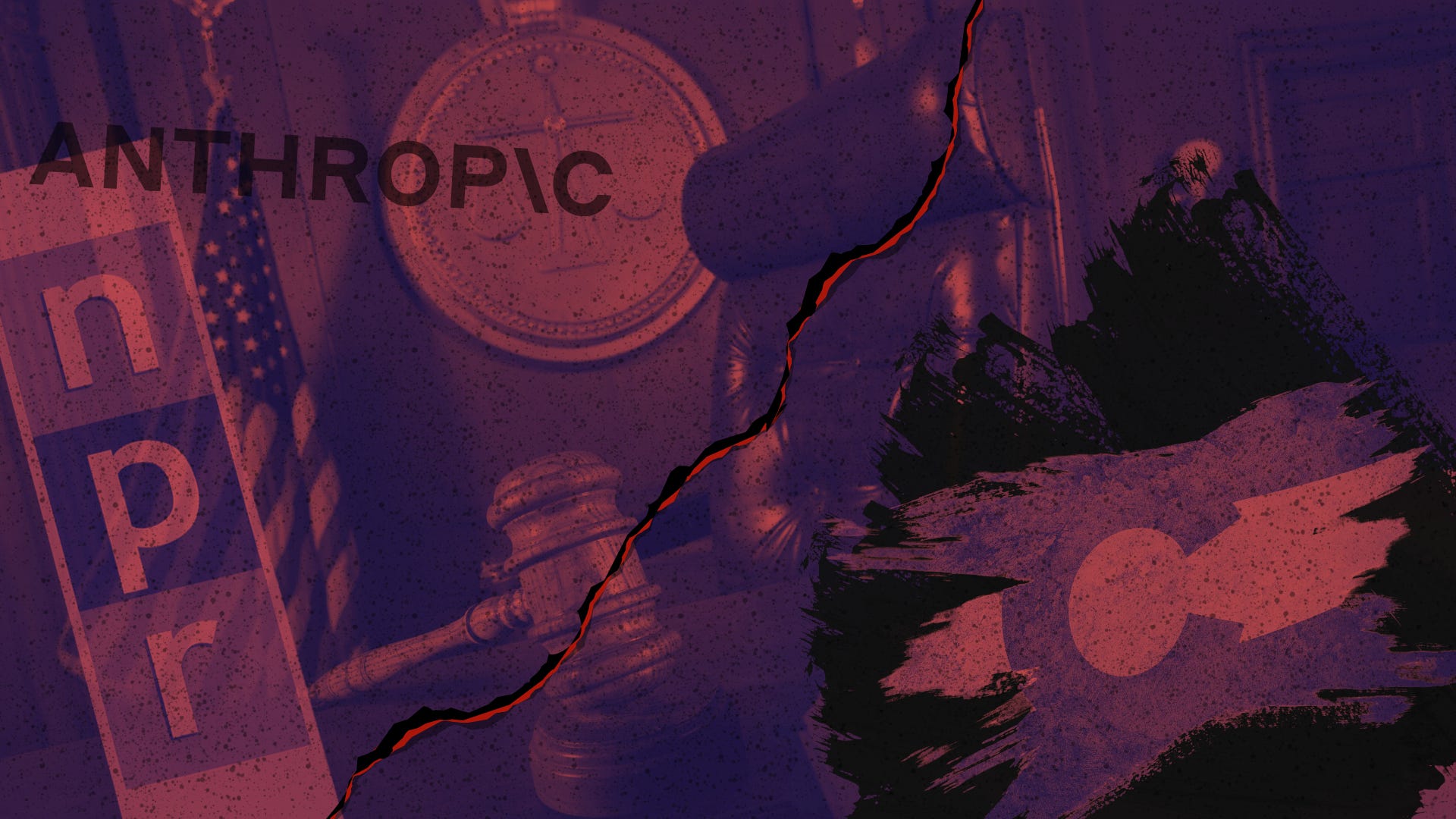
» Federal Judge Rules Trump Violated Free Speech by Ordering NPR Defunded
A federal judge has found that President Trump’s executive order barring federal funding for NPR and PBS violated the First Amendment and is “unlawful and unenforceable.”
Background:
The order singled out the two broadcasters and accused them of not presenting “fair, accurate, or unbiased portrayal of current events to taxpaying citizens,” and revoked $1.1 billion in congressionally-approved public media funding.
Justice Randolph D. Moss of the U.S. District Court for the District of Columbia said the order “singles out two speakers and, on the basis of their speech, bars them from all federally funded programs.”
“It is difficult to conceive of clearer evidence that a government action is targeted at viewpoints that the President does not like and seeks to squelch,” Moss added.
White House spokesperson called it “a ridiculous ruling by an activist judge,” and the Trump administration said it would appeal.
» Judge Blocks Pentagon’s Ban on Anthropic, Cites First Amendment Retaliation
A federal judge has issued a preliminary injunction to stop the Pentagon from labeling AI company Anthropic a “supply chain risk” and halted the Trump administration’s ban on federal use of its technology, citing likely First Amendment retaliation.
Details:
The designation followed Anthropic CEO Dario Amodei’s announcement that he would not allow the company’s AI model, Claude, to be used for autonomous weapons or citizen surveillance, as detailed in a previous Free Flow.
District Judge Rita Lin found that the government’s actions were likely motivated by retaliation for Anthropic’s public statements, which drew scrutiny to the government’s contracting position.
Lin stayed her order against the Department of Defense’s designation, which would have effectively barred the company from government contracts, for seven days, giving the government an opportunity to appeal.
“Nothing in the governing statute supports the Orwellian notion that an American company may be branded a potential adversary and saboteur of the U.S. for expressing disagreement with the government,” the order said.
» Tennessee Library Board Fires Director for Refusing to Move LGBTQ Books
The Rutherford County Library Board in Tennessee has voted 8-3 to fire library system director Luanne James for refusing to comply with its order to relocate more than 100 LGBTQ+ books from the children’s to the adult section.
Context:
On March 16, the board voted to move the books, with Board Chairman Cody York arguing it is dangerous and inaccurate to tell children that boys can be girls and girls can be boys.
Two days later, James emailed the board saying she would not move the books, arguing that doing so would violate her and county residents’ First Amendment rights and compromise her professional obligation to prevent government-mandated viewpoint discrimination.
“Librarians should not be used as a filter for political agendas,” James said in a statement read by her attorney after her firing, “I stood up for the right to read, standing for the citizens of Rutherford County.”
The Digital Age 🤖
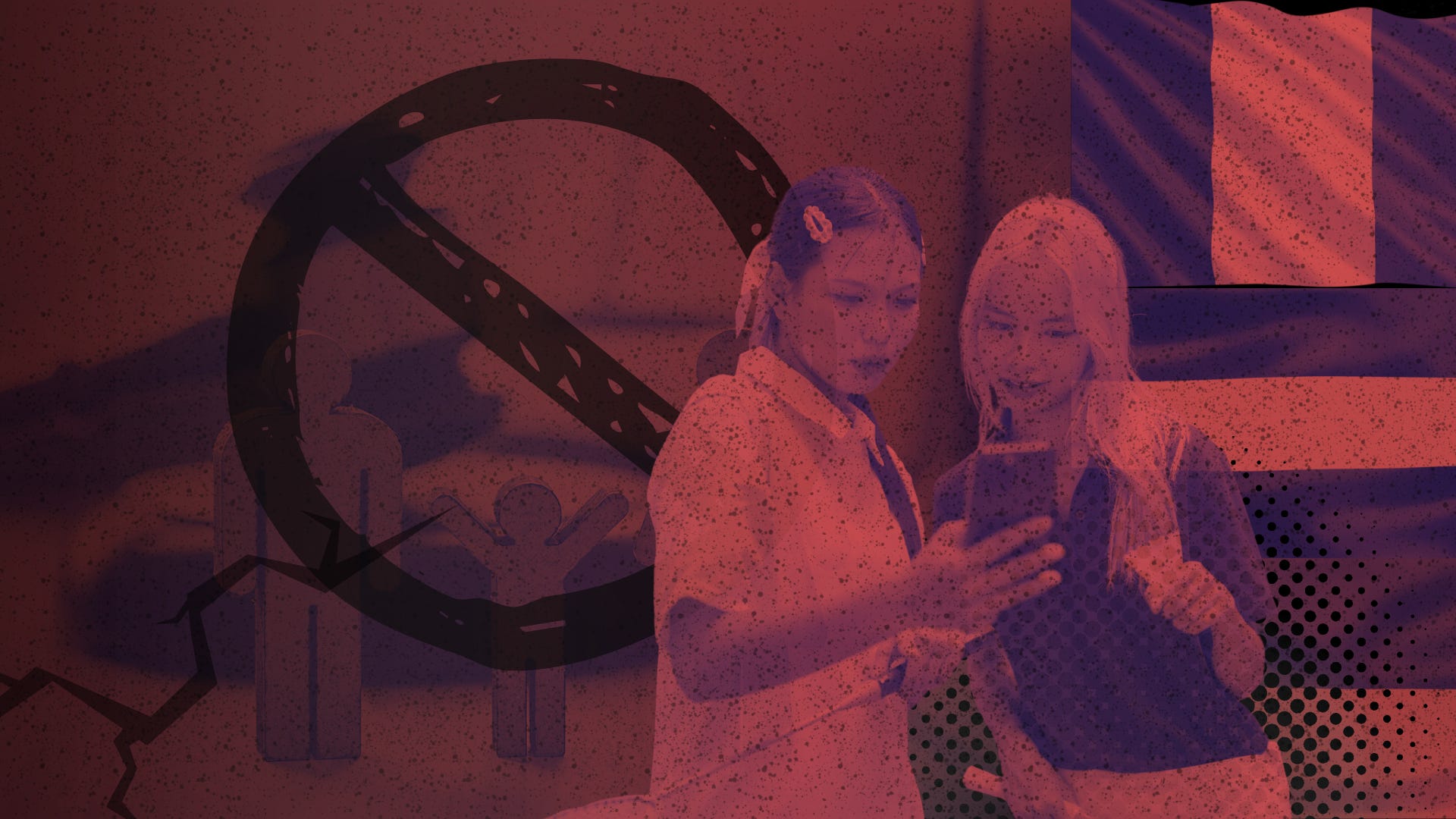
» Austria Plans Social Media Ban for Children Under 14
Austria’s governing coalition has announced plans to ban social media use for children under 14, joining a growing list of countries imposing age-based restrictions on platform access.
Details:
The proposal would prohibit children under 14 from accessing social media platforms, though specific enforcement mechanisms have not yet been detailed.
If enacted, Austria would join Australia, which implemented an under-16 ban late last year.
The announcement comes as Australia’s communications watchdog said this week that social media firms must better enforce the country’s under-16 ban, noting that one-fifth of Australian minors continue to use platforms like Snapchat and TikTok, as mentioned in a previous Free Flow.
» France Moves Closer to Social Media Ban for Children Under 15
France’s Senate approved a proposal to restrict social media access for children under 15, advancing President Emmanuel Macron’s pledge amid broader European efforts to regulate minors’ online activity.
Background:
France has long pushed stricter controls on youth access to social media, including a 2023 law requiring parental consent for minors under 15—though it never took effect due to conflicts with EU law.
The National Assembly’s earlier version of the bill mandates that platforms delete existing underage accounts and block new ones, and bans mobile phones in high schools.
The Senate’s version proposes a two-tier system distinguishing between harmful platforms (which would be banned) and others accessible with parental consent, while exempting educational services.
Ongoing EU-level debates over age verification systems—and broader Digital Services Act (DSA) constraints—have complicated national efforts to regulate access.
Lawmakers remain divided between the Assembly and Senate versions, requiring a compromise before implementation—likely delaying enforcement.
Key questions remain unresolved, particularly around how platforms will verify users’ ages without infringing privacy or creating new barriers to access.
» Indonesia’s Social Media Ban for Minors Takes Effect
Indonesia’s ban on social media for children under 16 has officially taken effect, making it one of the latest countries to impose age-based restrictions on platform access.
Details:
The ban, Regulation of the Minister of Communication and Digital No. 9 of 2026, 5, took effect on March 28, and requires social media platforms to block accounts belonging to users under 16.
Authorities have already summoned officials from Google and Meta over compliance failures with the new law.
TikTok and Roblox have also received warning letters that said they showed “partial compliance,” and the country’s minister of communication and digital affairs, Meutya Hafid, said that “if they still fail to demonstrate full compliance,” they will be summoned as well.
The government has not specified what penalties under the law could be, but has previously stated they would include warnings, administrative fines, temporary suspension, and “termination of access” to the local market.
Our Take: In an X thread about Indonesia’s social media ban, Jacob Mchangama argues, “Just as proponents of free speech should take seriously the very real challenges that social media brings about for children, childrens’ advocates should acknowledge that their policy proposals have real consequences for free expression and that good intentions do not equal good outcomes.” To read more about the dangers of social media age restrictions, read Jacob and Jeff Kosseff in the Wall Street Journal.
» India Sees Spike in Social Media Censorship Amid Iran War
Internet watchdogs documented a surge in takedowns of social media content critical of the Indian government’s response to the Iran conflict beginning on March 11, with at least 42 instances recorded by March 19.
Background:
India’s legal framework allows authorities to issue takedown orders for national security or public order reasons, though these requests or the reasoning behind them are not made public.
Removed content included political cartoons, satire, opposition messaging, and commentary questioning New Delhi’s silence on U.S.-Israeli strikes against Iran.
Affected voices ranged from cartoonists and journalists to opposition figures, parody accounts, and even a retired Air Force officer.
» Iran Cracks Down on Starlink Sellers as Internet Blackout Continues
Iranian authorities have arrested dozens of people for alleged involvement in a network that sold Starlink satellite terminals, which have enabled people to access the internet and communicate during ongoing internet blackouts.
Context:
The internet has been nearly completely blacked out in Iran for more than a month, following shutdowns during anti-government protests beginning in December, and throughout the ongoing conflict with the U.S. and Israel.
Iranians are attempting to circumvent the blocks, including by using Starlink satellite-internet terminals developed by SpaceX, despite the fact that such attempts could result in capital punishment.
Authorities have reportedly seized 139 Starlink devices and arrested 46 people accused of selling the terminals.
Information and Communications Technology Minister Sattar Hashemi signed a document escalating operations to locate Starlinks, citing public leaks of government files detailing its strategy to target resellers.
This comes as bombing, power outages, and overstretched emergency services are taking a toll on the nation’s infrastructure in addition to its censorship system.
Regime-approved communication, which the nation’s censorship systems were designed to protect, has also degraded, and local data centers and “white SIM cards,” as mentioned in a previous Free Flow, are no longer working.
» Brazil Proposes Targeting Online Misogyny as Senate Advances Criminalization Bill
Brazil is proposing a new decree to combat misogyny online, while the Federal Senate advances legislation that would criminalize misogyny with prison sentences of up to five years.
Background:
The decree, led by Brazil’s Ministry of Justice and Public Security, is part of the National Pact Brazil Against Femicide, responding to a reported rise in coordinated online harassment and misogynistic content.
At the same time, Brazil’s Federal Senate has approved a bill that would classify misogyny as a criminal offense, defined as conduct rooted in beliefs of male supremacy.
The bill would incorporate misogyny into existing laws governing prejudice and discrimination, akin to provisions in Brazil’s Law of Racism.
Lawmakers backing the bill point to rising violence against women, citing thousands of femicide cases and attempted femicides in 2025 alone.
The Decree would:
Establish a heightened duty of care for platforms
Require rapid removal of illegal content, particularly non-consensual intimate material
Create reporting mechanisms for victims
Impose corporate liability for coordinated harassment campaigns
Ban AI-generated sexualized or manipulated content (e.g., deepfakes)
The Senate Bill:
Criminalizes misogyny with 2–5 year prison sentences
Applies to online abuse, including threats and harassment directed at women
The Senate rejected proposed exemptions for speech framed as “free speech” or religious expression
The Brussels Effect: Europe and Beyond 🇪🇺
» Finnish MP Convicted for Hate Speech
Finland’s supreme court has, in a 3-2 vote, convicted Christian Democrat Member of Parliament Päivi Räsänen of inciting hatred after she republished a pamphlet on social media claiming that homosexuality was a “developmental disorder.”
Background:
Räsänen first published the pamphlet in 2004, and republished it on Facebook in 2019 and on her website in 2020.
Lower courts had acquitted her of all charges. The Supreme Court reversed those acquittals and fined her €1,800.
Reaction:
Finnish government ministers from Räsänen’s party and the nationalist Finns Party immediately called for freedom of speech protections and legislative changes.
The minister of justice, Leena Meri, said the law was “not sufficiently precise and especially not predictable as required by the principle of legality in the criminal code,” and that, “It is very difficult for people to know what is prohibited and what is permitted.
Räsänen said she would consider appealing to the European Court of Human Rights.
Free Speech Recession 🌍
» Israeli Soldiers Assault and Detain CNN News Crew
A CNN team reporting on the aftermath of an assault by Israeli settlers and the establishment of an illegal outpost near the Palestinian village of Tayasir was detained and physically assaulted by Israeli soldiers.
Background:
The Foreign Press Association (FPA), representing hundreds of journalists in Israel and Palestine, condemned the attack and said the crew clearly identified themselves as press.
Israeli soldiers reportedly pointed rifles at the CNN crew and nearby civilians, ordered journalists to stop filming, and threatened to confiscate their equipment.
According to the FPA, a soldier placed CNN photojournalist Cyril Theophilos in a chokehold, slammed him to the ground, and damaged his camera.
CNN confirmed the account, while the FPA rejected the idea that the incident was a misunderstanding, calling it a direct attack on press freedom.
The IDF said the episode would be investigated, with a spokesperson stating the conduct did not reflect military standards and apologizing for the incident.
» China Tries Artist in Secret Trial Over Sculptures Mocking Mao
A prominent Chinese artist, Gao Zhen, stood trial on Monday in a closed-door proceeding for allegedly “slandering” Mao Zedong through satirical sculptures. This trial highlights the Chinese government’s continued crackdown on artistic and historical expression.
Background:
China criminalized speech that “tarnishes” official historical narratives in 2018, with expanded penalties in 2021 allowing prison sentences of up to three years.
Authorities have increasingly used these laws against journalists, comedians, and online commentators critical of the Communist Party’s version of history.
Gao Zhen’s work—created over a decade ago—includes irreverent depictions of Mao, addressing taboo subjects such as the Cultural Revolution and Tiananmen Square.
Gao was tried in secret after more than 18 months in detention, with authorities barring public access and even denying entry to a U.S. diplomat.
Ashley Haek is a communications coordinator and research assistant at The Future of Free Speech.
Justin Hayes is the Director of Communications at The Future of Free Speech and the Managing Editor of The Bedrock Principle.