


This Week at a Glance 🔎
🇺🇸 Judge Dismisses Trump’s Defamation Lawsuit Against WSJ
💻 UK Content Moderation Crisis Measures Take Effect
🇷🇴 Romania’s Senate Passes Under-15 Social Media Ban
🇷🇺 Russia’s Leading Independent Paper Shuts Down
🇬🇧 UK Names Age Check Methods for Under-16 Ban
First of All 🇺🇲
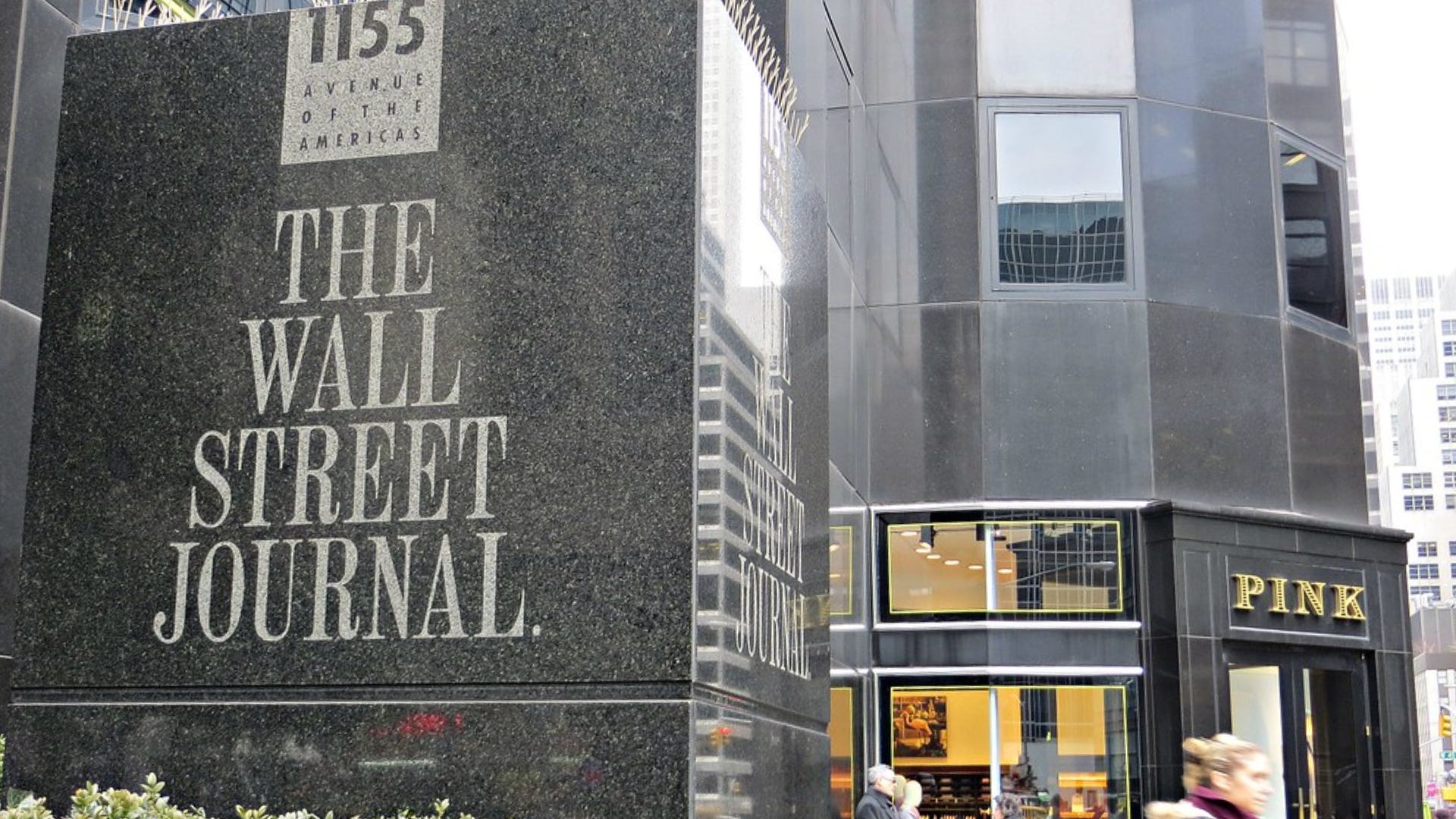
» Judge Dismisses Trump’s Defamation Lawsuit Against WSJ
A federal judge dismissed President Donald Trump’s $20 billion defamation lawsuit against the Wall Street Journal over its reporting on a birthday letter to sex offender Jeffrey Epstein bearing Trump’s name.
Details:
In July 2025, Trump sued The Journal, its parent companies, Rupert Murdoch, and two reporters after it reported on the sexually suggestive letter, which he denies writing, as covered in a previous Free Flow.
U.S. District Judge Darrin P. Gayles first dismissed the suit in April, as covered in a previous Free Flow, but let Trump file an amended complaint showing the paper acted with “actual malice.”
Gayles found the revised complaint still fell short and dismissed the case with prejudice, so Trump cannot refile.
Gayles rejected Trump’s argument that The Journal should have withheld the story after Trump denied writing the letter, saying that would violate the First Amendment.
A spokesperson said Trump “will continue to press forward in his powerhouse lawsuit against the Wall Street Journal and all of the other defendants.”
» Judge Rules Firing Over Ceasefire Post Violates First Amendment
A federal judge ruled that the Rhode Island governor’s office violated the First Amendment by firing a constituent services staffer over a social media post about Gaza.
Context:
On Oct. 22, 2023, the staffer, identified in the ruling as Mr. Sanchez, posted on his personal X account that he “marched with thousands of people calling for an immediate ceasefire and a[n] end to the occupation.”
The governor’s staff initially advised Sanchez not to make new posts, but then demanded he delete his post after press inquiries followed. Sanchez refused and was fired.
U.S. District Judge John McConnell found the post was off-duty speech on a public issue from an account identifying Sanchez as a Providence city councilor, not a governor’s employee.
The judge said the calls, emails, and press questions the post attracted were the “ordinary business of a governor’s office,” not disruption.
The Digital Age 🤖
» UK Criminalizes Possession of Certain Porn Genres
The UK will criminalize publishing or possessing certain genres of pornographic content starting Nov. 6.
Details:
The Crime and Policing Act 2026 bans imagery depicting strangulation or suffocation, with penalties of up to three years in prison.
The law doesn’t define either term. The Ministry of Justice said that courts will decide whether acts qualify as strangulation or suffocation on a case-by-case basis.
It also bans roleplay porn where people pretend to be closely related, or “where a reasonable person would think at least one person is, or is pretending to be, under 16.”
Those in possession of such images must “permanently delete” them before the law takes effect. Having published an image in the past could leave one liable.
The UK banned a variety of fetish acts, including strangulation, in porn in 2014, but reversed the rules in 2019.
» UK Names Age Check Methods for Under-16 Ban
The UK’s internet regulator Ofcom identified four age assurance methods it deems “highly effective” ahead of the government’s rules for its under-16 social media ban.
Details:
The government announced the ban in June, as covered in a previous Free Flow. It will take effect in March 2027.
The government plans to publish its first regulations by year’s end. Ofcom will then consult on guidance for platforms.
Some adults won’t need checks if platforms already hold reliable data, but Ofcom told the BBC a “large number of accounts” would have to verify their age.
Ofcom said that app stores, which rely on self-declared ages, could do more to protect children, but that platforms will remain responsible for their own checks.
The Methods:
16 and over: photo ID matching, banking information, digital identity services, facial age estimation
18 only: credit card verification, mobile network operator checks, email estimation
Not effective: self-declaration, general contractual agreements, verifiable parental consent
Our Take: Jeff Kosseff argued the ban rests on a shaky age-verification foundation. “Requiring sensitive information such as facial scans or photo IDs risks real privacy violations,” he wrote, adding that “children are well aware of how to circumvent age-assurance technology.”
» UK Content Moderation Crisis Measures Take Effect
New crisis protocols under the UK’s Online Safety Act took effect Nov. 2, requiring large platforms to have emergency moderation plans and response teams, and a direct channel for law enforcement.
Context:
The country’s internet regulator, Ofcom, began work on the protocols in 2024, after false social media claims about the killer of three girls in Southport fueled nationwide riots.
Ofcom defines a crisis as an “extraordinary situation” posing a “serious threat to public safety” linked to a surge in illegal content or content harmful to children.
Platforms, not Ofcom, decide when a crisis is occurring or “likely to occur.”
The Measures:
Plans must set out the indicators platforms will monitor, and a senior response team must act once a crisis is judged likely.
Platforms with more than 700,000 UK users must maintain a communications channel through which law enforcement agencies can share crisis information.
The rules cover large user-to-user services at medium or higher risk of hosting illegal content, such as terrorism, hate speech, harassment, or foreign interference.
Civil liberties groups, including the Open Rights Group, warn that fast removal under police pressure during unrest could sweep up lawful political speech.
» Fifth Circuit Reopens Challenge to Texas Age-Verification Law
The full Fifth Circuit will rehear challenges to Texas’ online age-verification law, the SCOPE Act, vacating a previous block on its content-filtering provision.
Details:
The provision requires platforms to keep minors from content “that promotes, glorifies, or facilitates” suicide, self-harm, eating disorders, bullying, and more.
The three-judge panel said it treated platforms “as publishers subject to sweeping state controls” and was preempted by Section 230, which protects platforms from liability over user-generated content.
Judge James Ho, a panel member, dissented, arguing that curating content is the platform’s own speech and not protected by Section 230. Texas can enforce the provision if the full court agrees.
The law’s age-registration requirement for all users and its ID checks for sites with mostly “harmful material” remain in force.
The Brussels Effect: Europe and Beyond 🇪🇺
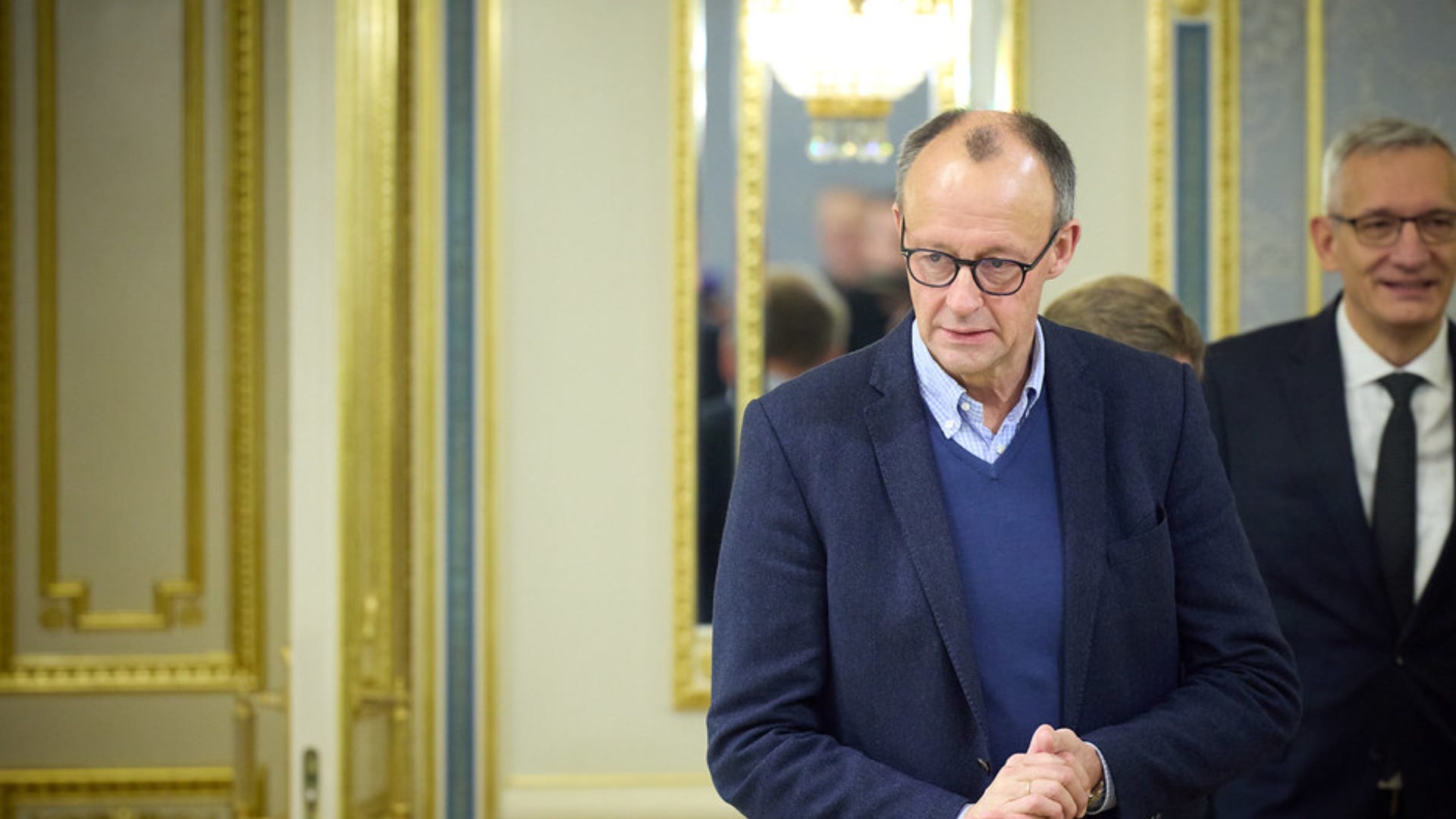
» German Chancellor Pushes for Independent AI
German Chancellor Friedrich Merz said Germany and Europe must move faster to build their own AI to protect their “digital sovereignty.”
Details:
At a Berlin AI conference, Merz said nations risked surrendering control to outside providers as the new technology becomes increasingly embedded in the economy.
He called digital sovereignty “a truly existential question.”
“After all, the aim is to be able to produce and manage technologies independently, securely, and autonomously throughout the entire value chain, from hardware to software,” he said.
Merz said Germany would seek to work with like-minded partners such as Canada and France.
Our Take: In Foreign Affairs, Jacob Mchangama argues that digital sovereignty — “the idea that states must control their own data and infrastructure” — has a legitimate place in critical infrastructure and industrial policy. The danger comes when it extends to information and ideas, trading an open internet for a controlled one. Mchangama points to a decentralized, interoperable, pro-social online ecosystem as “an alternative to top-down digital sovereignty.”
» Romania’s Senate Passes Under-15 Social Media Ban
Romania’s Senate passed a social media ban for children under 15.
Details:
The bill was adopted on Nov. 2 when the deadline for voting on it expired. It must pass the Chamber of Deputies before it becomes law.
Platform providers would have to implement age-verification checks recognized at the EU level or in compliance with the Digital Services Act.
The text explicitly prohibits relying on declarative statements of age.
For users 15 to 18, platforms would have to apply default settings and limit addictive design features and exposure to gambling, sexually explicit, or violent content.
For all users under 18, platforms would have to switch off targeted advertising and direct messages from outside connections, default to private accounts, and activate time controls.
Providers not designated as very large online platforms under the Digital Services Act could face fines between 0.5% and 2% of their global annual turnover, or suspension of their services.
Our Take: In the Wall Street Journal, Jacob Mchangama and Jeff Kosseff warned that youth bans echo a long history of blaming new media for corrupting the young, and that “new laws could lead to unintended consequences for other vital democratic interests that may outweigh uncertain benefits.”
» Press Freedom Groups Ask EU to Improve Journalists’ Access
A coalition of press freedom groups signed a joint letter to the European Commission urging it to improve journalists’ access to its documents.
Details:
The groups said the Commission was obstructing journalists’ access to documents through delays, vague denials, and heavy redactions.
They also said the Commission sometimes fails to archive crucial documents.
The letter asked the Commission to publicly disclose request figures, including wait times, and to create a comprehensive, machine-readable electronic register of documents.
It also asked the Commission to support the EU Ombudsman in assessing whether denials are necessary and proportionate.
Free Speech Recession 🌍
» Swedish Climate Activist Banned from UK
The UK revoked the travel authorization of Swedish climate activist Andreas Malm, saying his presence was “not considered to be conducive to the public good.”
Details:
Malm was invited to discuss the war in Iran with Palestine Action co-founder Huda Ammori at a London conference on Nov. 4.
Palestine Action is a direct-action group protesting Israel’s actions in Gaza. The UK proscribed it as a terrorist organization in 2025, as covered in a previous Free Flow.
Malm speculates the travel ban was because of the panel, and claims that his requests for clarification have gone unanswered.
He denied publicly supporting or financing the group in a BBC interview, but said his sympathies could be guessed.
The Home Office said it cannot discuss individual cases, but such decisions are “based solely on an assessment of the potential risk an individual may pose to UK society.”
The Home Office used the same “public good” rationale to bar U.S. commentators Cenk Uygur and Hasan Piker in June, as covered in a previous Free Flow, and a right-wing influencer in January, as covered here.
» Russia’s Leading Independent Paper Shuts Down
Russia’s leading independent newspaper, Novaya Gazeta, announced that it will close on Nov. 9, saying security services forced it to stop working.
Details:
Novaya Gazeta was Russia’s last major independent media outlet critical of the Kremlin still operating inside the country.
Six of the paper’s journalists have been killed since 2000. Former editor-in-chief Dmitry Muratov, a Nobel laureate, was attacked in 2022 and stepped down as editor in 2023 after being labeled a “foreign agent.”
The paper was also fined for discrediting the country’s armed forces, had its online platforms blocked, its printing house seized, and its media registration revoked, and saw its entire staff designated foreign agents.
The paper said its eviction from its Moscow office coincided with banks shutting off its reader-donation system.
» Nepal Detains Four Journalists
Nepal police arrested at least four journalists on Oct. 30 without warrants, then released them that evening after widespread criticism.
Details:
Officers also entered Naya Patrika Daily’s newsroom, searching for journalist Nabaraj Mainali, who reported on alleged judiciary bribery.
Media groups condemned the detentions, saying holding journalists without warrants violates constitutional press freedom.
The prime minister’s office said it had no involvement and ordered the journalists released.
Police later said they acted on concerns the prime minister’s office raised about reporting critical of law enforcement.
» Journalists Charged After Being Attacked in West Bank
Israeli police detained Russian-Israeli journalist Andrey Khrzhanovskiy and U.S. journalist Jasper Nathaniel after settlers assaulted them in the West Bank.
Details:
Videos and photographs show settlers attacking Khrzhanovskiy. Fellow journalist Adele Shoko said the settlers beat Khrzhanovskiy until he lost consciousness, stole his phone, blocked an ambulance, and pepper-sprayed Nathaniel.
Nathaniel said they were “charged with assault, along with five other offenses,” and that a judge banned them from the West Bank for two months kept his phone, and that no charges were brought against the attackers.
Khrzhanovskiy was also briefly detained last week while filming. He said he faces charges for “supporting a terrorist organization.”
Ashley Haek is a Communications Manager at The Future of Free Speech.
Ajdin Muratovic is the Director of Communications at The Future of Free Speech and the Managing Editor of The Bedrock Principle.